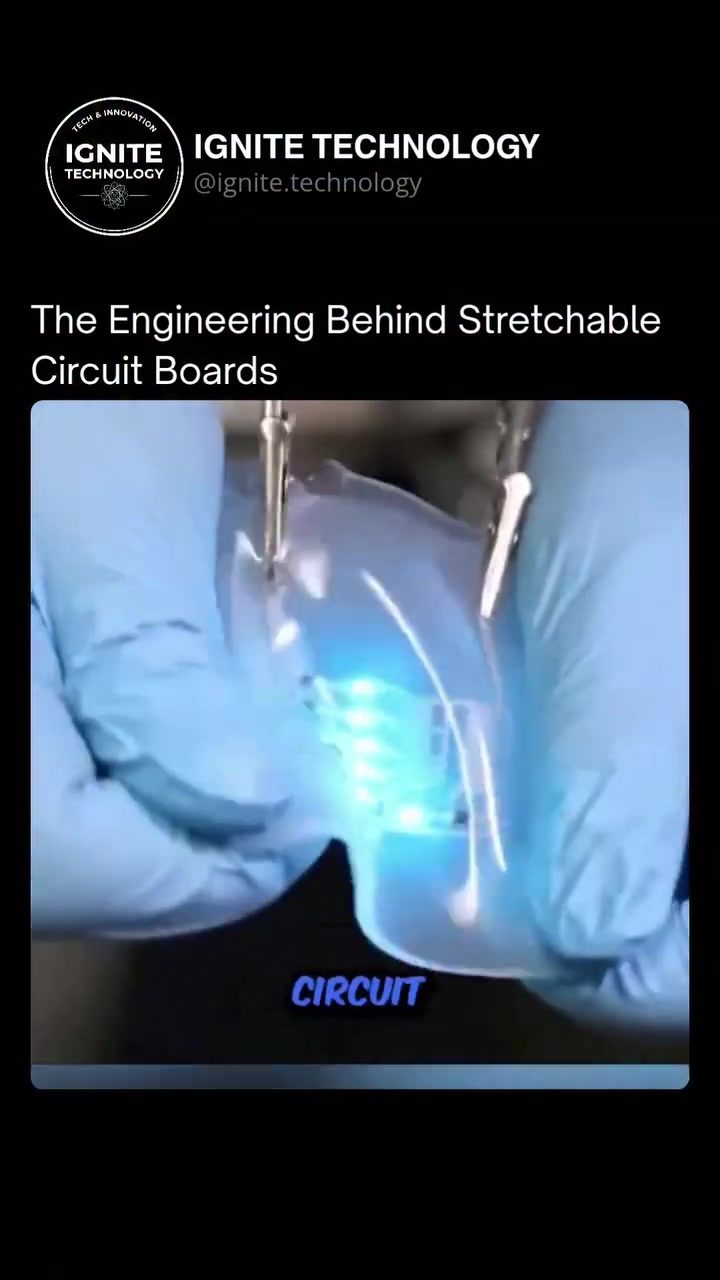
Stretchable Circuit Boards
Stretchable circuit boards represent a groundbreaking advancement in modern electronics, providing a robust solution to the persistent issue of mechanical fatigue in traditional rigid printed circuit boards (PCB). The application of pressure on conventional electronics often results in the fracture of the PCB substrate, leading to failures in the electrical connections and conductive pathways. Recognizing this problem, engineers have developed a revolutionary solution: the stretchable printed circuit board (SPCB).
Why This Matters
By leveraging breakthroughs in hardware engineering and material science, stretchable circuit boards offer a powerful alternative to traditional rigid PCBs. This innovation has the potential to redefine the future of electronics, from biomedical applications to wearable technology and flexible displays.
The Engineering Behind Stretchable Circuit Boards
The key to the stretchable circuit boards' success lies in their unique design. Traditional rigid circuit boards typically use straight conductive traces, which can easily snap under pressure.
However, the SPCB utilizes an engineered serpentine wiring pattern. Instead of straight lines, the conductive traces are designed in a continuous, smooth S-curve. When the substrate is stretched, twisted, or bent, these micro-conductors elongate gradually, preventing the wires from breaking or snapping. This ensures that the stretchable circuit boards maintain electrical conductivity and signal integrity, thereby enabling the continuous flow of electrons without voltage drops or impedance mismatches.
The Role of Conductive Materials
The materials used in stretchable circuit boards are meticulously chosen for their ability to withstand deformation. High-purity conductive traces and silver conductive inks are common choices. These materials are fabricated into delicate micro-wirings, which are then sealed within a protective encapsulation layer. This layer not only prevents physical damage but also maintains the structural integrity of the circuit board.
Dynamic Movement and Flexibility
During dynamic movement, such as stretching, twisting, or bending, the micro-conductors in the circuit board perform a gradual layout elongation. This means that the circuit board can adapt to various physical stresses without compromising its electrical performance. This flexibility is particularly beneficial for applications that require a high level of mobility and robustness, such as wearable electronics and smart fabrics.
Practical Applications
The applications of stretchable circuit boards are vast and varied, spanning multiple industries and consumer markets. Some of the most notable applications include:
Biomedical Engineering
In the field of biomedical engineering, stretchable circuit boards are used in skin-integrated medical patches, bio-sensors, and soft sensors. These devices can adhere to the skin, providing continuous monitoring of vital signs and other physiological parameters. The flexibility of the circuit boards allows them to conform to the contours of the body, ensuring a comfortable and secure fit.
Wearable Electronics
Stretchable circuit boards are also integral to the development of wearable electronics. These devices, which include smart fabrics and e-textiles, benefit from the flexibility and durability of the circuit boards. As a result, they can be integrated into clothing and accessories, providing users with convenient, always-on technology.
Consumer Electronics
In the consumer electronics market, stretchable circuit boards are used in the design of next-generation flexible displays, rollable screens, and impact-resistant gadgets. These innovations enable the creation of devices that are not only more flexible and durable but also easier to transport and use in various environments.
Practical Tips for Stretchable Circuit Boards
When working with stretchable circuit boards, there are several practical tips to keep in mind:
- Carefully Plan the Wiring Pattern: Utilize the serpentine wiring pattern to ensure that the conductive traces can withstand dynamic movement and deformation without breaking.
- Choose High-Quality Materials: Opt for high-purity conductive traces and protective encapsulation layers to enhance the durability and performance of the circuit boards.
- Consider the Encapsulation Layer: Ensure that the encapsulation layer provides adequate protection without adding unnecessary bulk or rigidity to the circuit board.
- Test Under Real-World Conditions: Simulate the conditions under which the circuit board will be used to ensure that it can withstand the expected levels of stress and deformation.
Important Takeaways
Stretchable circuit boards represent a significant advancement in the field of electronics, offering a versatile and durable solution to the challenges posed by traditional rigid PCB designs. By leveraging cutting-edge materials and engineering principles, stretchable circuit boards can adapt to various physical stresses, ensuring reliable performance in a wide range of applications.
Conclusion
The future of electronics is increasingly flexible and adaptable, and stretchable circuit boards are at the forefront of this revolution. From biomedical engineering to wearable electronics and consumer devices, the potential applications of this technology are vast and exciting. As engineers and designers continue to innovate and refine the design and materials of stretchable circuit boards, we can expect to see even more groundbreaking advancements in the years to come.
Watch the Reel
Questions readers ask
What are stretchable circuit boards and how do they differ from traditional PCBs?
Stretchable circuit boards, or SPCBs, are flexible electronics that can bend, twist, and stretch without losing conductivity. Unlike traditional rigid PCBs, SPCBs use a serpentine wiring pattern to maintain electrical connections even under deformation, making them more durable and resistant to mechanical fatigue.
What are the primary benefits of using stretchable circuit boards in wearable electronics?
Stretchable circuit boards offer several advantages for wearable electronics. They conform to the body's shape, ensuring a comfortable fit and allowing for unstudied movement. They also reduce the risk of breakage during physical activity and enhance the longevity of wearable devices.
How does the serpentine wiring pattern contribute to the functionality of stretchable circuit boards?
The serpentine wiring pattern in SPCBs allows the circuit to deform and stretch without causing fractures in the conductive pathways. This design ensures that electrical signals remain intact, maintaining the functionality of the circuit even when subjected to mechanical strain.
What types of applications can benefit from the use of stretchable circuit boards?
Stretchable circuit boards have a wide range of applications, including biomedical devices, wearable technology, and flexible displays. Their ability to withstand deformation makes them ideal for devices that require flexibility and durability, such as smart fabrics, fitness trackers, and foldable screens.
What role do conductive materials play in the development of stretchable circuit boards?
Conductive materials are crucial in the development of stretchable circuit boards as they enable the flow of electrical current even when the circuit is deformed. High conductivity materials, such as silver nanoparticles or carbon nanotubes, are often used to create flexible, durable, and efficient electronic components.
How can stretchable circuit boards enhance the durability of flexible displays?
Stretchable circuit boards can significantly enhance the durability of flexible displays by preventing fractures in the conductive pathways during bending or twisting. This ensures that the display maintains its functionality and visual quality over time, even with repeated use and deformation.
What are the potential challenges in the manufacturing of stretchable circuit boards?
Manufacturing stretchable circuit boards presents challenges such as ensuring consistent conductivity during deformation and maintaining the integrity of the serpentine wiring pattern. Additionally, integrating these flexible circuits with other components and ensuring a seamless user experience can be complex, requiring advancements in both material science and electronic engineering.
Related deep dives
Similar reads based on topic and creator.


Recent articles
Fresh deep dives from the latest Reels we unpacked.




Comments
Be the first to comment.