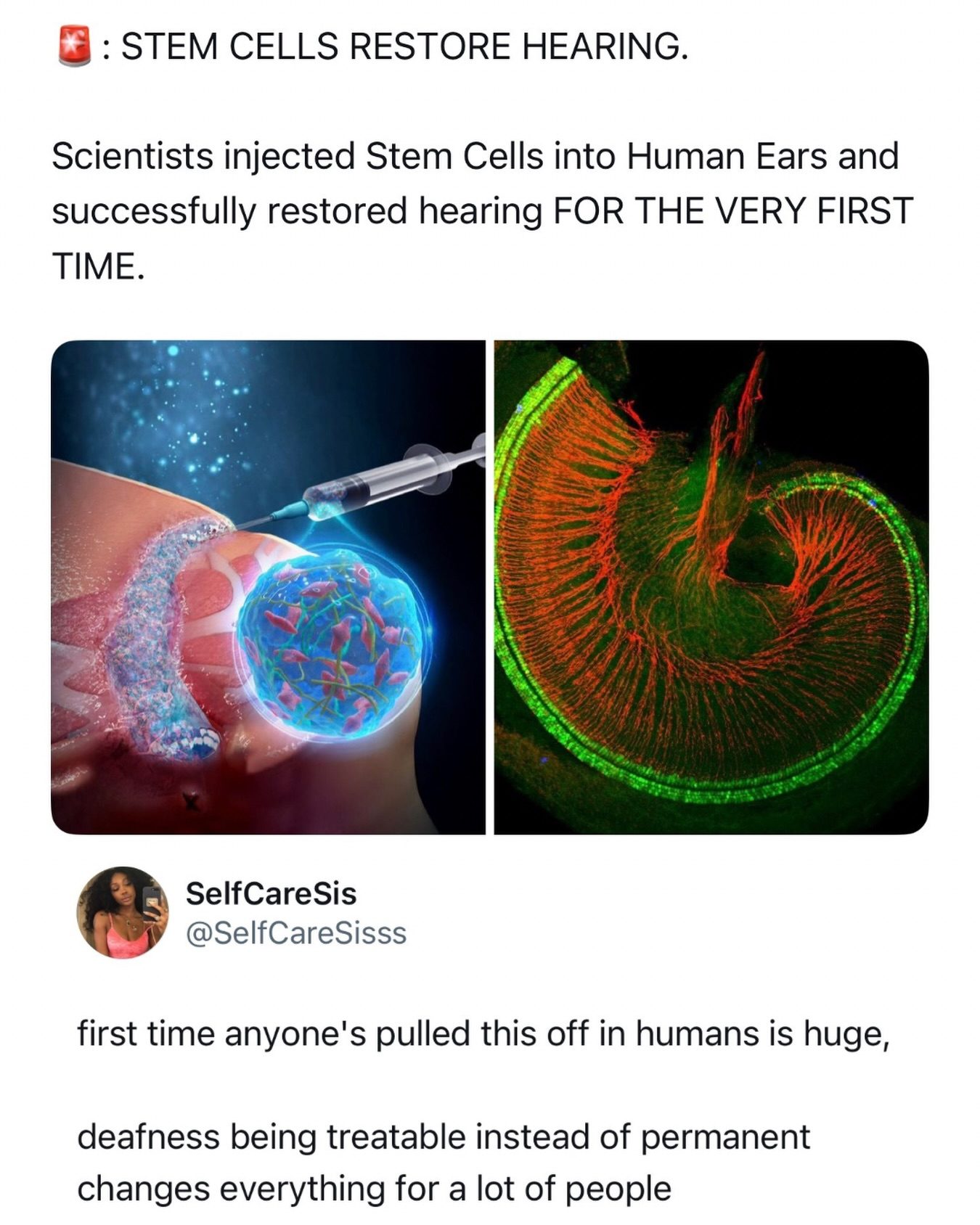
Stem Cell Hearing Restoration
The prospect of restoring hearing through stem cell therapy is revolutionizing the field of hearing medicine. For decades, hearing loss caused by damaged inner-ear cells was considered irreversible. However, recent advancements in regenerative medicine are challenging this notion. Scientists are now developing innovative therapies that aim to repair or replace the sensory hair cells inside the inner ear, which are crucial for converting sound into electrical signals for the brain.
Why This Matters
Sensorineural hearing loss affects millions of people worldwide, significantly impacting their quality of life. Traditional treatments, such as hearing aids and cochlear implants, have been helpful but do not address the underlying damage to the inner-ear cells. The development of stem cell and regenerative therapies offers a promising avenue for more comprehensive and transformative treatment options.
The Science Behind Stem Cell Hearing Restoration
Understanding Sensorineural Hearing Loss
Sensorineural hearing loss occurs when the tiny hair cells in the inner ear are damaged or destroyed. These hair cells are responsible for detecting sound vibrations and converting them into electrical signals that the brain interprets as sound. Once damaged, these cells do not regenerate naturally, leading to permanent hearing loss.
Stem Cell Therapy: A New Hope
Stem cell therapy involves using specialized cells that have the ability to develop into various cell types. In the context of hearing restoration, scientists are exploring how stem cells can be used to regenerate the damaged hair cells in the inner ear. The goal is to replace these cells with new, functional ones that can restore the ear's ability to detect sound.
Initial trials have shown promising results, with some patients experiencing improved hearing. The success of these trials suggests that stem cell therapy could become a viable treatment option for sensorineural hearing loss in the future.
Regenerative Medicine and Gene Therapy
Regenerative medicine encompasses a broader range of therapies aimed at repairing or replacing damaged tissues and organs. In addition to stem cell therapy, gene therapy is also being explored as a potential treatment for hearing loss. Gene therapy involves introducing genetic material into the body to correct or compensate for defective genes that cause hearing impairment.
Current Challenges and Future Directions
While the early results are encouraging, there are still significant challenges to overcome. The primary focus of current research is on improving the safety and effectiveness of these therapies. Researchers are also working to determine which types of hearing loss are most likely to benefit from stem cell and regenerative treatments.
To ensure the viability of these therapies, larger clinical trials are necessary. These trials will provide more comprehensive data on the safety and efficacy of the treatments, paving the way for their potential approval as standard medical procedures.
Practical Tips for Those Affected by Hearing Loss
Stay Informed
Keeping up-to-date with the latest research and developments in hearing restoration is crucial. Follow reputable sources and organizations that specialize in hearing health to stay informed about new treatments and clinical trials.
Consult with a Healthcare Professional
If you or someone you know is experiencing hearing loss, consult with a healthcare professional who specializes in ear, nose, and throat (ENT) conditions. They can provide personalized advice and guidance on the best treatment options available.
Participate in Clinical Trials
For those eligible, participating in clinical trials can be a way to access cutting-edge treatments and contribute to medical research. These trials are carefully monitored to ensure the safety and well-being of participants.
Important Takeaways
- Stem cell and regenerative therapies show promise in restoring hearing by repairing or replacing damaged inner-ear cells.
- Early human trials have demonstrated some success in improving hearing, but these treatments are still experimental.
- The next decade could see significant breakthroughs in hearing medicine, potentially transforming the lives of millions of people with sensorineural hearing loss.
- Gene therapy and regenerative medicine are also being explored as potential treatment options.
- Staying informed and consulting with healthcare professionals are crucial steps for those affected by hearing loss.
Conclusion
The potential of regenerative medicine to restore hearing is a groundbreaking development in the field of hearing health. Although there are still many challenges to overcome, the progress made so far is encouraging. As research continues, the hope is that these innovative therapies will eventually provide a more comprehensive and effective treatment for hearing loss, offering new opportunities for those living with this condition.
Watch the Reel
Questions readers ask
How does stem cell therapy aim to restore hearing loss?
Stem cell therapy targets the regeneration of damaged inner-ear cells, specifically the sensory hair cells, which are essential for converting sound into electrical signals. By repairing or replacing these cells, stem cell therapy can potentially restore hearing in cases where traditional treatments have not been successful.
What is the significance of regenerative ear cell research?
Regenerative ear cell research focuses on developing therapies that can repair or replace damaged inner-ear cells, offering a potential breakthrough for those suffering from sensorineural hearing loss. This research could lead to new treatments that go beyond current solutions like hearing aids and cochlear implants, which often do not address the underlying cell damage.
What are inner-ear stem cell therapies?
Inner-ear stem cell therapies involve using stem cells to regenerate or repair the delicate structures within the inner ear that are responsible for hearing. These therapies are designed to restore the functionality of damaged sensory hair cells, potentially providing a new avenue for treating hearing loss.
What progress has been made in stem cell hearing loss treatments?
Recent advancements in regenerative medicine have shown promising results in the development of stem cell therapies for hearing loss. Scientists are currently working on innovative approaches to repair or replace inner-ear cells, which could revolutionize the way hearing loss is treated, particularly for those with severe or irreversible damage.
Are there any ongoing regenerative medicine trials for hearing loss?
Yes, there are ongoing trials exploring the use of regenerative medicine to treat hearing loss. These trials involve using stem cells to restore or regenerate damaged inner-ear cells, with the goal of improving or restoring hearing in patients with sensorineural hearing loss.
What makes stem cell hearing regeneration a groundbreaking approach?
Stem cell hearing regeneration is considered groundbreaking because it addresses the root cause of hearing loss by targeting the damaged inner-ear cells. Unlike traditional treatments that amplify sound or bypass damaged areas, stem cell therapy aims to restore the natural hearing process, offering a more comprehensive solution to hearing loss.
Related deep dives
Similar reads based on topic and creator.



Recent articles
Fresh deep dives from the latest Reels we unpacked.




Comments
Be the first to comment.