Morning Stretch Routine
Starting the day with a morning stretch routine can significantly improve your mobility, flexibility, and overall well-being. This routine helps to wake up the body, loosen tight muscles, and prepare you for the day ahead. By incorporating a few key stretches, you can enhance your daily routine and enjoy a more comfortable and energized start to your day.
Why This Matters
Morning stiffness is a common issue that affects many people. Whether due to poor sleep posture, prolonged sitting, or general inactivity, waking up feeling stiff can hinder your productivity and overall mood. A well-structured morning stretch routine can alleviate this stiffness, improve circulation, and promote better posture. Incorporating exercises that target different parts of the body, such as the neck, shoulders, back, and spine, ensures a comprehensive warm-up that benefits the entire body.
Main Discussion
A morning stretch routine can be as simple or as complex as you like, depending on your fitness level and the time you have available. A basic routine should include stretches for the neck, shoulders, chest, and back.
Neck Stretches
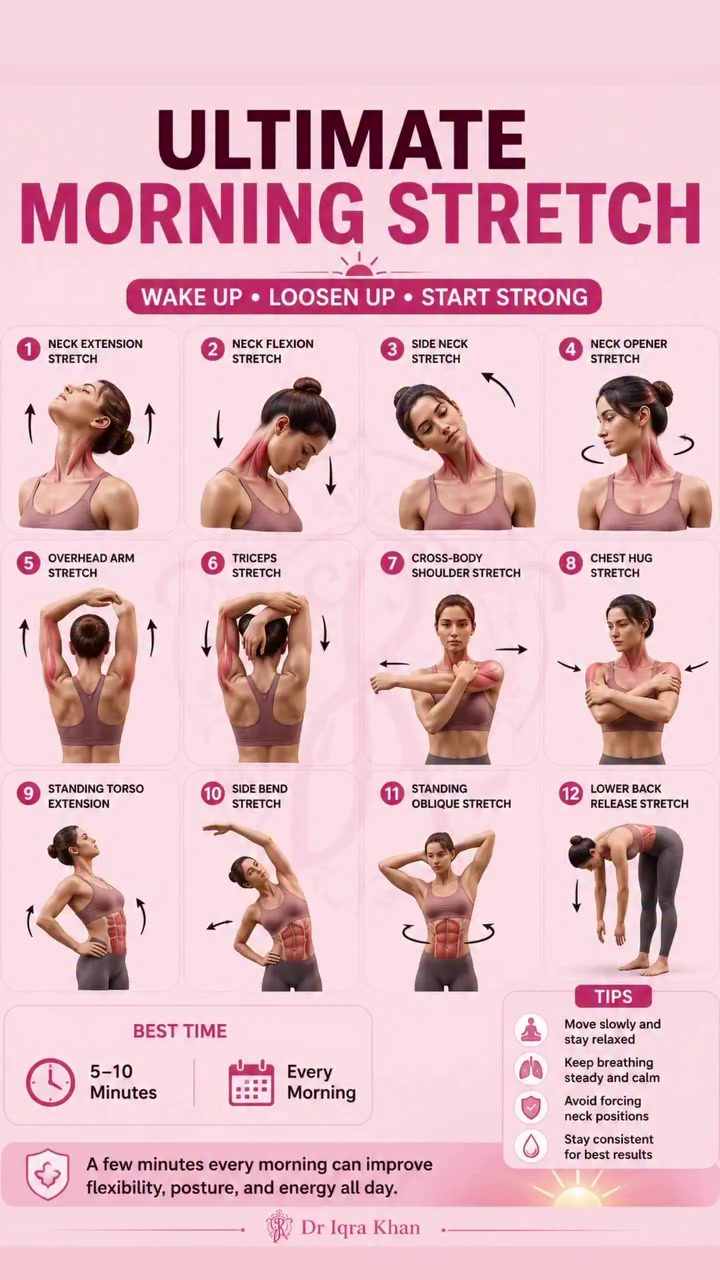
The neck is a critical area to focus on, as it supports the weight of the head and is often tense due to stress and poor posture. Begin with a neck extension, where you gently tilt your head back and look up towards the ceiling. Hold this position for a few seconds, then release. Next, try a neck flexion stretch, where you tuck your chin down towards your chest and hold. Side neck stretches involve tilting your head to one side, bringing your ear towards your shoulder, and holding. The neck opener stretch is a bit different; it focuses on tilting your head to the side while rolling it back and forth, as if you were making a small circular motion.
These stretches help to relieve tension and improve neck mobility, which is essential for daily activities and reducing the risk of injury. Remember to move slowly and avoid forcing any position that causes pain.
Arm and Shoulder Stretches
Next, focus on your arms and shoulders. Overhead arm stretches involve raising your arms above your head and interlacing your fingers, then gently pulling your arms back and away from your head. To stretch the triceps, reach one arm overhead and bend your elbow so that your hand is behind your head. Use your other hand to gently press your elbow further back.
A cross-body shoulder stretch involves bringing one arm across your chest and using the opposite arm to deepen the stretch. To perform a chest hug stretch, wrap your arms around your chest and gently hug yourself, feeling the stretch in your chest and upper back.
These arm and shoulder stretches are beneficial for anyone who spends a lot of time sitting at a desk or using a computer. They help to counteract the forward-rolled shoulders and rounded spine that often result from prolonged sitting.
Chest and Spine Stretches
A standing torso extension involves standing tall and gently arching your back, looking up towards the ceiling. This stretch helps to open up the chest and release tension in the upper back. To perform a side bend stretch, reach one arm overhead and bend your torso to the opposite side, feeling the stretch along your side and in your obliques.
Gentle spinal movements like torso twists can help to release tension in the lower back and promote better spinal mobility. To perform a standing oblique stretch, place your hands on your hips and gently twist your torso to one side, then the other. For lower-back release stretches, bend forward at the hips and gently sway your torso side to side, feeling the stretch in your lower back and hips.
Practical Tips
Here are some practical tips to get the most out of your morning stretch routine:
- Move Slowly: Always move into and out of stretches gently and slowly. Avoid jerking or bouncing movements, as these can cause injury.
- Stay Relaxed: Tension in your muscles can prevent you from achieving a deeper stretch. Focus on relaxing your body and breathing steadily.
- Listen to Your Body: Never push yourself into a position that causes pain. If a stretch feels uncomfortable, ease out of it and try a gentler variation.
- Consistency is Key: Over time, consistency in your stretching routine will yield the best results. Set a specific time each morning, whether it's 5, 10 or 15 minutes, and stick to it. This will ensure you see improvements in mobility and flexibility.
Important Takeaways
A well-rounded morning stretch routine should target multiple areas of the body, including the neck, shoulders, chest, and back. Each stretch contributes to overall mobility and flexibility, ensuring that you're prepared for the day ahead. Incorporating these stretches into your morning routine can help alleviate stiffness and promote better posture and circulation.
When performing stretches, remember to move slowly, stay relaxed, and breathe steadily. Consistency is crucial for seeing improvements, so make sure to dedicate a few minutes each morning to this practice.
Conclusion
Incorporating a morning stretch routine into your daily schedule can have a profound impact on your physical well-being. By targeting key areas such as the neck, shoulders, chest, and back, you can alleviate stiffness, improve mobility, and prepare your body for the day. Remember to move slowly, stay relaxed, and prioritize consistency. Start your day with movement, and you'll be surprised by how much it can enhance your overall health and productivity.
Watch the Reel
Questions readers ask
What are some benefits of Dr. Iqra Khan's morning stretch routine?
Dr. Iqra Khan's morning stretch routine offers several benefits, including improved mobility, flexibility, and posture. It can help reduce morning stiffness and prepares your body for the day, promoting better circulation, and enhancing overall well-being.
Can Dr. Iqra Khan's morning stretch routine help with neck and shoulder pain?
Yes, this routine includes specific stretches that target the neck and shoulders to help alleviate tension and pain. Consistent practice can improve flexibility and reduce stiffness in these areas.
How long does it take to see improvements from a daily stretch routine?
The timeline for seeing improvements can vary, but many people begin to notice a difference in their mobility and flexibility within a few weeks. Consistency is key, so aim to practice the routine daily for optimal results.
What is the best time to perform a morning stretch routine?
Ideally, you should perform this routine after waking up. This helps to wake up the body and loosen tight muscles. Make it a part of your morning routine, before breakfast, to enjoy a more comfortable and energized start to the day.
Are these stretches suitable for all ages and fitness levels?
Yes, Dr. Iqra Khan's morning stretch routine is designed to be gentle and accessible for all ages and fitness levels. However, if you have any specific health concerns, it's always a good idea to consult with a healthcare professional before starting any new routine.
Recent articles
Fresh deep dives from the latest Reels we unpacked.




Comments
Be the first to comment.