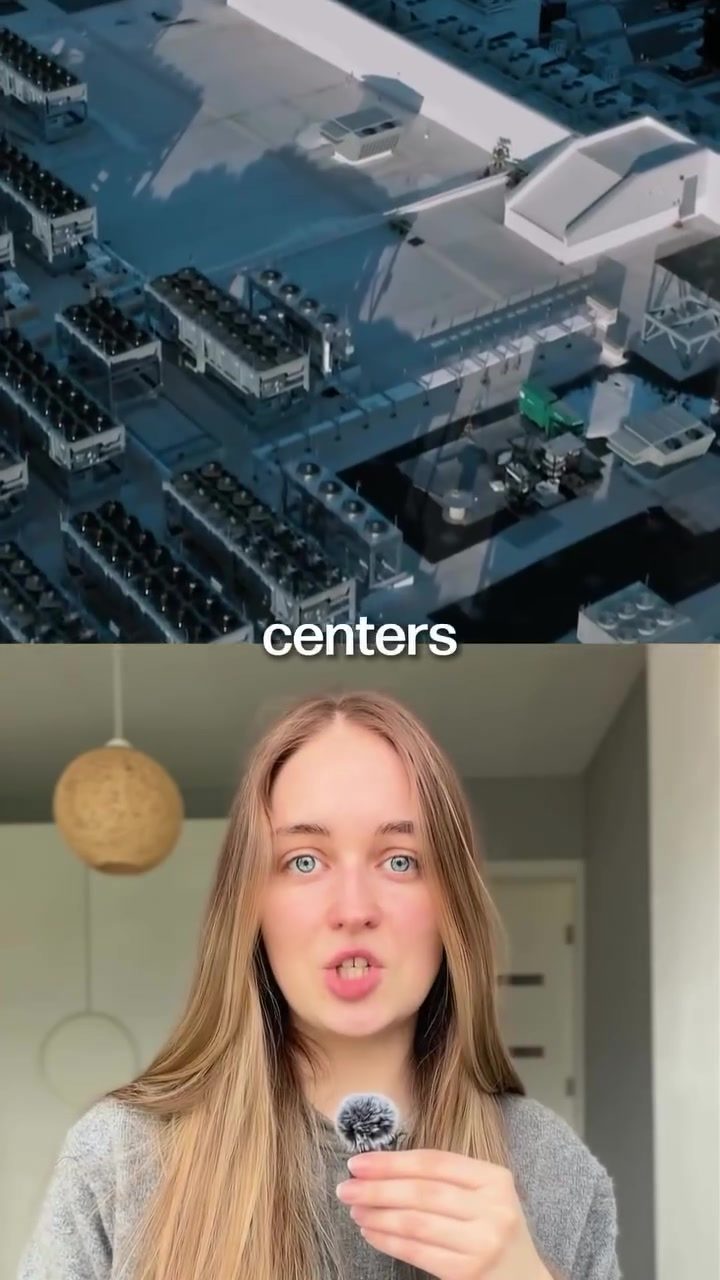
Orbital Data Centers: The Future of AI Computing in Space
Data centers are the backbone of the modern digital world, processing and storing vast amounts of information. However, as artificial intelligence (AI) continues to advance, so does the demand for data processing power. This increasing demand presents a significant challenge: traditional data centers require enormous amounts of energy—both to run and to cool their systems. By 2030, electricity use for data centers is expected to double, and by 2050, it could represent a tenth of all electricity consumed on Earth.
Why This Matters
The energy and land constraints of traditional data centers are becoming increasingly problematical. As AI continues to evolve, the amount of data being processed is growing exponentially. This growth is pushing data centers to their limits, both in terms of energy consumption and physical space. The solution to this problem may lie in a seemingly futuristic concept: orbital data centers.
The Rise of Orbital Data Centers
One of the most promising initiatives in this area is the launch of a satellite equipped with an NVIDIA H100 chip by StarCloud. This prototype, known as StarCloud 1, is a step toward a new era of computing that leverages the vast resources of space. The satellite carries the most powerful processor ever deployed in space, marking a significant milestone in orbital computing.
The vision for the future involves tens of thousands of satellites, each equipped with powerful AI chips. These satellites would form a network capable of performing complex, large-scale computing tasks in space. This concept, known as orbital computing, could revolutionize the way we approach data processing and storage.
The Benefits of Orbital Computing
The primary advantage of orbital data centers is their access to almost unlimited solar energy. In space, there are no land constraints or permitting battles, and the solar arrays powering the satellites can stretch as much as 4 square kilometers. This abundant energy source could significantly reduce the operational costs and environmental impact of data centers.
Moreover, the lack of atmospheric interference allows for more efficient cooling of the systems. This means that the heat generated by powerful processors can be more readily dissipated, preventing the overheating issues that plague Earth-based data centers.
Orbital Compute and Its Applications
Orbital compute relies on a network of satellites working together to process data. The process begins with a prompt sent from Earth through laser links. The request is then processed by AI chips inside a satellite bus, which is powered by massive solar arrays. The results are sent back to Earth in milliseconds, making this method incredibly efficient.
This technology has the potential to be applied in various fields, including scientific research, climate modeling, and real-time data processing for industries such as finance and healthcare. The ability to process large datasets in space could lead to breakthroughs in areas that require rapid and accurate data analysis.
Practical Tips for Implementing Orbital Compute
While the concept of orbital data centers is exciting, practical implementation will require overcoming several challenges. Here are some key considerations:
1. Technological Challenges
Building and deploying satellites with advanced AI chips requires cutting-edge technology. Ensuring the reliability and longevity of these systems in the harsh conditions of space is a significant challenge. Companies will need to invest in robust engineering and testing to achieve this.
2. Energy Management
While solar energy is abundant in space, efficiently harnessing and managing it is crucial. Advanced solar panels and energy storage solutions will be necessary to power the orbital data centers effectively.
3. Data Transmission
The speed and reliability of data transmission between Earth and space are critical. Investments in laser communication technology will be essential to ensure that data can be sent and received quickly and efficiently.
Important Takeaways
The future of AI computing may well be in orbit. Orbital data centers present a solution to the energy and land constraints of traditional data centers. By harnessing the power of space, companies can achieve more sustainable and efficient data processing.
The launch of StarCloud 1 marks an important step in this direction, demonstrating the feasibility of using AI chips in space. The future of orbital compute holds the promise of revolutionizing data processing, enabling breakthroughs in various fields, and addressing the growing energy and space challenges faced by traditional data centers.
Conclusion
The concept of orbital data centers, while initially sounding like science fiction, is a response to very real and pressing issues. As the demand for data processing continues to grow, the need for innovative solutions becomes increasingly urgent. Orbital computing offers a promising path forward, leveraging the unique advantages of space to meet the challenges of the digital age. With ongoing advancements in technology, the vision of a network of AI-powered satellites working together in orbit may soon become a reality.
Watch the Reel
Questions readers ask
What is the primary goal of StarCloud's space-based AI data centers?
StarCloud aims to address the energy and land constraints of traditional data centers by moving computing tasks to orbit. By using satellites equipped with advanced AI chips, StarCloud can harness solar power for data processing, reducing the need for terrestrial energy resources.
How do space-based AI data centers differ from traditional data centers?
Space-based AI data centers utilize satellites in orbit to perform data processing tasks. They leverage solar power for energy, unlike traditional data centers that rely on terrestrial power sources and require extensive land use for cooling and infrastructure.
What are the potential benefits of using AI chips in space for data processing?
By placing AI chips in orbit, StarCloud can perform complex computing tasks closer to data sources, such as satellites and space probes, reducing latency and improving efficiency. Additionally, harnessing solar energy in space can lead to substantial energy savings and reduced environmental impact.
Why are traditional data centers facing increasing challenges?
Traditional data centers are facing challenges due to the exponential growth in data processing demands, particularly from AI advancements. This growth requires more energy for both computing and cooling, leading to concerns about energy consumption and land use.
How does StarCloud's initiative contribute to sustainable computing?
StarCloud's use of solar-powered satellites for data processing can significantly reduce the carbon footprint associated with traditional data centers. By leveraging abundant solar resources in space, StarCloud aims to minimize energy consumption and environmental impact.
What types of tasks can be performed by StarCloud's orbital data centers?
StarCloud's orbital data centers are designed to handle complex computing tasks, including those required for AI and machine learning. By processing data in orbit, these centers can support a wide range of applications, from scientific research to commercial services.
What are the advantages of processing data in orbit versus on Earth?
Processing data in orbit offers several advantages, including reduced latency, improved data security, and access to abundant solar energy. By moving data processing closer to space-based data sources, orbital data centers can provide faster and more efficient computing solutions.
Related deep dives
Similar reads based on topic and creator.



Recent articles
Fresh deep dives from the latest Reels we unpacked.



Comments
Be the first to comment.