AI-Powered Simulations and Their Impact on Business
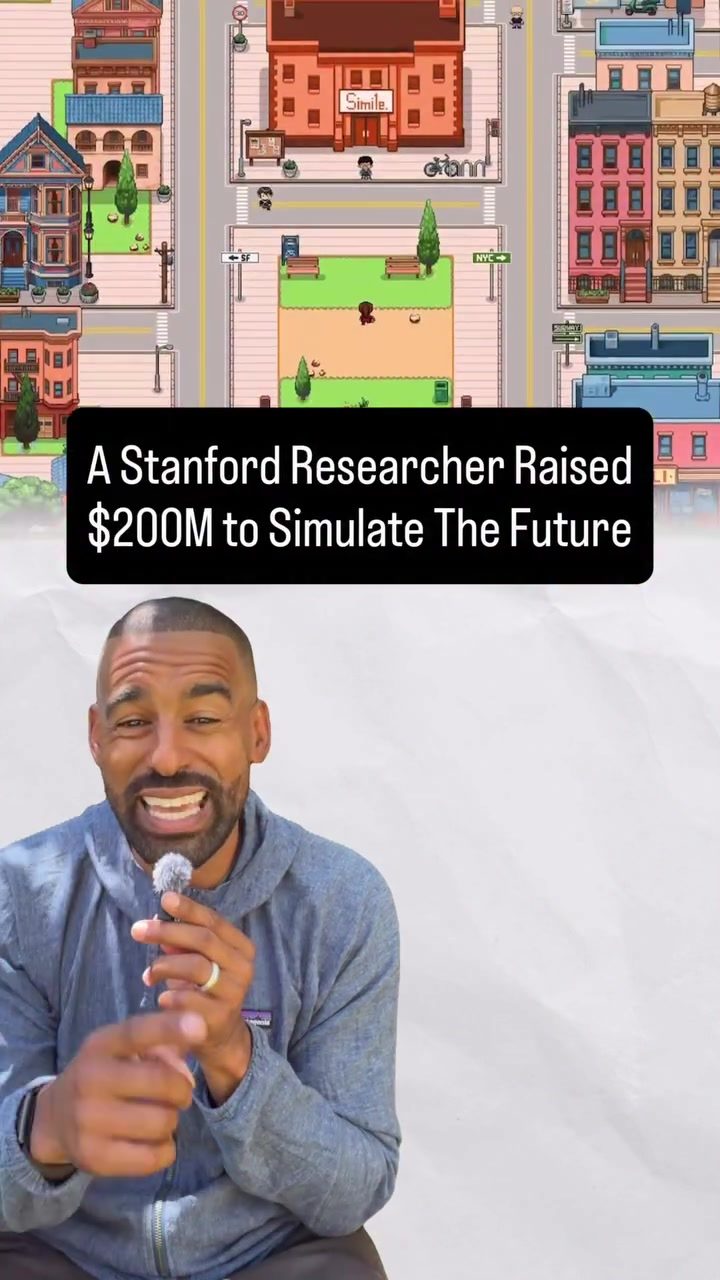
Imagine a world where every individual is an AI-powered agent, capable of waking up, going to work, building relationships, and making decisions independently. This is not a distant futuristic dream but a reality that has already been demonstrated by a Stanford researcher, Joon Sung Park. Park created a simulation where 25 AI agents interacted with each other, forming relationships, planning events, and even organizing a Valentine's Day party. None of these interactions were scripted, showcasing the potential of AI to mimic human behavior autonomously.
Context: The Evolution of AI and Simulations
The implications of this technology extend far beyond academic fascination. By turning this research into a company, Simsile has raised $200 million at a $2 billion valuation. This significant investment highlights the growing interest in AI-driven simulations and their potential to revolutionize market research and consumer insights. Instead of relying on traditional focus groups and surveys, companies can now use AI twins of real consumers to gather insights quickly and efficiently.
The Power of AI Twins
What Are AI Twins?
AI twins, as developed by Simsile, are digital stand-ins that mimic the behavior, responses, and decision-making processes of real humans. These AI twins can be surveyed in minutes, providing companies with rapid and scalable insights that would traditionally take months to gather.
Applications in Various Industries
The applications of AI twins are vast and varied. For instance, CVS, Deloitte, and Wealthfront are already leveraging this technology to understand consumer behavior better. In the pharmaceutical industry, companies like CVS use AI twins to predict how patients will respond to new drugs, accelerating the drug development process significantly.
The Future of AI and Human Behavior Simulation
Simulating Global Behavior
Simsile has an ambitious mission: to simulate all 8 billion people on Earth. While this goal is both audacious and concerning, it underscores the potential of AI in understanding and predicting human behavior on a global scale. The company's rapid growth, from a $100 million valuation five months ago to a $2 billion valuation now, indicates a strong belief in the viability of this technology.
The Shift from Content Creation to Behavior Simulation
The tech world is moving from AI that creates content to AI that simulates human behavior. Companies that possess verified human behavioral data will have a significant advantage. Authentic human knowledge remains the scarcest asset in AI, and Simsile's $200 million investment bet underscores the belief that simulations can replace traditional data collection methods.
Practical Tips for Leveraging AI Simulations
Integrating AI Twins into Market Research
-
Identify Key Areas: Determine which aspects of your market research would benefit most from AI simulations. Typically, areas with large datasets and complex human interactions are ideal candidates.
-
Collaborate with AI Experts: Partner with companies like Simsile that have expertise in creating and deploying AI twins. Their experience can help you navigate the technical complexities and ensure accurate simulations.
-
Iterative Testing: Use AI twins to conduct iterative tests and gather insights quickly. This approach allows for faster adjustments and more efficient use of resources.
-
Cross-Industry Applications: Consider how AI twins can be applied to different areas of your business, from product development to customer service. The versatility of this technology makes it a valuable tool across various departments.
Important Takeaways
Through the lens of AI simulations, several key points emerge:
-
Speed and Efficiency: AI twins offer a faster and more efficient way to gather consumer insights compared to traditional methods.
-
Scalability: The ability to simulate millions of interactions in minutes makes AI twins a scalable solution for large-scale market research.
-
Versatility: The applications of AI twins span multiple industries, from retail to pharmaceuticals, demonstrating their widespread potential.
-
Industry Shift: The focus is moving from AI-generated content to AI-driven simulations, highlighting a new era in technology and business.
Conclusion
The world of AI is rapidly evolving, and simulations like those developed by Simsile are at the forefront of this revolution. By leveraging AI twins, companies can gain deep insights into consumer behavior, streamline their market research processes, and stay ahead in an increasingly competitive landscape. As we move forward, the integration of AI simulations will undoubtedly shape the future of business and technology, offering unprecedented opportunities for growth and innovation.
Watch the Reel
Questions readers ask
What is the primary goal of Simsile's AI-powered simulations?
Simsile's AI-powered simulations aim to replicate human behavior and decision-making processes. By creating AI agents that interact autonomously, the technology provides businesses with valuable insights into consumer behavior and market trends.
How does Simsile's technology differ from traditional market research methods?
Simsile's technology offers a more dynamic and autonomous approach to market research. Unlike traditional methods, which often rely on surveys and focus groups, Simsile's AI simulations can predict consumer responses and provide real-time insights.
What are some of the industries already utilizing Simsile's AI simulations?
Simsile's technology is already being applied in various sectors, including healthcare, where it can predict patient behaviors and optimize care; finance, where it can model market reactions and assess risks; and retail, where it can forecast consumer purchasing patterns.
Who is the founder of Simsile and what is their background?
Simsile was founded by Joon Sung Park, a researcher from Stanford. Park's work involves creating AI agents that can interact autonomously, demonstrating the potential of AI to understand and predict human behavior autonomously.
Can you describe an example of Simsile's AI simulations in action?
One notable example involves 25 AI agents that were able to interact with each other, form relationships, and plan events entirely on their own. These agents even organized a Valentine's Day party, showcasing the autonomous decision-making capabilities of Simsile's technology.
What are the potential benefits of using AI for market insights?
AI can provide faster and more accurate market insights by simulating various scenarios and consumer behaviors. This allows businesses to make informed decisions quickly, adapt to changing market conditions, and stay ahead of competitors.
How might AI simulations impact the future of business strategies?
AI simulations can revolutionize business strategies by offering a detailed understanding of consumer behavior and market dynamics. This can lead to more effective marketing, better resource allocation, and improved product development, ultimately enhancing a company's competitive edge.
Related deep dives
Similar reads based on topic and creator.
Recent articles
Fresh deep dives from the latest Reels we unpacked.
Comments
Be the first to comment.