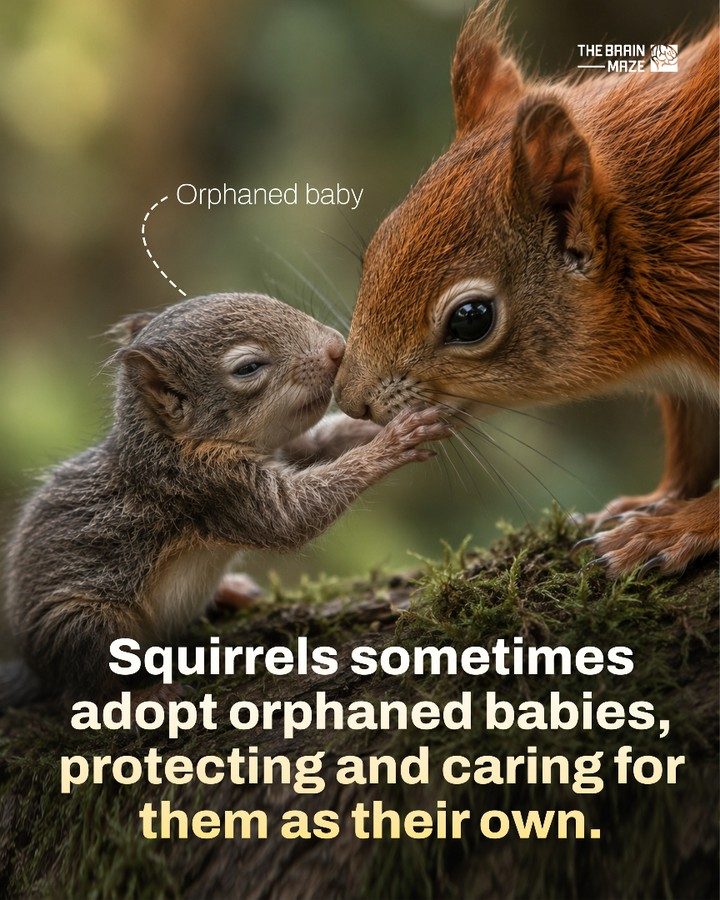
Squirrel Adoption: A Remarkable Display of Cooperation in the Wild
Squirrels, known for their bushy tails and acrobatic antics, are also surprisingly compassionate creatures. When a baby squirrel loses its mother, nearby females may step in to adopt the orphan and raise it as their own. This behavior, though rare, is a testament to the cooperative nature that exists even in the wild. The act of adoption involves providing warmth, protection, grooming, and sometimes even nursing, all of which are crucial for the survival of the young squirrel.
The Context of Squirrel Adoption
The phenomenon of squirrel adoption is a fascinating aspect of animal behavior. Squirrels are typically solitary creatures, but this behavior highlights their ability to form social bonds and exhibit altruistic care. Understanding this behavior not only enriches our knowledge of squirrel social structures but also sheds light on the broader spectrum of cooperative behaviors in the animal kingdom.
The Mechanics of Adoption in Squirrels
Social Structure and Cooperation
Squirrels live in densely populated areas, often sharing territories with other squirrels. This proximity allows for the possibility of adoption. Female squirrels, known as does, are particularly attuned to the needs of their own offspring. When a baby squirrel (kit) loses its mother, nearby does may take notice and step in to provide care. This behavior is likely driven by a combination of biological and social factors.
Providing Essential Care
When a squirrel adopts an orphaned kit, it provides several essential forms of care:
- Warmth: The adopter provides physical contact, which helps the kit regulate its body temperature and feel secure.
- Protection: The adoptive mother protects the kit from predators and other environmental threats, ensuring its safety.
- Grooming: Regular grooming helps maintain the kit's hygiene and strengthens the social bond between the adopter and the kit.
- Nursing: In some cases, the adoptive mother may even nurse the orphaned kit, providing it with the necessary nutrients for growth and development.
Why This Behavior Matters
Survival and Evolution
Adoption in squirrels is a vital mechanism for ensuring the survival of vulnerable kittens. By adopting, squirrels increase the chances of an orphaned kit's survival, which in turn can contribute to the overall population stability. This behavior is a prime example of how cooperation and altruism can evolve in nature, even in species that are not typically known for their social traits.
Ecological Implications
The behavior of squirrel adoption can have broader ecological implications. It affects the dynamics of squirrel populations in an area, influencing factors such as population density and genetic diversity. Understanding this behavior can also help in conservation efforts, as it provides insights into the reproductive strategies and social structures of squirrel communities.
Practical Tips for Observing Squirrel Adoption
Identifying Adoption Behavior
While observing squirrel adoption in the wild can be challenging, there are some signs to look out for:
- Close Proximity: Look for a larger squirrel, typically a female, spending a lot of time in close proximity to a smaller, younger squirrel.
- Grooming and Care: Watch for instances of grooming and protective behaviors, such as the adult squirrel shielding the kit from potential threats.
- Nesting: Observe if the squirrels share a nest and if the larger squirrel is seen providing warmth and protection to the kit.
Ethical Considerations
When observing squirrel adoption, it's important to keep ethical considerations in mind. Avoid disturbing the squirrels or interfering with their natural behaviors. Use binoculars or a camera with a zoom lens to observe from a safe distance. This ensures the squirrels' well-being and maintains the integrity of their natural environment.
Important Takeaways
- Squirrels exhibit surprising acts of care and compassion, including adopting orphaned kittens.
- Adoption behavior involves providing warmth, protection, grooming, and sometimes nursing to the orphaned kit.
- This rare behavior shows the cooperative nature of squirrels and the potential for altruism in the wild.
- Understanding this behavior has implications for both ecology and conservation efforts.
Conclusion
Squirrel adoption is a remarkable example of how nature's intricacies can reveal fascinating behaviors that challenge our perceptions of animal social structures. By understanding the mechanisms and implications of this behavior, we gain a deeper appreciation for the complexity and resilience of squirrel communities. Whether you're a wildlife enthusiast or simply curious about the natural world, observing squirrel adoption offers a unique window into the extraordinary bonds that can form in the wild.
Watch the Reel
Questions readers ask
How do squirrels recognize when a baby squirrel needs care?
Squirrels rely on vocalizations and behaviors from an orphaned baby squirrel to determine if it needs care. The orphaned squirrel will often make distress calls which can attract nearby females.
What are some of the key responsibilities of a foster squirrel mother?
A foster squirrel mother provides warmth, protection, grooming, and sometimes even nursing to the orphaned baby. These actions are vital for the squirrel's survival and development.
Is squirrel adoption common among all squirrel species?
Squirrel adoption is not a common behavior and is typically observed in certain species, such as gray squirrels and eastern fox squirrels, but it is not universal among all squirrel species.
What are some of the key survival strategies for orphaned squirrels?
Orphaned squirrels depend on the foster care of other squirrels to ensure their survival. This includes regular grooming, protection, and warmth as well as learning essential survival skills from their foster mother.
What happens if an orphaned squirrel is not adopted by another squirrel?
If an orphaned squirrel is not adopted, its chances of survival are significantly reduced. Without the care of a foster mother, the squirrel may face challenges such as lack of protection, nutrition, and socialization, which are crucial for its development.
How do squirrels benefit from adopting orphaned babies?
While the primary benefit is to the orphan, the adoptive squirrel mother may also gain social bonds and a sense of cooperation. This behavior fosters a unique social structure within the squirrel community.
Related deep dives
Similar reads based on topic and creator.




Recent articles
Fresh deep dives from the latest Reels we unpacked.




Comments
Be the first to comment.