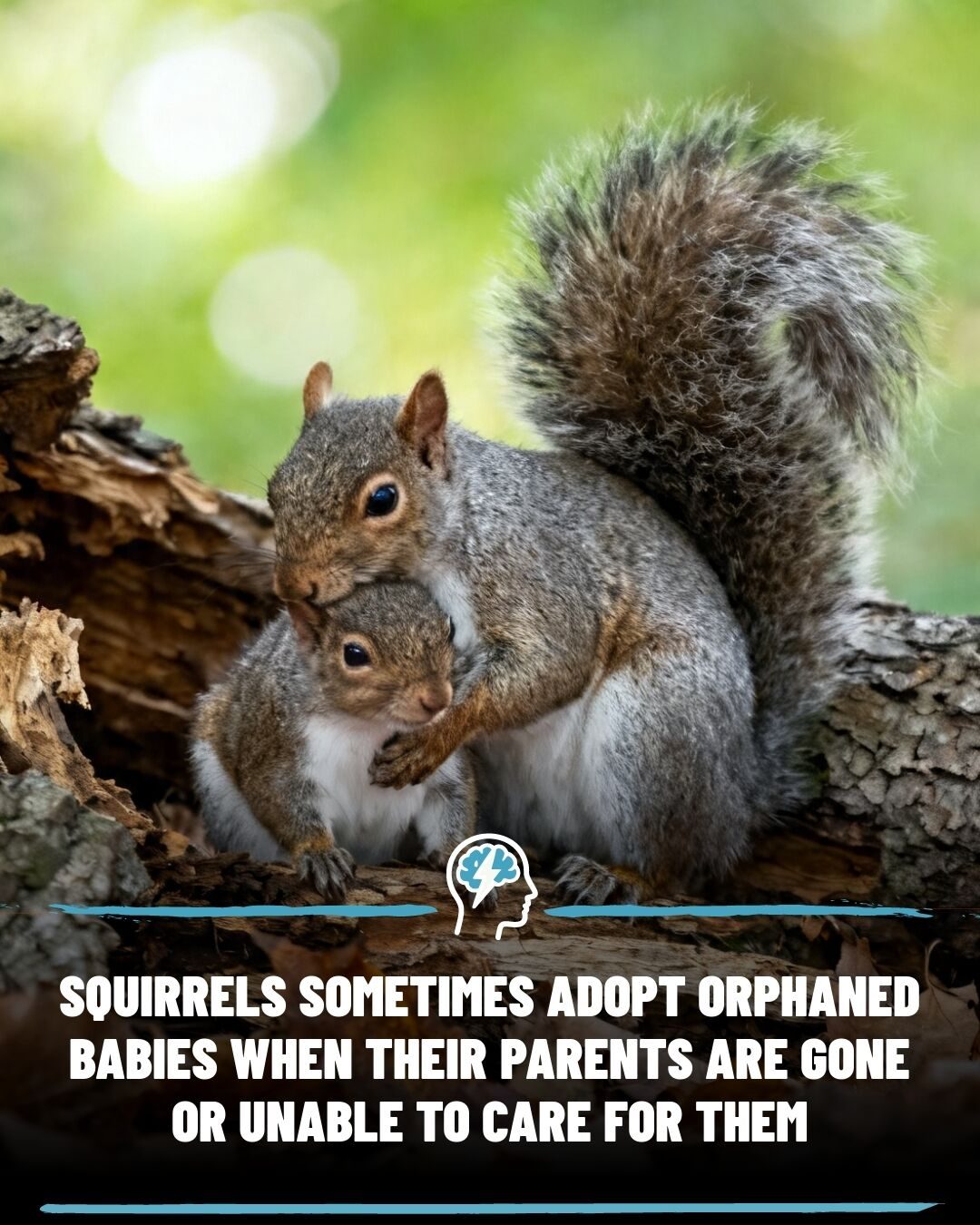
Squirrel Adoption: A Fascinating Event in the Natural World
Squirrels, particularly red squirrels, exhibit a remarkable behavior: adoption. When a mother squirrel disappears or is unable to care for her young, other female red squirrels can step in to raise the orphaned pups. This behavior, while intriguing and unexpected, is governed by complex genetic and evolutionary mechanisms.
Why This Matters
Squirrel adoption is an interesting subject for a few reasons. It is an example of behavior in the natural world that can fly in the face of our assumptions. Seeing a typically solitary animal exhibiting nurturing behavior toward non-offspring is fascinating. Moreover, understanding the underlying mechanisms of this behavior provides insight into evolutionary biology and the theory of inclusive fitness. This is a phenomenon that touches on family bonds, survival strategies, and the intricate dance of genetics.
The Complexity of Squirrel Adoption
The Phenomenon
Adoption in red squirrels is not a common occurrence. It requires several specific conditions to be met. It is a rare event, but when it does happen, it follows a strict pattern. The surrogate mother is nearly always a close relative of the orphaned pup. This could mean a sister or niece or nephew. This close blood relation is key to the behavior.
The Mechanism
The fascinating part is how the squirrels recognize these relationships. It comes down to vocalizations. Squirrels, like many animals, have distinctive calls and chattering patterns. If a female squirrel stops hearing a relative's vocalizations for several days, she may investigate and discover orphaned pups that share her genes. This ability to recognize kin through sound is an essential part of the adoption process.
Inclusive Fitness
Scientists explain this behavior through a concept called inclusive fitness. Inclusive fitness suggests that an organism's fitness is not solely determined by its own reproductive success, but also by the success of its relatives. By helping close relatives survive and reproduce, the adopting squirrel indirectly passes on shared genes, even if those aren't her own offspring. This follows Hamilton's Rule, a foundational principle in evolutionary biology. It suggests that altruistic behavior can evolve when the genetic benefits outweigh the costs.
Territoriality and Behavior Shift
Red squirrels are typically asocial and territorial. They rarely interact with other squirrels outside of mating. Yet, when orphaned kin are involved, they can shift their behavior entirely. This shift is a testament to the power of genetic ties and the instinct for survival. It shows that even in typically solitary animals, there is a capacity for nurturing and communal behavior under the right circumstances.
Practical Tips for Observing Squirrel Adoption
While squirrel adoption is a rare and specific behavior, there are a few tips for those interested in observing this fascinating phenomenon.
Know the Season
Squirrel adoption is most likely to occur during the breeding season, typically in late winter to early spring. This is when squirrels are most active in their reproductive behavior, and when orphaned pups are most likely to be found.
Look for Relatives
Since adoption only occurs between close relatives, keep an eye out for squirrels that seem to be interacting in a familial way. Look for squirrels that are chattering and communicating in a way that seems to be about more than just territorial disputes.
Be Patient
Squirrel adoption is a rare event. It may take a lot of observation and patience to witness this behavior.
Observe from a Distance
Squirrels are easily disturbed by human presence. The best way to observe them is from a distance, using binoculars or a camera with a good zoom lens.
Important Takeaways
- Squirrel adoption is a rare but fascinating behavior in the natural world.
- It is governed by complex genetic and evolutionary mechanisms, including inclusive fitness and Hamilton's Rule.
- The behavior is strictly governed by blood relations, vocalizations, and the costs and benefits of caring for orphaned pups.
- The behavior challenges our assumptions about animal behavior and provides a unique insight into the world of evolutionary biology.
Nature's Intricacy
This behavior, seen through the lens of inclusive fitness and Hamilton's Rule, reveals a layer of complexity in animal behavior that challenges our assumptions. What looks like compassion may actually be a sophisticated genetic strategy. This makes nature's intricacies all the more captivating.
Watch the Reel
Questions readers ask
What triggers red squirrels to adopt orphaned pups?
Red squirrels typically adopt orphaned pups when the biological mother is absent or unable to care for her young. This behavior is often observed when the mother squirrel has died or when she is too sick or injured to provide proper care. In such cases, other female red squirrels, usually close relatives, will step in to nurture the orphaned pups.
How common is adoption behavior in red squirrels?
Adoption behavior in red squirrels is not extremely common, but it occurs more frequently than in many other solitary animal species. The exact rates of adoption vary based on environmental factors and population dynamics, but it is a significant enough phenomenon to be studied by researchers.
What role do family dynamics play in red squirrel adoption?
Family dynamics play a crucial role in red squirrel adoption. Close female relatives, such as aunts or grandmothers, are more likely to adopt orphaned pups. This behavior is thought to be driven by genetic relatedness, as caring for kin can help propagate shared genes.
How do red squirrels benefit from adopting orphaned pups?
Red squirrels benefit from adopting orphaned pups in several ways. Firstly, it helps maintain the overall population by ensuring the survival of young squirrels. Additionally, adopting relatives can strengthen social bonds within the community, which may provide long-term benefits. Lastly, it allows the adoptive squirrel to practice parenting skills that can be useful in future litters.
What are the survival rates of adopted red squirrel pups?
The survival rates of adopted red squirrel pups can be relatively high, especially when the adoptive mother is a close relative. Studies have shown that adopted pups often fare as well as non-adopted pups, given that the adoptive mother is healthy and capable of providing adequate care.
How do red squirrels identify and select orphaned pups for adoption?
Red squirrels typically identify orphaned pups through vocalizations and scent cues. Orphaned pups may emit distress calls, and their scent can indicate their need for care. Female squirrels, particularly those with recent maternal experience, are more likely to respond to these cues and take in the orphaned young.
Related deep dives
Similar reads based on topic and creator.




Recent articles
Fresh deep dives from the latest Reels we unpacked.




Comments
Be the first to comment.