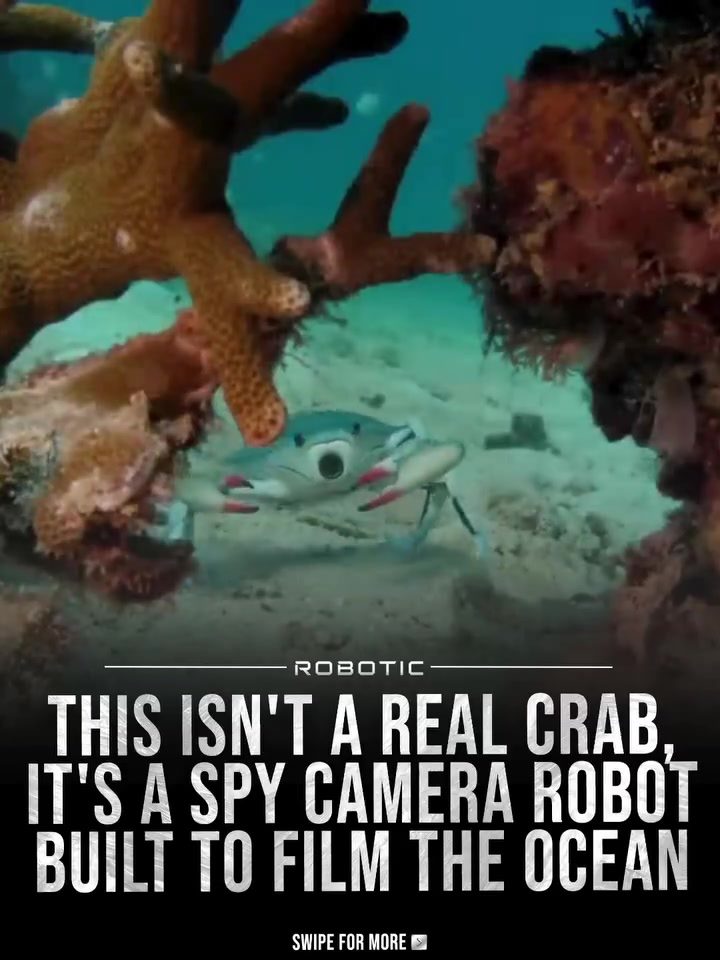
Spy Camera Robots: Unveiling the Ocean's Secrets
Spy camera robots, designed to mimic marine creatures, are revolutionizing underwater research. These innovative devices allow scientists to observe marine life without disturbing their natural behavior, offering unprecedented insights into the ocean's ecosystems.
Why This Matters
Understanding marine life in its natural habitat is crucial for conservation efforts and ecological studies. Traditional methods, such as scuba diving or using conventional cameras, often alter the behavior of marine creatures. Spy camera robots, however, provide a non-invasive way to capture high-quality footage of marine life, revealing behaviors that were previously difficult to observe.
The Technology Behind Spy Camera Robots
Biomimetic Design
Biomimetic design is at the core of spy camera robots. These robots are engineered to closely resemble real marine creatures, making them virtually indistinguishable from their natural counterparts. The robotic spy crab featured in the caption is a prime example. Built by John Downer Productions, this crab-like robot is designed to approach marine life without arousing suspicion.
Filming Marine Life
The primary function of a spy camera robot is to capture high-quality footage of marine life. These robots are equipped with advanced cameras and recording capabilities, allowing them to film in various underwater conditions. The robotic spy crab, for instance, was used to film the peacock mantis shrimp, a creature known for its ultra-fast strikes and powerful cavitation bubbles.
Minimal Disturbance
One of the key advantages of spy camera robots is their ability to film marine life with minimal disturbance. Unlike divers or conventional underwater cameras, these robots do not alter the natural behavior of marine creatures. This allows scientists to study wildlife in their natural habitats, providing more accurate and comprehensive data.
Advanced Capabilities
Spy camera robots are equipped with state-of-the-art technology, including high-definition cameras, waterproof housing, and advanced recording capabilities. These features enable them to capture detailed footage of marine life, even in the deepest and most remote parts of the ocean. The lifelike appearance of these robots further enhances their ability to observe marine life without being detected.
Practical Tips for Using Spy Camera Robots
Choosing the Right Robot
Selecting the right spy camera robot depends on the specific marine life you aim to observe. For instance, if you are studying crustaceans, a crab-like robot like the one built by John Downer Productions might be the best choice. If you are observing fish, a robot that mimics a fish might be more suitable.
Setting Up the Robot
Proper setup is crucial for the success of your spy camera mission. Ensure the robot is fully charged and that all components, including the camera and recording devices, are functioning correctly. Place the robot in an area where it can capture the desired footage without being detected by the marine life.
Monitoring the Robot
Once deployed, it is essential to monitor the robot to ensure it is functioning correctly and capturing the desired footage. This can be done remotely using a control device or by checking the robot's battery life and data storage capacity periodically.
Important Takeaways
Spy camera robots offer a groundbreaking approach to studying marine life. Their ability to mimic real creatures and capture high-quality footage without disturbing the environment makes them an invaluable tool for scientists and researchers. By providing detailed insights into the natural behaviors of marine creatures, these robots contribute significantly to our understanding of the ocean's ecosystems.
Conclusion
Spy camera robots represent a significant advancement in marine research. Their biomimetic design, advanced filming capabilities, and non-invasive nature make them an ideal tool for observing marine life. As technology continues to evolve, these robots will play an increasingly important role in helping us understand and protect the delicate ecosystems of our oceans.
Watch the Reel
Questions readers ask
What are spy camera robots and how do they help in ocean research?
Spy camera robots are advanced devices designed to resemble marine animals, enabling them to capture footage of ocean life without disturbing the natural behaviors of the subjects. These robots are pivotal in ocean research as they provide high-quality, non-invasive footage, helping scientists to study and understand marine ecosystems more effectively.
How do biomimetic designs enhance the capabilities of spy camera robots?
Biomimetic designs allow spy camera robots to blend seamlessly into marine environments, making them less detectable to marine life. By mimicking the movements and appearances of real sea creatures, these robots can get closer to the subjects, capturing more accurate and detailed observations than traditional methods.
What are some examples of marine life behaviors that spy camera robots have captured?
Spy camera robots have successfully captured rare and intricate behaviors of marine life, such as the hunting strategies of mantis shrimp and the social structures of fish schools. These observations provide valuable data for conservation efforts and ecological studies, as many of these behaviors were previously unknown or poorly understood.
How do spy camera robots contribute to ocean conservation?
By offering a non-invasive method of studying marine life, spy camera robots help in identifying critical behaviors and threats faced by ocean species. This information is essential for developing targeted conservation strategies, ensuring the protection and preservation of marine ecosystems without causing disturbance to the animals.
Who developed the robotic crab camera and what makes it unique?
The robotic crab camera was developed by John Downer Productions. This innovative device is unique because of its ability to mimic the movements and appearance of a crab, enabling it to move undetected among marine life and capture close-up footage of their natural behaviors, particularly for underwater filming techniques.
What are the benefits of using mantis shrimp robots in ocean research?
Mantis shrimp robots are designed to study the rapid, powerful movements of mantis shrimp in their natural habitats. By understanding these behaviors, researchers gain insights into the ecological roles of these creatures, which can help in broader marine ecosystem studies and in developing biomimetic technology for other applications.
How has the use of underwater spy cameras revolutionized marine life observation?
Underwater spy cameras have transformed marine life observation by allowing scientists to capture high-definition footage of marine life without causing any disturbance. This technological advancement has led to new discoveries and a deeper understanding of marine ecosystems, contributing significantly to ocean research innovations and conservation strategies.
Related deep dives
Similar reads based on topic and creator.




Recent articles
Fresh deep dives from the latest Reels we unpacked.




Comments
Be the first to comment.