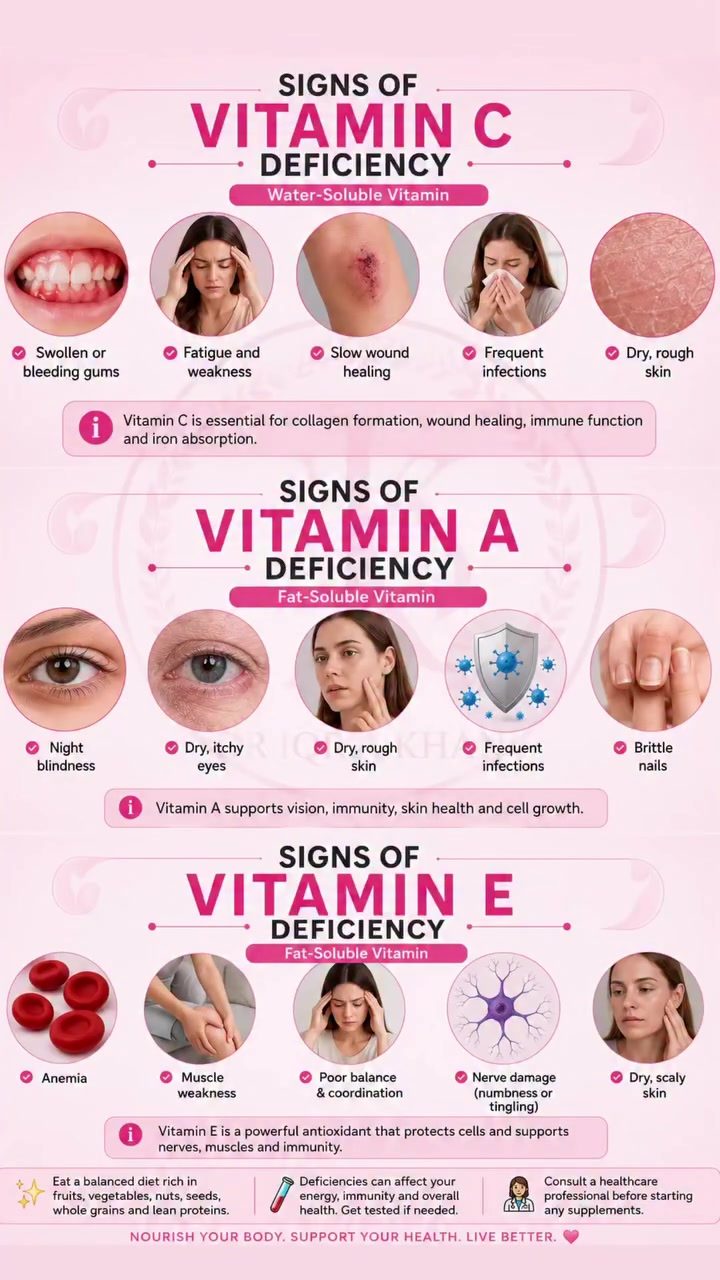
Vitamin Deficiency Signs
Vitamins are crucial for maintaining overall health, and recognizing the signs of vitamin deficiencies can help address potential health issues early. Proper evaluation is essential because deficiency symptoms can overlap with many other conditions.
Why this matters
A balanced diet is the best way to ensure you get the vitamins your body needs, but it's not always easy to know if you're getting enough. Certain vitamins play specific roles in the body, and deficiencies can manifest in various ways. Understanding these signs can prompt you to seek appropriate medical advice and make dietary adjustments.
Understanding Vitamin Deficiency
Vitamin C Deficiency
Vitamin C, a water-soluble vitamin, is vital for collagen formation, wound healing, immune function, and iron absorption. Key signs of Vitamin C deficiency include:
- Swollen or bleeding gums: Vitamin C is essential for gum health, and a deficiency can cause gum issues, including bleeding and swelling.
- Fatigue and weakness: Vitamin C helps in energy production. A deficiency can lead to persistent fatigue and overall weakness.
- Slow wound healing: Vitamin C plays a crucial role in tissue repair and wound healing. Deficiency can result in slower recovery times.
- Frequent infections: As a significant immune booster, a lack of Vitamin C can make you more susceptible to infections.
- Dry, rough skin: Vitamin C is necessary for skin health, and deficiency can cause skin issues, including dryness and roughness.
- Other symptoms: Joint and muscle pain, and anemia.
Vitamin A Deficiency
Vitamin A, a fat-soluble vitamin, is essential for vision, immunity, skin health, and cell growth. Indicators of a Vitamin A deficiency may include:
- Night blindness: Vitamin A is critical for maintaining good vision, particularly in low-light conditions. Deficiency can lead to night blindness.
- Dry, itchy eyes: Vitamin A supports eye health, and a deficiency can cause dryness and itching.
- Dry, rough skin: Vitamin A is crucial for skin health, and a deficiency can result in dry, flaky skin.
- Frequent infections: Vitamin A boosts the immune system, and a deficiency can increase susceptibility to infections.
- Brittle nails: Vitamin A is important for nail health, and a deficiency can lead to brittle nails.
Vitamin E Deficiency
Vitamin E, another fat-soluble vitamin, acts as an antioxidant and is crucial for muscle and nerve health. Possible symptoms of a Vitamin E deficiency include:
- Anemia: Vitamin E helps in the formation of red blood cells. Deficiency can lead to anemia, resulting in fatigue, weakness, and shortness of breath.
- Muscle weakness: Vitamin E supports muscle health, and a deficiency can cause muscle weakness and other muscular issues.
- Poor balance and coordination: Vitamin E is essential for nerve function, and a deficiency can affect balance and coordination.
- Nerve damage (numbness or tingling): Vitamin E deficiency can cause nerve damage, leading to numbness or tingling sensations, particularly in severe cases.
- Dry, scaly skin: Vitamin E supports skin health, and a deficiency can result in dry, scaly skin.
Other Vitamin Deficiencies
While the focus here is on Vitamins C, A, and E, it's worth noting that other vitamins and minerals are also essential for overall health. Deficiencies in other vitamins and minerals can lead to various health issues, including:
- Vitamin B12 deficiency: This can cause anemia, neurological issues, and fatigue. Key signs include weakness, fatigue, and numbness or tingling.
- Iron deficiency: This can result in anemia, fatigue, weakness, and pale skin.
- Magnesium deficiency: This can cause muscle cramps, fatigue, and irregular heartbeats. Key signs include muscle weakness, spasms, and tremors.
Preventing and Addressing Vitamin Deficiencies
Balanced Diet
A balanced diet rich in fruits, vegetables, nuts, seeds, whole grains, and lean proteins is the best way to prevent vitamin deficiencies. Each of these food groups contributes essential vitamins and minerals to support overall health.
Supplements
Supplements can help fill nutritional gaps, but they should not replace a healthy diet. If you suspect a vitamin deficiency, consult a healthcare professional before taking any supplements. Self-diagnosis and self-treatment can be risky and may lead to unintended side effects.
Medical Evaluation
If you experience persistent symptoms associated with vitamin deficiencies, consult a healthcare professional. Proper evaluation and testing can help identify the underlying cause and determine the best course of action.
Practical tips
- Eat a variety of foods: Aim for a balanced diet that includes a variety of fruits, vegetables, lean proteins, and whole grains.
- Stay hydrated: Drinking enough water supports overall health and nutrient absorption.
- Regular check-ups: Regular medical check-ups can help identify potential vitamin deficiencies early.
- Consult a professional: If you suspect a vitamin deficiency, consult a healthcare professional before taking any supplements.
- Monitor symptoms: Pay attention to your body and monitor any persistent symptoms that may indicate a vitamin deficiency.
- Limit processed foods: Processed foods often lack essential vitamins and minerals and can contribute to vitamin deficiencies.
Important takeaways
- Deficiency symptoms can overlap with many other conditions, so proper evaluation is crucial.
- Vitamin C, A, and E deficiencies can manifest in various ways, including gum issues, skin problems, and vision problems.
- A balanced diet is the best way to prevent vitamin deficiencies, but supplements can help fill nutritional gaps when needed.
- If you suspect a vitamin deficiency, consult a healthcare professional before taking any supplements.
- Regular medical check-ups and monitoring symptoms can help identify potential vitamin deficiencies early.
Conclusion
Vitamins are essential for maintaining overall health, and recognizing the signs of vitamin deficiencies can help address potential health issues early. Understanding the specific roles of vitamins and their deficiency symptoms can prompt you to seek appropriate medical advice and make dietary adjustments. Whether through a balanced diet or targeted supplements, ensuring adequate vitamin intake is crucial for supporting your health and well-being.
Watch the Reel
Questions readers ask
What are some common signs of vitamin deficiencies that I should look out for?
Common signs of vitamin deficiencies can include swollen gums, frequent infections, night blindness, and dry skin. These symptoms can indicate a lack of essential vitamins and should prompt you to evaluate your diet and consider consulting a healthcare professional.
How can I tell if my diet lacks essential vitamins?
If you notice symptoms like poor wound healing, weakness, or changes in your skin and gums, it might indicate a lack of essential vitamins. Maintaining a balanced diet is crucial, but if you experience these signs, it's important to assess your vitamin intake and seek advice from a healthcare provider.
Which vitamins are responsible for maintaining good skin health?
Vitamins like A, C, and E play significant roles in maintaining skin health. Deficiencies in these vitamins can lead to dry skin and other dermatological issues. Ensuring a diet rich in these vitamins or talking to a healthcare professional can help address and prevent these problems.
What role do water-soluble vitamins play in the body, and what happens if I'm deficient in them?
Water-soluble vitamins, such as vitamin C, are vital for various bodily functions, including immune support and collagen formation. Deficiencies can lead to symptoms like swollen gums, frequent infections, and poor wound healing. Ensuring adequate intake through a balanced diet can help prevent these issues.
Why is it important to recognize the signs of vitamin deficiency early?
Recognizing the signs of vitamin deficiency early allows you to take timely action, such as adjusting your diet or seeking medical advice. Early intervention can prevent more serious health issues and help you maintain your overall well-being. This is because certain vitamins play specific roles in the body, and deficiencies can manifest in various ways.
Can vitamin deficiencies cause frequent infections, and if so, which ones?
Yes, vitamin deficiencies can compromise your immune system, leading to frequent infections. For instance, deficiencies in vitamin C can weaken your immune response, making you more susceptible to infections. Ensuring you get enough of these vitamins through your diet can help strengthen your immune system.
How do I know if I have a vitamin C deficiency, and what are the signs?
Symptoms of vitamin C deficiency can include swollen gums, frequent infections, and poor wound healing. If you experience these signs, it may indicate a lack of vitamin C. Consulting a healthcare professional can help confirm the deficiency and guide you on how to address it through dietary changes or supplements.
Recent articles
Fresh deep dives from the latest Reels we unpacked.




Comments
Be the first to comment.