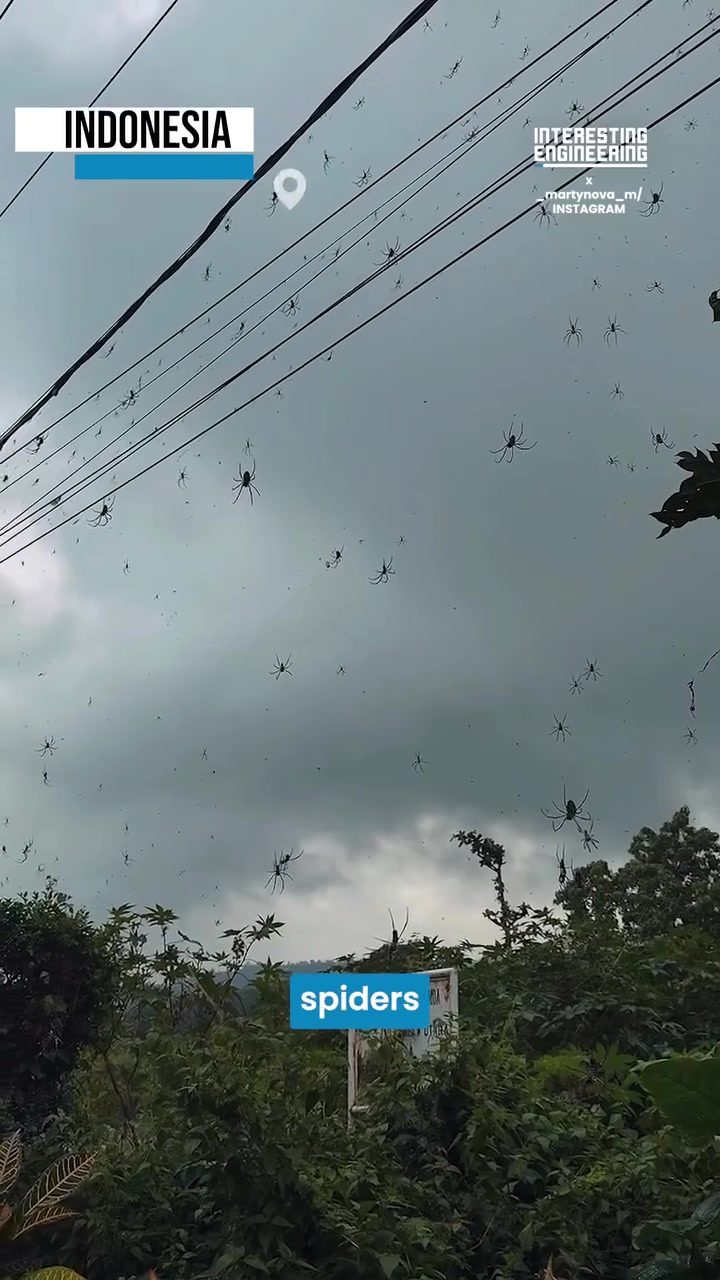
Spider Swarms in Indonesia
A swarm of spiders descending from power lines in Indonesia creates a striking and somewhat unsettling sight. This phenomenon, while startling, is a natural part of the arachnids' behavior and ecology. The spiders gather in large numbers, covering the power lines with intricate silk threads, which anchor their webs and help them catch prey.
Indonesia's Spider Swarms: Why This Matters
Understanding how spiders behave and survive in their natural habitats is crucial for appreciating the delicate balance of ecosystems. Spider swarms, while unusual, help control insect populations and play a role in nutrient cycling. This behavior, though unsettling, is essential for maintaining the health of their local environment.
The Science Behind Spider Swarms
The Role of Elevated Structures
Spider swarms often form on elevated structures like power lines. These structures provide spiders with stable anchor points to build their webs. By doing so, the spiders can take advantage of the wind and better access to flying insects, making it easier to catch prey.
Advantages of Silken Threads
Silk threads, a key component of spider webs, offer numerous benefits. They provide structural support, allow spiders to move through their webs, and help them sense vibrations and movements of prey. When many spiders gather in one place and weave their webs together, they create a dense, interconnected network that can cover large areas.
Practical Tips for Observing Spider Swarms
Safety First
Observing spider swarms can be a fascinating experience, but it's important to prioritize safety. Avoid direct contact with the spiders and their webs. While most spiders are harmless, some species can deliver painful bites or cause allergic reactions. Wearing protective clothing, such as long sleeves and gloves, can help prevent accidental contact.
Best Time and Location
Spider swarms are more likely to be seen in the late summer and early fall, when insect populations peak. Look for swarms in areas with ample vegetation, as this provides spiders with an abundance of food and shelter. Elevated structures, such as power lines, bridges, and tall buildings, are prime locations for spiders to build their webs.
Important Takeaways
Spider swarms in Indonesia are a natural and fascinating sight. The spiders' behavior, while unsettling, is a critical part of their ecology. Understanding this phenomenon can help us appreciate the complex web of life that surrounds us, and the roles that various creatures play in maintaining the balance of ecosystems.
Conclusion
Spider swarms in Indonesia provide a unique opportunity to observe nature in action. By understanding the behavior and ecology of these arachnids, we can better appreciate the intricate web of life that sustains our planet. The next time you encounter a spider's web, take a moment to consider the complex behaviors and adaptations that make these creatures so remarkable.
Watch the Reel
Questions readers ask
Why do spiders cover power lines in Indonesia with silk?
Spiders in Indonesia cover power lines with silk to create webs that help them catch prey. The power lines provide an elevated and stable structure for the spiders to build their webs, which can be more effective for hunting insects in open areas. Additionally, the silk from the webs can contribute to nutrient cycling in the ecosystem.
Are spider swarms in Indonesia harmful to the environment?
No, spider swarms in Indonesia are not harmful to the environment. In fact, they play a crucial role in controlling insect populations and contributing to nutrient cycling. These swarms are a natural part of the arachnids' behavior and ecology, and they help maintain the delicate balance of the local ecosystem.
What types of spiders are involved in these swarms?
The article does not specify the types of spiders involved in the swarms. However, it is common for various species of web-building spiders to gather in large numbers to take advantage of abundant food sources and suitable web-building structures, such as power lines.
How do spider swarms benefit the local ecosystem?
Spider swarms benefit the local ecosystem by controlling insect populations and contributing to nutrient cycling. The spiders catch and consume insects, helping to regulate their numbers. The silk from the webs and the spiders' waste products can also contribute to the cycling of nutrients within the ecosystem.
What should people do if they encounter a spider swarm on power lines in Indonesia?
If you encounter a spider swarm on power lines in Indonesia, it is best to observe from a distance and avoid disturbing the spiders. These swarms are a natural occurrence and play an important role in the ecosystem. If you have concerns about safety or power line integrity, contact local authorities or power line maintenance services.
Why do spiders prefer power lines for their webs?
Spiders prefer power lines for their webs because they offer an elevated and stable structure that is ideal for building webs. Power lines provide a high vantage point that allows spiders to catch more prey and avoid predators. Additionally, the open spaces around power lines make it easier for spiders to detect and capture insects.
Do spider swarms on power lines affect power distribution?
The article does not provide specific information on whether spider swarms on power lines affect power distribution. However, it is possible that in extreme cases, heavy webs could potentially cause issues with power line insulation or conductivity. If you notice any concerns, it is best to contact local power line maintenance services.
Related deep dives
Similar reads based on topic and creator.



Recent articles
Fresh deep dives from the latest Reels we unpacked.




Comments
Be the first to comment.