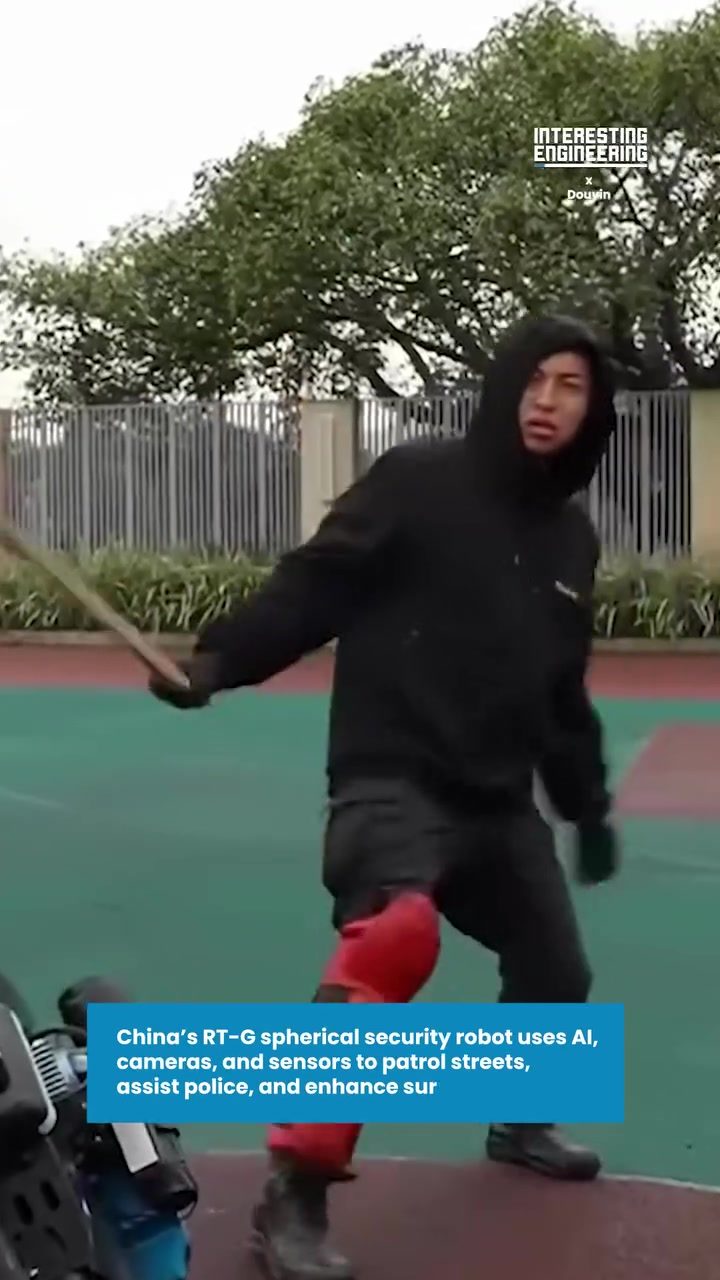
Spherical Security Robots
Spherical security robots, such as the RT-G, are cutting-edge patrol machines designed for public safety and surveillance. These robots leverage artificial intelligence (AI), cameras, and sensors to enhance security operations. The RT-G, for instance, is capable of rolling at high speeds on both land and water, making it a versatile tool for various environments. Let's dive into the world of spherical security robots, their capabilities, and their applications.
Why Spherical Security Robots Matter
In an era where public safety is a paramount concern, the integration of advanced technology in security measures has become more critical. Spherical security robots represent a significant leap forward in this domain. Their ability to navigate different terrains, collect data, and assist law enforcement makes them invaluable in maintaining public order and safety.
Enhanced Surveillance
One of the primary advantages of spherical security robots is their enhanced surveillance capabilities. Equipped with high-resolution cameras and sensors, these robots can monitor large areas efficiently. The RT-G, for example, uses AI to analyze visual data, making real-time assessments and alerting authorities to potential threats. This level of surveillance is crucial for preventing and responding to security breaches.
Versatility in Terrain
The spherical design of these robots allows them to navigate various terrains with ease. Whether it's smooth pavements, rough terrain, or even water, these robots can move seamlessly. This versatility makes them ideal for patrolling diverse environments, from urban streets to remote areas. The RT-G’s capability to roll on both land and water adds an extra layer of flexibility, ensuring that no area is left unmonitored.
AI and Facial Recognition
The integration of AI and facial recognition technology in spherical security robots significantly boosts their effectiveness. These robots can identify and track individuals, vehicles, and other objects of interest. Facial recognition technology, in particular, is a game-changer, enabling law enforcement to quickly identify suspects and verify identities. The AI algorithms can also learn and adapt, improving their detection and analysis capabilities over time.
Main Discussion
Design and Mobility
The spherical design of these robots is not just for aesthetics; it serves a functional purpose. The round shape allows for 360-degree mobility, enabling the robot to move in any direction without the need for complex maneuvering. This design also makes it easier for the robot to roll over obstacles, ensuring smooth and uninterrupted patrolling.
The RT-G, for instance, demonstrates exceptional mobility. It can navigate paved areas, interact with police officers, and patrol various environments. This mobility is crucial for effective surveillance, as it allows the robot to cover more ground and respond quickly to potential threats.
Integration with Law Enforcement
Spherical security robots are designed to work in tandem with law enforcement. They can assist police officers by providing real-time data and alerts, helping them make informed decisions. The RT-G, for example, is shown interacting with police officers, highlighting its role as a supportive tool in security operations.
This integration is not limited to physical assistance. The data collected by these robots can be analyzed to identify patterns and trends, providing valuable insights for law enforcement strategies. The AI capabilities of these robots can also help in predicting and preventing criminal activities, making them a proactive tool in maintaining public safety.
Use of Sensors and Cameras
Sensors and cameras are at the heart of spherical security robots. These components enable the robots to gather and analyze data, providing a comprehensive view of the environment. The RT-G, for instance, uses AI to process data from its sensors and cameras, making real-time assessments and alerts.
The sensors can detect various parameters, including temperature, humidity, and even chemical substances. This data can be used to identify potential hazards and ensure that emergency services are alerted in a timely manner. The cameras, on the other hand, provide visual surveillance, enabling the robot to monitor activities and detect any suspicious behavior.
Applications in Public Safety
Spherical security robots have numerous applications in public safety. They can be used for patrolling public spaces, monitoring traffic, and ensuring the safety of large events. Their versatility allows them to adapt to various scenarios, making them a reliable tool for maintaining order and security.
In urban settings, these robots can patrol streets, parks, and other public areas, providing a constant presence and deterrent to criminal activities. In remote or rural areas, they can monitor infrastructure and alert authorities to any potential threats. The RT-G, with its ability to roll on land and water, is particularly useful in such diverse environments.
Practical Tips for Implementing Spherical Security Robots
Implementing spherical security robots in public safety operations requires careful planning and execution. Here are some practical tips to ensure effective use:
Choose the Right Model
Select a robot that fits the specific requirements of your environment. Consider factors such as terrain, weather conditions, and the types of data you need to collect. The RT-G, for example, is well-suited for urban and semi-urban settings, but for more rugged terrains, you might need a different model.
Ensure Compliance with Regulations
When deploying AI-powered robots, it is crucial to comply with local regulations and data privacy laws. Ensure that the robots' data collection and analysis processes align with legal requirements and ethical standards.
Integrate with Existing Systems
For maximum effectiveness, integrate the robots with existing security systems and law enforcement databases. This integration allows for seamless data sharing and coordination, enhancing the overall security operations.
Provide Training to Personnel
Training law enforcement personnel on how to use and interact with these robots is essential. They should be familiar with the robots' capabilities, limitations, and how to interpret the data they provide. This ensures that the robots are used effectively and that their full potential is realized.
Regular Maintenance
Regular maintenance and updates are crucial for keeping the robots operational and effective. Ensure that the robots undergo regular checks, software updates, and hardware maintenance to maintain their performance and reliability.
Important Takeaways
Spherical security robots, such as the RT-G, are revolutionizing public safety and surveillance. Their advanced capabilities, including AI, sensors, and facial recognition technology, make them invaluable tools for law enforcement. These robots can navigate diverse terrains, collect comprehensive data, and assist in maintaining public order and safety.
By integrating spherical security robots into public safety operations, we can enhance surveillance, improve response times, and create a safer environment for everyone. The versatility and advanced features of these robots make them a critical component in the future of security and law enforcement.
Conclusion
In summary, spherical security robots represent a significant advancement in public safety and surveillance. Their AI capabilities, mobility, and integration with law enforcement make them indispensable tools in maintaining security and order. As technology continues to evolve, these robots will play an increasingly important role in ensuring the safety and well-being of communities. Embracing this technology is not just about staying ahead of the curve; it's about building a safer, more secure future for all.
Watch the Reel
Questions readers ask
How do spherical robots enhance public safety?
Spherical robots enhance public safety by providing real-time data and alerts through their advanced AI, cameras, and sensors, allowing authorities to respond quickly to potential threats. Their ability to patrol diverse environments, including both land and water, ensures comprehensive coverage and improved security measures.
What makes the RT-G robot unique?
The RT-G robot stands out due to its versatility and speed. It can navigate various terrains, including water, and operate at high speeds, making it an efficient tool for public safety and surveillance. This capability ensures that it can be deployed in a wide range of environments, from urban areas to coastal regions.
Can spherical robots operate autonomously?
Yes, spherical robots are designed to operate autonomously, thanks to their advanced AI systems. They can patrol predefined routes, detect anomalies, and send alerts without the need for constant human intervention. However, they can also be remotely controlled when necessary, providing flexibility in different situations.
How do spherical robots benefit crime prevention?
Spherical robots benefit crime prevention by acting as a visible deterrent and providing continuous monitoring. Their real-time data collection and alert systems help authorities detect and respond to suspicious activities promptly, thereby reducing the likelihood of criminal incidents. Additionally, their presence can discourage potential wrongdoers from engaging in illegal activities.
What kind of environments can spherical robots operate in?
Spherical robots are designed to operate in a variety of environments, including urban landscapes, industrial sites, and natural terrains. Their ability to traverse both land and water makes them particularly useful for coastal surveillance, large outdoor areas, and waterfront properties. This versatility ensures that they can be deployed in almost any setting where enhanced security is needed.
What data do spherical robots provide to authorities?
Spherical robots provide a range of data to authorities, including real-time video footage, thermal imaging, and environmental sensor readings. This data is crucial for identifying potential threats, monitoring public safety, and making informed decisions during emergency situations. The information is typically transmitted to a central monitoring system for immediate analysis and response.
How do spherical robots communicate with authorities?
Spherical robots communicate with authorities through integrated wireless networks, allowing for real-time data transmission and alerts. These robots can send notifications directly to monitoring stations or control centers, ensuring that any anomalies or security breaches are promptly addressed. Additionally, some models can be equipped with two-way communication systems for direct interaction with operators.
Related deep dives
Similar reads based on topic and creator.


Recent articles
Fresh deep dives from the latest Reels we unpacked.




Comments
Be the first to comment.