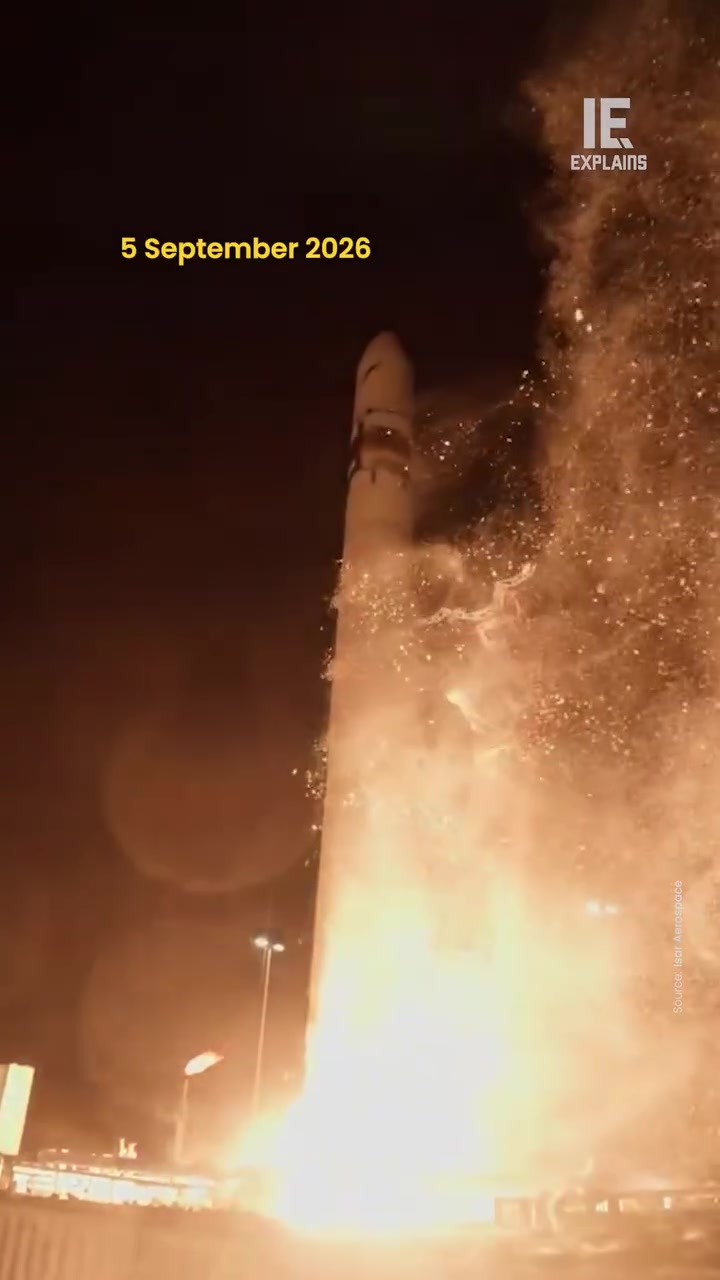
The First Euro-Rocket in the Arctic
On September 5, 2026, Isar Aerospace's Spectrum rocket launched from a small island inside the Arctic Circle. The 28-meter tall, 2-meter wide launch vehicle is Europe's first privately built rocket to reach orbit. Spectrum deployed five CubeSats and one experiment into low Earth orbit, marking a significant milestone for European commercial spaceflight.
The Euro-Rocket: Spectrum
Spectrum is a two-stage rocket designed and built by Isar Aerospace, a German startup based in Munich. Its nine-engine bottom stage and single-engine top stage are powered by liquid oxygen and propane, a fuel choice that maximizes thrust relative to volume. The rocket can carry up to a thousand kilos into low Earth orbit, and its vertical integration allows for rapid iteration and improvements. The rocket sporting a carbon composite structure laid up by machine instead of welded metal. Its 3D-printed engine components allow for quick redesigns between tests. The separation systems are pyro-free, reducing shock to the satellites riding above. Roughly 80% of the vehicle is built in-house, including the design, engines, structure, and software. This vertical integration enables the company to make changes swiftly, a critical factor in the competitive space launch market. Spectrum’s first flight took place in March 2025, lasting just 30 seconds. Its second flight, on September 5, 2026, was a resounding success, reaching orbit and deploying its payloads into a sun-synchronous orbit. This launch sequence included key milestones such as max dynamic pressure, main engine cutoff, stage separation, second stage ignition, fairing jettison, and a circularization burn.
Europe's Space Shift
Until recently, Europe's space ambitions were dominated by state-backed agencies. The first Ariane rocket launched in 1979, and by the early 1990s, the Ariane program held more than half of all commercial launches to geostationary transfer orbit. Europe had the commercial business but relied heavily on government-backed launches. The European Space Agency (ESA) funded launches through a carefully balanced system designed to ensure that every euro contributed by a member state returned as contracts within that state. This approach, while fair, often hindered innovation and speed. Vertical integration, crucial for rapid development, was close to impossible under this model.
The Crisis and the Challenge
Europe’s space sector faced a crisis between 2022 and 2024. Russia withdrew its Soyuz rockets from French Guyana due to the Ukraine war. Vega C failed in December 2022 and was grounded for two years. Ariane 5 retired in July 2023, leaving Europe without a large satellite launch capability. This crisis forced ESA to reevaluate its approach. In late 2023, ESA announced the European Launcher Challenge, a new model that inverts the old system. Instead of specifying the rocket, ESA promises to buy the launches. In August 2026, the first contracts were awarded, totaling 544 million euros across three companies: Isar Aerospace, Rocket Factory Augsburg, and Spain's PLD Space. Isar Aerospace alone received 198 million euros. This shift allowed a startup in Munich to achieve in eight years what a continent could not do in 40. The success of Spectrum marks a turning point, but the future of Europe's commercial space industry hinges on the next 10 flights.
The Path to Reuse and Sustainability
Spectrum is currently an expendable rocket, which means each flight discards its engines and first stage. However, the choice of propane as fuel suggests a future path toward reuse. The industrial side of Isar Aerospace is robust, with a factory in Pazdorf near Munich built to produce up to 40 vehicles per year. Vehicles 3 to 7 are already in production, and the company has raised over 600 million euros, including a 270 million euro round in June 2026. However, building a factory for 40 rockets per year is a bet on a demand that Europe does not yet have.
Launching Europe's Future
Europe's journey into commercial spaceflight is fraught with challenges but also brimming with potential. The success of Spectrum is a beacon of what can be achieved with innovative thinking and a shift in policy. The next decade will be crucial in determining whether Europe can sustain this momentum and establish a thriving commercial space industry. For now, the Arctic launch of Spectrum stands as a testament to Europe's capability and ambition in the new space race.
Watch the Reel
Questions readers ask
What makes Spectrum unique among European rockets?
Spectrum is unique because it's Europe's first privately built rocket to reach orbit, and it's designed with a high degree of vertical integration. This means Isar Aerospace handles most of the design, engineering, and manufacturing in-house, allowing for rapid iteration and improvements. Additionally, its use of liquid oxygen and propane for fuel, along with innovative materials like carbon composite structures and 3D-printed engine components, sets it apart from traditional designs.
Why did Europe's space sector face a crisis between 2022 and 2024?
The crisis was multifaceted. Russia withdrew its Soyuz rockets from French Guyana due to geopolitical tensions, Vega C failed and was grounded, and Ariane 5 retired, leaving Europe without a reliable large satellite launch capability. This forced the European Space Agency (ESA) to reevaluate its launch strategies and open up to more private sector involvement.
How does the European Launcher Challenge differ from the traditional ESA model?
The European Launcher Challenge is a significant shift from the traditional ESA model. Instead of specifying the rocket and ensuring contracts return to member states, ESA now promises to buy the launches from private companies. This approach encourages innovation and rapid development, as seen with Isar Aerospace's Spectrum rocket, which received a substantial contract under this new model.
Can the Spectrum rocket be reused or is it a single-use vehicle?
The article does not provide specific details on the reusability of the Spectrum rocket. Given the focus on rapid iteration and improvements, it's possible that future iterations could explore reusability. However, based on the information provided, Spectrum appears to be a single-use vehicle for now.
Who are some of the competitors for Isar Aerospace in Europe's new space race?
Isar Aerospace is not alone in Europe's new space race. Other companies that received contracts under the European Launcher Challenge include Rocket Factory Augsburg and Spain's PLD Space. These companies, along with others, are part of the emerging commercial space industry in Europe, driving innovation and competition in the sector.
What were the key milestones achieved during Spectrum’s September 2026 flight?
During its successful September 2026 flight, Spectrum achieved several key milestones. These included reaching max dynamic pressure, main engine cutoff, stage separation, second stage ignition, fairing jettison, and a circularization burn. These milestones demonstrate the rocket's capability to reach and deploy payloads into a sun-synchronous orbit.
How does the use of liquid oxygen and propane benefit the Spectrum rocket?
The use of liquid oxygen and propane as fuel for the Spectrum rocket maximizes thrust relative to volume. This fuel choice allows the rocket to carry up to a thousand kilos into low Earth orbit, making it a competitive option in the space launch market.
Related deep dives
Similar reads based on topic and creator.

Recent articles
Fresh deep dives from the latest Reels we unpacked.
Comments
Be the first to comment.