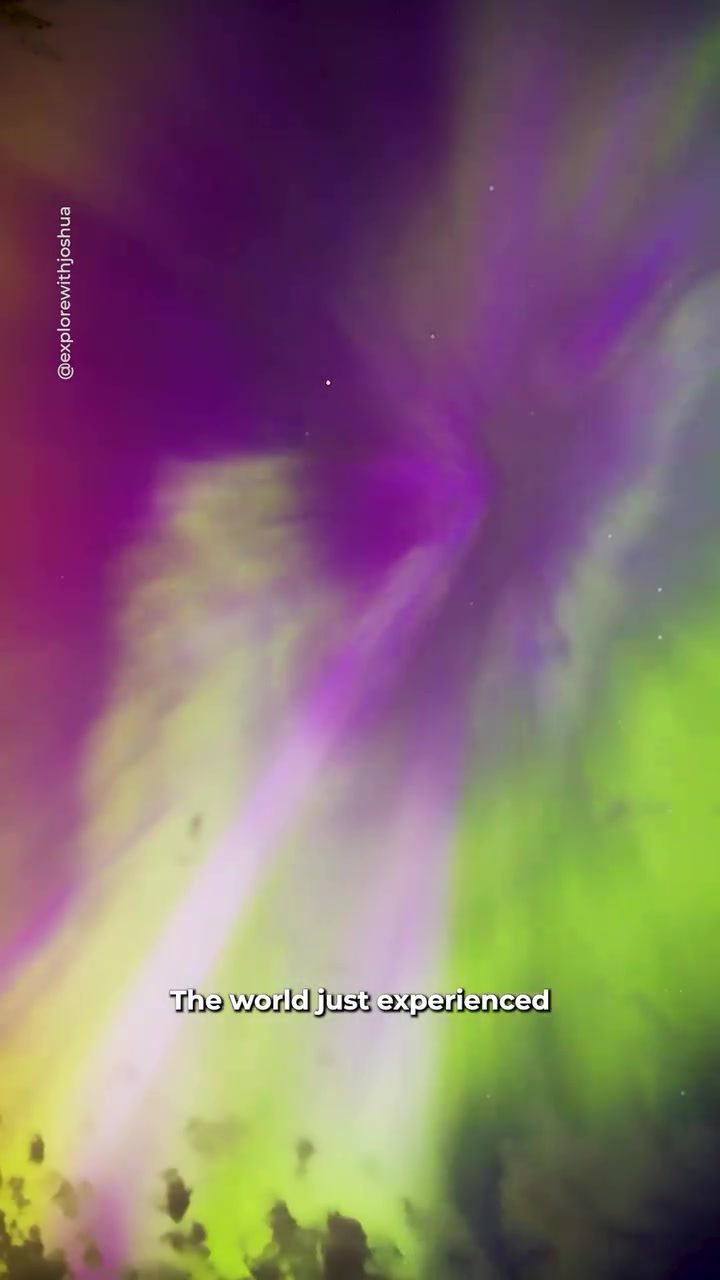
Aurora Borealis
## The Phenomenon
The Aurora Borealis, commonly known as the Northern Lights, is a breathtaking natural light display that illuminates the night sky. This phenomenon occurs when charged particles from the sun interact with Earth's magnetic field and atmosphere. The result is a vibrant dance of colors, ranging from vibrant greens and purples to soft pinks, across the night sky.
## Why This Matters
Recent years have marked an extraordinary period for aurora enthusiasts. The world just experienced one of the strongest solar storms in over two decades. This powerful solar event triggered spectacular auroras across regions that do not usually witness this phenomenon. Countries such as the UK, Germany, Spain, Hawaii, and China all reported sightings of the Northern Lights. This occurrence is a significant reminder of the powerful connection between our planet and the sun, and it highlights the timeless allure of the natural world.
## Understanding Aurora Activity
Solar Cycle and Auroras
Auroras, like the Northern Lights, are closely tied to the sun's activity, which operates in approximately 11-year cycles. Each cycle includes a period of maximum activity, known as the solar maximum, during which the sun's magnetic field flips and solar activity peaks. The current solar cycle is in its maximum phase, meaning there are increased chances to observe the Northern Lights at their best.
During this phase, solar flares and coronal mass ejections emit a higher volume of charged particles into space. When these particles reach Earth, they interact with the planet's magnetic field and atmosphere, resulting in the stunning light displays we know as auroras.
Rare Aurora Colors
While the Northern Lights are often associated with vibrant greens, the solar maximum phase can produce rarer and more captivating hues. Red and purple auroras, for example, are more likely to appear during this period. These colors are produced when charged particles interact with different atmospheric gases at various altitudes. Red auroras occur at higher altitudes where oxygen is less dense, while purple auroras result from interactions with nitrogen.
## Aurora Forecasting
Solar Weather Forecasts
Staying updated on solar weather forecasts is crucial for aurora enthusiasts. By monitoring solar activity and geomagnetic storms, scientists can predict when and where auroras are likely to occur. Tools such as the NOAA’s Space Weather Prediction Center regularly provide forecasts and alerts, helping viewers plan their stargazing adventures.
Preparing for 2025 and Beyond
The maximum phase of the solar cycle is expected to persist over the next few years, with 2025 being particularly favorable for aurora viewing. This period offers unique opportunities for both seasoned enthusiasts and newcomers to experience the Northern Lights. Whether you are planning a trip to a high-latitude destination or simply want to be ready to spot an aurora from your backyard, staying informed about solar weather will enhance your chances of witnessing this awe-inspiring phenomenon.
## Practical Tips
Where to See the Northern Lights
While the Northern Lights are most frequently seen in high-latitude regions such as Alaska, Canada, Iceland, and Norway, the recent solar storm showcases the possibility of sightings in lower latitudes, including parts of the United Kingdom, Spain, and even Hawaii. However, to maximize your chances of seeing the aurora, consider traveling to regions with minimal light pollution and clear skies, particularly during the winter months when nights are longer and darker.
Essential Gear for Aurora Viewing
A successful aurora-watching experience requires a few key pieces of equipment:
- Camera: A DSLR or mirrorless camera with manual settings allows you to capture the vibrant colors and movements of the aurora. A wide-angle lens is ideal for capturing the expansive sky.
- Tripod: Essential for long exposure shots, which are necessary to capture the intricacies of the aurora.
- Warm Clothing and Accessories: Layer up to stay warm and comfortable during long periods of outdoor observation. Consider thermal base layers, insulated jackets, and hand and foot warmers.
- Star Chart or App: Download a reliable star chart or use a smartphone app to help you locate the aurora and understand its position in the sky.
- Flashlight: Having a red-light flashlight can help preserve your night vision while checking maps or settings on your camera.
Photographing the Aurora
Capturing the Northern Lights on camera can be both challenging and rewarding. Some key tips for aurora photography include:
- Use a high ISO setting (e.g., 1600-3200) to capture enough light.
- Set a wide aperture (e.g., f/2.8) to let in more light.
- Opt for a long exposure time (e.g., 15-30 seconds) to capture the movement of the aurora.
- Use a remote shutter release or self-timer to minimize camera shake.
- Experiment with Manual Focus: Since autofocus may struggle in low light, manually focusing on a distant object or star can help.
Important Takeaways
The recent strong solar storm triggered auroras in unexpected regions, highlighting the dynamic and unpredictable nature of the Aurora Borealis. With the solar cycle in its maximum phase, there are increased opportunities to witness this natural wonder, including rare red and purple auroras.
Understanding the relationship between solar activity and auroras can enhance your viewing experience and help you plan your adventures. Staying informed about solar weather forecasts and being prepared with essential gear will maximize your chances of encountering this mesmerizing phenomenon.
Conclusion
The Northern Lights are a testament to the beauty and power of nature, reminding us of the intricate connection between our planet and the sun. Whether you are a seasoned aurora chaser or a curious newcomer, the next few years offer unparalleled opportunities to witness this awe-inspiring spectacle.
So, stay updated on the solar weather forecasts, prepare your gear, and get ready to experience the breathtaking dance of the Northern Lights.
Watch the Reel
Questions readers ask
What causes the Aurora Borealis to occur?
The Aurora Borealis, or Northern Lights, is caused by the interaction between charged particles from the sun and Earth's magnetic field and atmosphere. This interaction results in a stunning display of lights that can be seen in the night sky.
Why are auroras expected to be seen in unusual regions like China and Spain?
Recent strong solar activity has expanded the reach of auroras. These storms have the power to push the aurora displays farther south, making them visible in regions that typically do not experience this phenomena. This includes countries like China and Spain.
How do I know if I can see the Northern Lights from my location?
To determine if you can see the Northern Lights from your location, check the aurora forecast for your region. This forecast will provide information on the solar activity and aurora weather, helping you plan your viewing. Websites and apps dedicated to aurora tracking can be particularly useful.
What are the best conditions for viewing the Northern Lights?
The best conditions for viewing the Northern Lights include a clear, dark sky away from city lights. Additionally, the aurora forecast should indicate high solar activity and favorable aurora weather. Checking the aurora forecast and planning your trip accordingly will enhance your chances of seeing this spectacular display.
What colors can be expected in an Aurora display?
Auroras can display a variety of colors, with green and pink being the most common. Other colors such as red, yellow, blue, and violet can also be seen, depending on the type of gas molecules that the solar particles collide with in Earth's atmosphere.
Why are auroras more frequent during certain periods?
Auroras are more frequent and intense during periods of high solar activity, which typically follows an 11-year solar cycle. During the peak of this cycle, the sun's magnetic field flips, leading to increased solar storms and stronger aurora displays.
What is the significance of the recent solar storm mentioned in the article?
The recent solar storm, one of the strongest in over two decades, has triggered spectacular auroras in regions that do not usually experience them. This powerful event has expanded the reach of the auroras, making them visible in countries like the UK, Spain, Hawaii and China.
Related deep dives
Similar reads based on topic and creator.



Recent articles
Fresh deep dives from the latest Reels we unpacked.




Comments
Be the first to comment.