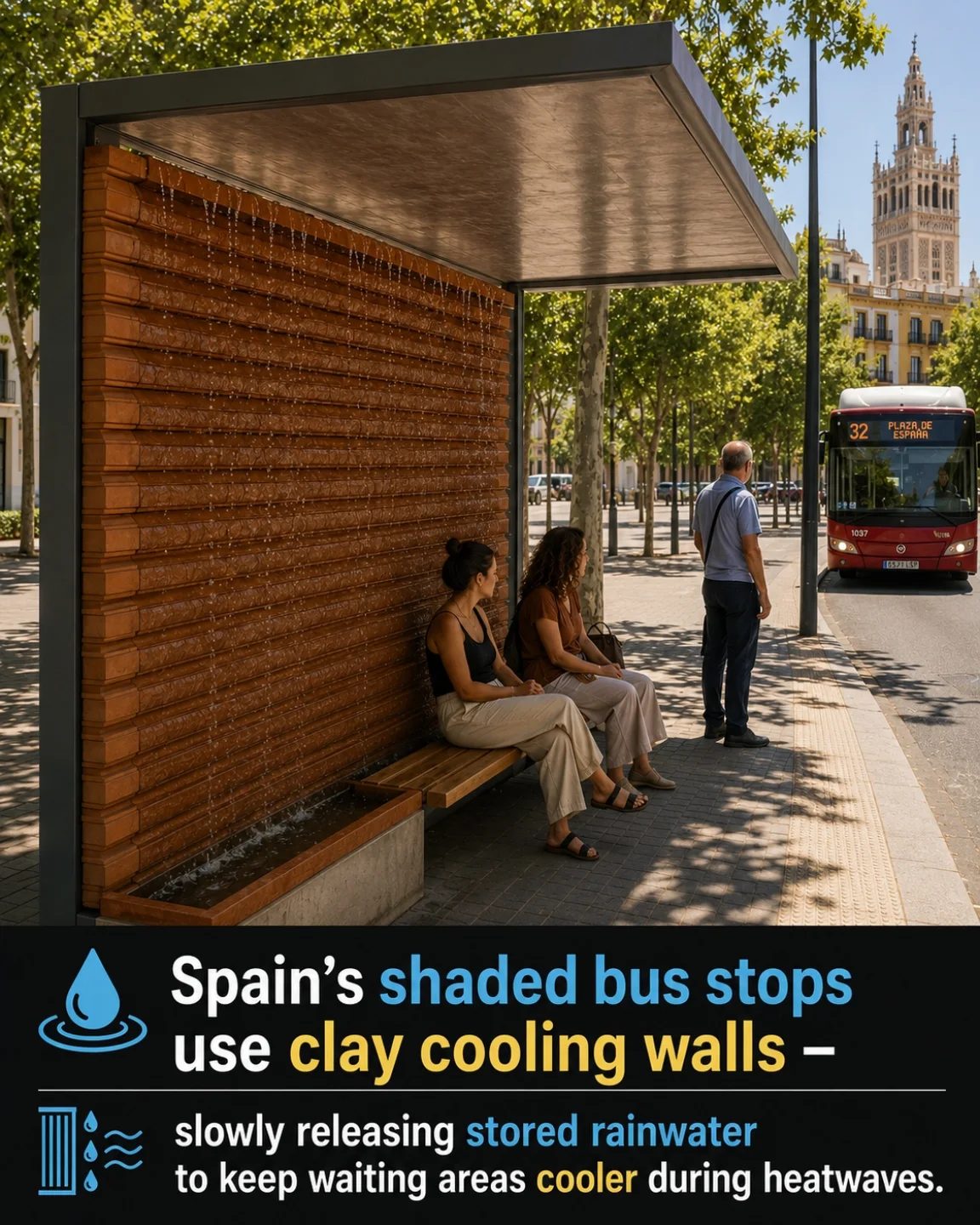
Spain’s Innovative Bus Stops: Clay Walls and Cooling Effects
Spain has increasingly become the subject of architectural interest, thanks to its innovative, eco-friendly bus stops. These bus stops are designed to maintain a comfortable climate during extreme heatwaves, a growing concern in the wake of climate change. The key innovation lies in the use of clay walls that store rainwater and release it slowly, creating a natural cooling effect in waiting areas.
Why This Matters
As temperatures around the world rise, the need for sustainable and effective cooling solutions in public spaces grows more pressing. Traditional air-conditioning methods are often energy-intensive and costly. In contrast, Spain’s bus stop design offers a passive, eco-friendly solution that can be replicated in other urban environments. This design is particularly relevant for regions facing extreme heatwaves, where waiting for public transportation can become uncomfortable and even dangerous.
Main Discussion
The Science Behind Clay Cooling
Clay has been used in construction for centuries, but its thermoregulatory properties are often overlooked. The clay walls in these Spanish bus stops are designed to absorb and slowly release moisture, creating a cooling effect. During the night, the clay absorbs rainwater, which is then released slowly during the day. This process, known as evapotranspiration, helps to cool the surrounding air and keep the waiting area comfortable. The clay’s porous nature also helps regulate humidity, making the environment more pleasant.
Design and Structure
The design of these bus stops is not only functional but also aesthetically pleasing. The clay walls blend seamlessly with the natural landscape, often adorned with greenery that further enhances the cooling effect. The bus stops are built with shading in mind, providing shelter from the sun and reducing direct heat exposure. This approach ensures that waiting passengers are protected from harsh sunlight and the scorching heat, making their experience more comfortable.
Sustainability and Eco-Friendliness
In an era where sustainability is a top priority, these bus stops stand out for their eco-friendly design. They eliminate the need for energy-intensive cooling systems, instead relying on natural processes. This not only reduces energy consumption but also minimizes the carbon footprint. The materials used are natural and locally sourced, further reducing environmental impact. By integrating these bus stops into the urban landscape, cities can move towards more sustainable and resilient infrastructure.
Comfort and User Experience
For commuters, the experience of waiting at a bus stop can significantly affect their daily commute. Traditional bus stops, especially in regions with extreme temperatures, can become unbearably hot. Spain’s unique design addresses this issue by creating a cooler, more comfortable environment. Waiting passengers are shielded from direct sunlight and heat, while the clay walls provide a natural, refreshing breeze. This design ensures a more pleasant and comfortable experience, making the daily commute less stressful and more enjoyable.
Practical Tips
If you are involved in urban planning or public transportation design, consider the following tips:
- Integrate Natural Materials: Utilize materials like clay that can naturally regulate temperature and humidity.
- Focus on Shading: Design bus stops with generous shading to protect users from direct sunlight.
- Eco-Friendly Solutions: Prioritize eco-friendly and sustainable solutions over energy-intensive systems.
- Local Adaptation: Adapt designs to local environmental conditions, ensuring they are effective in the specific climate.
Important Takeaways
- Clay Walls: The use of clay walls is a natural and effective way to regulate temperature and humidity.
- Passive Cooling: This design eliminates the need for energy-intensive cooling systems, making it more sustainable.
- User Comfort: The focus on user comfort and experience is crucial in public transportation design, especially in extreme climates.
- Sustainable Urban Planning: Integrating eco-friendly and sustainable practices in urban planning can lead to more resilient and comfortable public spaces.
Conclusion
Spain’s innovative bus stop design offers a remarkable solution to the challenges posed by extreme heatwaves. The use of clay walls that release stored rainwater and provide a natural cooling effect is not just a practical solution but also an eco-friendly one. As cities around the world grapple with rising temperatures, this design serves as a model for sustainable and effective urban planning. By focusing on user comfort, environmental sustainability, and natural processes, the Spanish bus stops set a new standard for public transportation infrastructure.
Watch the Reel
Questions readers ask
How do the clay walls in Spain's bus stops help with cooling?
The clay walls in Spain's bus stops absorb and store rainwater, then gradually release it as vapor, creating a natural cooling effect. This process helps maintain a comfortable temperature, making the bus stops more pleasant during extreme heatwaves.
What makes these bus stops sustainable?
The bus stops are sustainable because they utilize natural materials and processes, such as clay for cooling and rainwater management. They do not require electricity for cooling, reducing their overall environmental impact.
Can this design be used in other countries?
Yes, the design can be adapted for use in other countries experiencing similar climate challenges. However, the specific implementation may vary based on local climate conditions and available materials.
How do these bus stops manage rainwater?
The bus stops are designed to collect and store rainwater in their clay walls. This stored water is then slowly released, aiding in cooling the space and reducing the risk of flooding by managing excess rainwater effectively.
What are the benefits of using clay in these bus stops?
Clay is a renewable, natural material that can absorb and release moisture, helping to regulate temperature. Additionally, it is aesthetically pleasing, making the bus stops visually appealing while providing a functional benefit.
Recent articles
Fresh deep dives from the latest Reels we unpacked.




Comments
Be the first to comment.