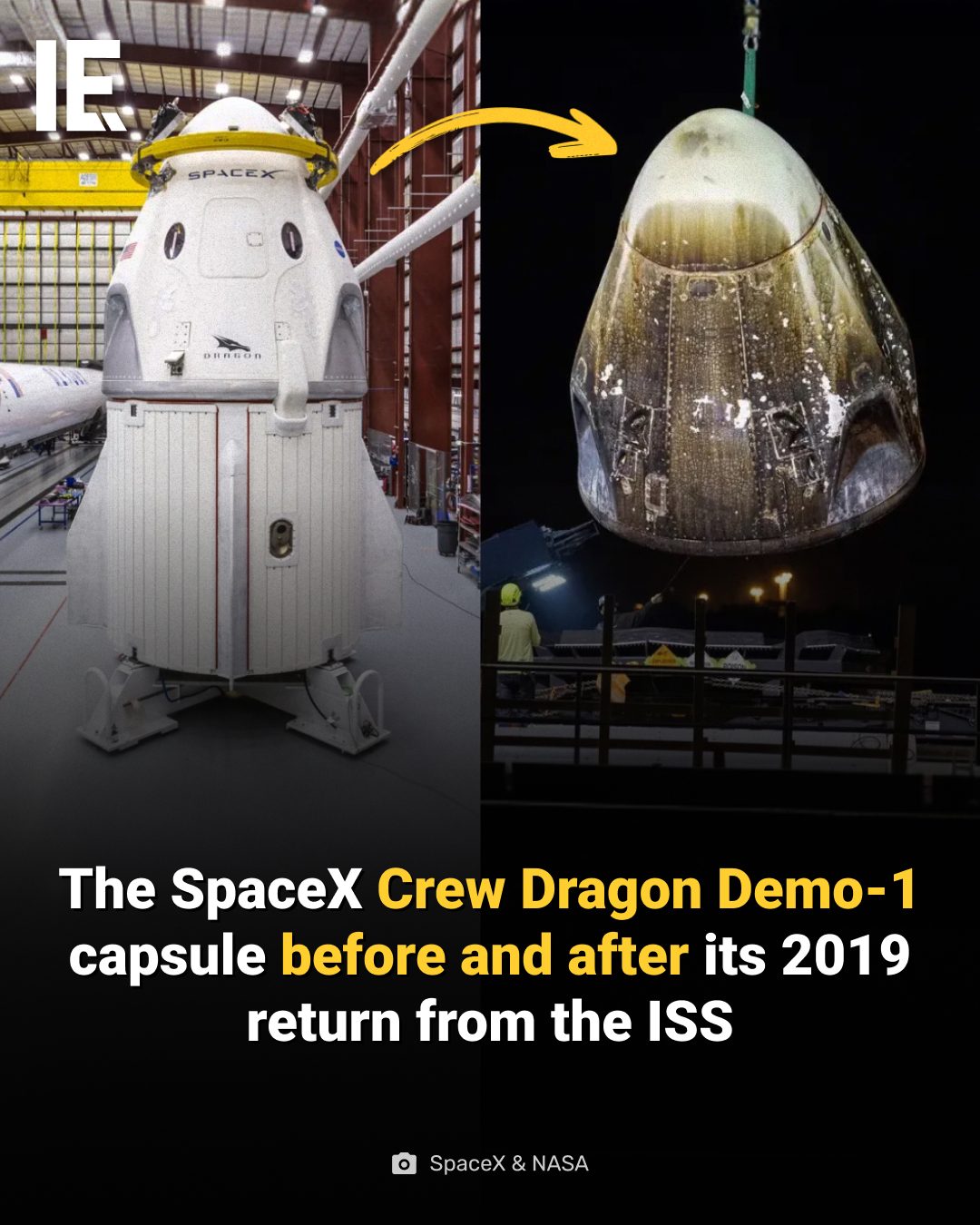
SpaceX Crew Dragon: A Closer Look at the Charred yet Resilient Spacecraft
The SpaceX Crew Dragon spacecraft, particularly the Demo-1 capsule, has a story to tell. The condition of the spacecraft after its first uncrewed test flight to the International Space Station (ISS) in March 2019 provides a fascinating glimpse into the challenges and engineering marvels of space travel. The charred exterior of the capsule is not a sign of damage but a testament to the design and functionality of its ablative heat shield. Let's delve into the details of what makes this spacecraft so remarkable.
Why This Matters
Space exploration is a field where every component of a spacecraft is designed with precision and purpose. The Crew Dragon capsule's condition after reentry from space highlights the ingenious engineering behind spacecraft design. Understanding the processes and materials used in spacecraft construction provides valuable insights into the future of space travel and the reuse of spacecraft. The ability to reuse spacecraft is crucial for cost-effectiveness and sustainability in space missions.
The Ablative Heat Shield: A Critical Component
The most striking feature of the Crew Dragon after its return from the ISS is the charred exterior. This charring is a result of the ablative heat shield doing its job. During reentry, the capsule hits Earth's atmosphere at a staggering speed of 28,000 km/h, generating surface temperatures of around 1,600°C. The ablative heat shield is designed to absorb this immense heat by gradually burning away, protecting the spacecraft and its contents from the extreme temperatures. This process ensures that the capsule can endure the intense heat of reentry and return safely to Earth.
The Demo-1 Mission: A Milestone for SpaceX
The Demo-1 mission was a significant milestone for SpaceX. It marked the first uncrewed test flight of the Crew Dragon to the ISS. The mission aimed to test the capsule's performance and safety systems in a real-world scenario. The successful completion of this mission paved the way for future crewed missions, demonstrating SpaceX's capability to transport astronauts safely to and from space. The resilience of the Crew Dragon capsule during this mission showcases the advanced engineering and materials used in its construction.
The Importance of Reusability
One of the key goals of modern spacecraft design is reusability. The ability to reuse spacecraft components not only reduces the cost of space missions but also minimizes waste. SpaceX has been at the forefront of this effort, designing spacecraft that can be reused multiple times. The Crew Dragon capsule is built with reusability in mind, incorporating materials and systems that can withstand the rigors of multiple space missions. This focus on reusability is essential for making space travel more accessible and sustainable.
The Role of NASA in Space Exploration
NASA has been a crucial partner in the development and testing of the Crew Dragon capsule. The collaboration between SpaceX and NASA has led to significant advancements in space exploration technology. The Demo-1 mission was a joint effort between the two organizations, highlighting the importance of public and private sector partnerships in achieving space exploration goals. The successful completion of the Demo-1 mission showcases the effectiveness of this collaboration and its potential for future space missions.
Practical Tips for Understanding Spacecraft Design
For those interested in understanding spacecraft design, here are some practical tips:
- Study the Materials: Learn about the materials used in spacecraft construction, such as ablative heat shields, and their properties.
- Understand the Engineering: Dive into the engineering principles behind spacecraft design, including thermal protection systems and reusability.
- Follow Space Missions: Stay updated with the latest space missions and their outcomes to understand the real-world application of spacecraft design principles.
- Explore Partnerships: Learn about the collaborations between space agencies and private companies, as these partnerships drive innovation in the field.
- Analyze Mission Data: Examine the data from completed space missions to understand the performance and challenges faced by spacecraft.
Important Takeaways
The condition of the SpaceX Crew Dragon capsule after its return from the ISS provides valuable insights into the design and functionality of spacecraft. The charred exterior is a result of the ablative heat shield doing its job, which protects the spacecraft during reentry. The Demo-1 mission was a significant milestone for SpaceX, demonstrating the capability to transport astronauts safely to and from space. The focus on reusability is crucial for making space travel more cost-effective and sustainable. The collaboration between SpaceX and NASA highlights the importance of public and private sector partnerships in space exploration.
Conclusion
The SpaceX Crew Dragon capsule's journey to and from the ISS in March 2019 offers a unique perspective on the challenges and innovations in space travel. The charred exterior of the capsule is a testament to the engineering marvels that make space exploration possible. As space exploration continues to evolve, understanding the design and functionality of spacecraft like the Crew Dragon will be crucial for future missions. The collaboration between SpaceX and NASA, along with the focus on reusability, paves the way for a new era of space travel, where safety, sustainability, and innovation go hand in hand.
Watch the Reel
Questions readers ask
What caused the charred exterior of the SpaceX Crew Dragon Demo-1 capsule?
The charred exterior is due to the capsule's ablative heat shield, which protects it during the intense heat of atmospheric reentry. This charring is a normal and expected result, not a sign of damage.
Why is the charred exterior of the Crew Dragon capsule significant?
The charred exterior signifies that the ablative heat shield functioned as intended, safeguarding the astronauts. The design and functionality of the capsule can be appreciated by observing the effects of the ISS mission on the spacecraft.
What is the purpose of the ablative heat shield on the SpaceX Crew Dragon?
The ablative heat shield is designed to protect the spacecraft and its crew from the extreme temperatures experienced during reentry. It works by absorbing and dissipating heat, ensuring a safe return from space.
What was the significance of the SpaceX Demo-1 mission to the ISS in 2019?
The Demo-1 mission was an uncrewed test flight to the ISS, marking a crucial step in validating the Crew Dragon spacecraft's design and capabilities. It paved the way for future crewed missions to the space station.
How does the condition of the Crew Dragon capsule after reentry provide insights into space travel?
The condition of the Crew Dragon capsule after reentry highlights the challenges and engineering marvels of space travel. It demonstrates the effectiveness of the spacecraft's design and the rigorous conditions that spacecraft must endure.
What can the charred exterior of the Crew Dragon capsule tell us about its design and functionality?
The charred exterior is a visible indicator that the ablative heat shield has performed its function correctly. It showcases the engineering prowess and resilience of the spacecraft, ensuring crew safety during reentry.
What happens to the Crew Dragon capsule during reentry from the ISS?
During reentry, the Crew Dragon capsule experiences extreme heat due to atmospheric friction. The ablative heat shield protects the capsule by absorbing and dissipating this heat, leading to the characteristic charred exterior.
Related deep dives
Similar reads based on topic and creator.


Recent articles
Fresh deep dives from the latest Reels we unpacked.




Comments
Be the first to comment.