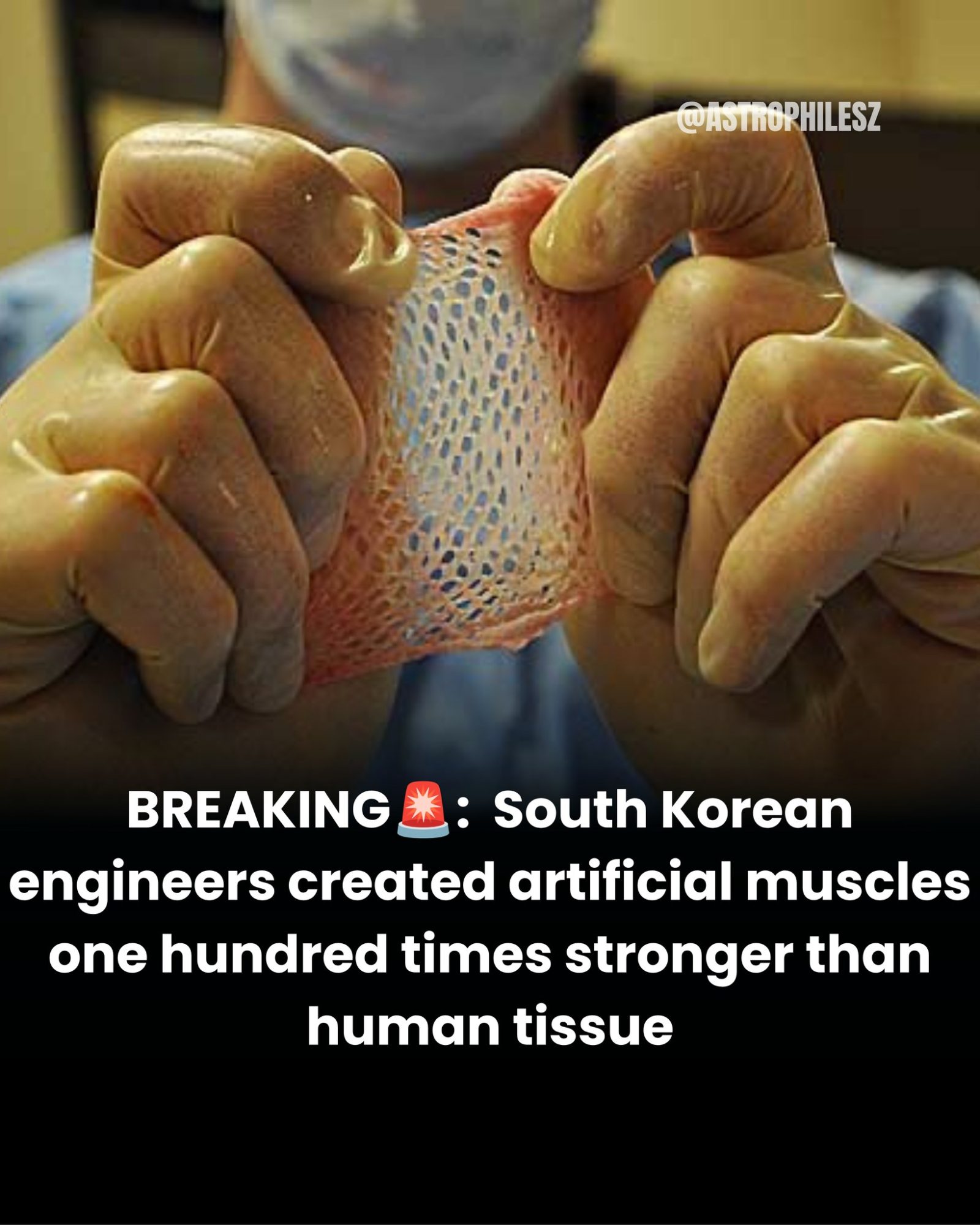
Artificial Muscles
Artificial muscles, developed by researchers at a South Korean institute, represent a groundbreaking advancement in soft robotics. These innovative materials weigh barely more than a coin, about 1.2 grams, yet can lift up to five kilograms—roughly 4,000 times their own weight. This astonishing capability outpaces any human muscle, solving a longstanding challenge in the field of soft robotics.
Context / Why this matters
Until recently, engineers working on soft robotics faced a fundamental trade-off. They could create materials that were soft and stretchy, making them safe to work alongside humans, but these materials were too weak to lift anything substantial. Conversely, they could develop rigid and powerful materials, but these were clumsy and dangerous to use in close proximity to humans. This new artificial muscle offers both flexibility and strength, making it a versatile solution for various applications.
Main discussion
The Science Behind Artificial Muscles
The secret to the artificial muscle's dual capabilities lies in its dual network structure. The material consists of a polymer with strong chemical bonds that provide rigidity and reversible physical bonds that allow for flexibility. This unique combination means the muscle can transition between a soft, stretchy state and a rigid, load-bearing state, all controlled by heat. This transition is akin to rubber turning into steel, offering a remarkable range of motion and strength.
In its soft state, the artificial muscle can stretch up to twelve times its original length. When heated, it stiffens into a rigid form capable of bearing significant loads without losing performance. Magnetic microparticles embedded in the material allow for precise control using magnetic fields, adding another layer of versatility.
Performance Specifications
The performance metrics of these artificial muscles are truly astounding. They boast a work density of about 1,150 kilojoules per cubic meter, which is roughly 30 times that of biological human muscle tissue. Additionally, they can contract by over 86 percent, making them incredibly efficient and powerful.
Applications and Future Possibilities
The potential applications for these artificial muscles are vast and exciting. Imagine a robotic hand that can delicately pick up a piece of fruit and then immediately lift a heavy tool, all without swapping any parts. This capability opens up possibilities for prosthetic limbs that move naturally yet carry real weight, wearable exoskeletons, and robots that can safely work side by side with people in various industries.
Practical tips
When considering the integration of artificial muscles into robotic systems, it's essential to understand their unique properties and how they can be leveraged. Here are a few practical tips for working with these innovative materials:
Design Considerations
- Flexibility and Strength: Understand the dual nature of the material. Design systems that can take advantage of both the soft, flexible state and the rigid, load-bearing state.
- Heat Control: Incorporate precise temperature control mechanisms to transition the muscle between its states effectively.
- Magnetic Fields: Utilize magnetic fields for precise control. Ensure that the design includes a way to apply and manipulate magnetic fields to guide the muscle's movements.
Safety and Operational Efficiency
- Safety Protocols: Develop safety protocols that account for the muscle's ability to transition between states. Ensure that the system can handle the sudden changes in rigidity and strength without causing harm.
- Efficiency: Optimize the design to make the most of the muscle's work density and contraction capabilities. This ensures that the system operates efficiently and effectively.
Important takeaways
The development of artificial muscles by South Korean engineers marks a significant advancement in soft robotics. These materials offer a unique combination of flexibility and strength, making them versatile and powerful. Their high work density and contractors make them ideal for a wide range of applications, from prosthetic limbs to wearable exoskeletons and collaborative robots.
Conclusion
The future of robotics is being shaped by innovative materials like artificial muscles. These remarkable creations not only outperform human muscles but also offer a range of possibilities for safer, more efficient, and versatile robotic systems. As research continues to evolve, we can expect to see even more groundbreaking applications that will revolutionize industries and improve daily life.
Watch the Reel
Questions readers ask
What makes the artificial muscles developed by South Korean engineers unique?
The artificial muscles are unique because they combine exceptional strength with flexibility. They can lift up to 4,000 times their own weight while remaining soft and safe for human interaction, unlike previous materials that were either too weak or too rigid for safe use.
How do these artificial muscles compare to human muscles in terms of strength?
These artificial muscles far exceed the strength of human muscles. Weighing only 1.2 grams, they can lift up to five kilograms, which is significantly more than any human muscle is capable of.
What is the significance of these artificial muscles for the field of robotics?
The advancement of these artificial muscles solves a longstanding challenge in soft robotics, where materials were either too weak to be useful or too rigid to be safe. This breakthrough opens up new possibilities for versatile applications in robotics, particularly in areas where human interaction is required.
Are these artificial muscles safe for humans to interact with?
Yes, the artificial muscles are designed to be safe for human interaction. Their soft and flexible nature makes them suitable for use in environments where humans and robots work closely together, reducing the risk of injury.
What are some potential applications for these strong, flexible artificial muscles?
Applications may include soft robotics, wearable devices, and prosthetics, among others. The strength and flexibility of these muscles make them versatile in various fields, including healthcare and manufacturing.
What was the previous limitation in creating artificial muscles?
Prior to this development, engineers could create materials that were soft and stretchy, safe for human interaction, but lacked strength. Alternatively, they could develop rigid, powerful materials that were unsafe for close human interaction. This new material breaks through this limitation.
Why is the flexibility of these artificial muscles important?
Flexibility is crucial because it allows the artificial muscles to be used in a wide range of applications, including those that require movement and adaptability. Moreover, flexibility contributes to the safety of these materials, making them suitable for close human interaction.
Related deep dives
Similar reads based on topic and creator.


Recent articles
Fresh deep dives from the latest Reels we unpacked.




Comments
Be the first to comment.