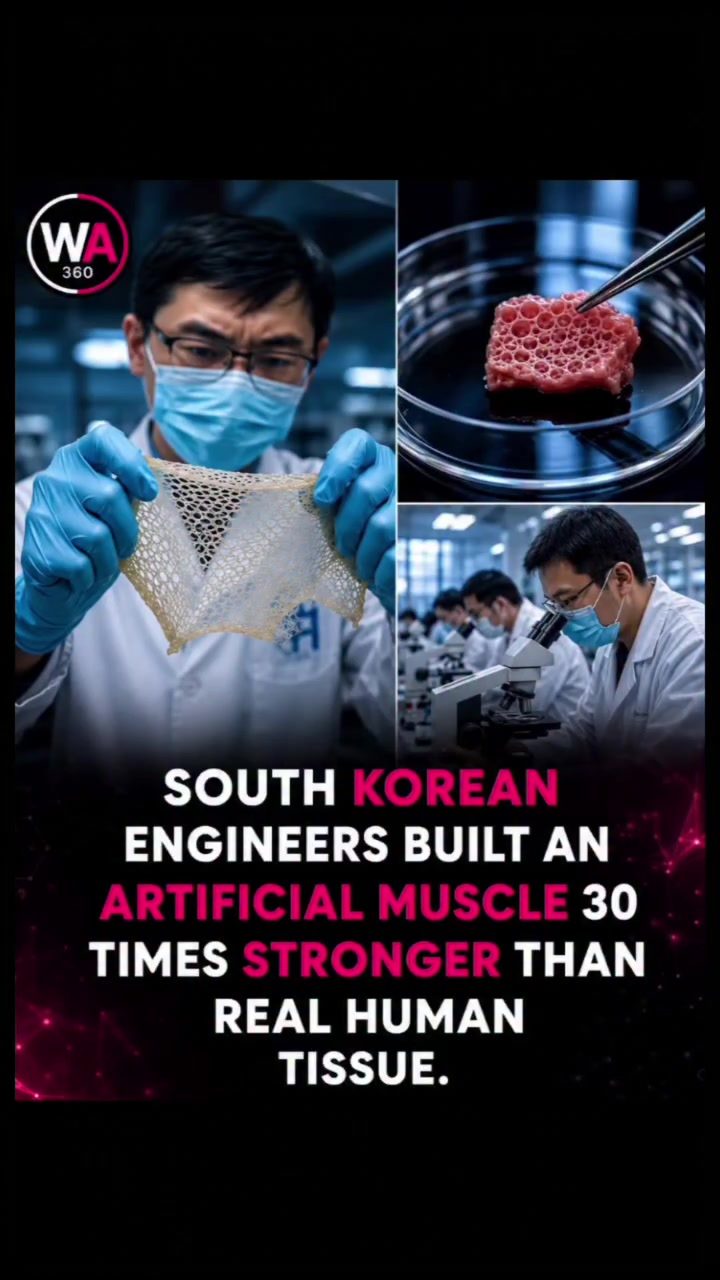
Artificial Muscle Breakthrough: 30 Times Stronger Than Human Muscle
Hundreds of times stronger than human muscle tissue yet lightweight, and flexible, artificial muscles represent a significant front in science. Researchers in South Korea have engineered an artificial muscle that outperforms human muscle tissue by a factor of 30, showcasing a major leap forward in bio-inspired engineering.
Interesting Facts About Artificial Muscles
While the technology is still in the development phase, the potential applications are vast. Artificial muscles could revolutionize fields such as robotics, prosthetic limbs, wearable technology, medical devices, and industrial automation.
What Are Artificial Muscles?
Artificial muscles are materials designed to mimic the properties of natural muscles. They are created using advanced materials and bio-inspired engineering techniques. These materials are designed to contract and expand in response to electrical signals, much like human muscles. The breakthrough in South Korea involves a material that is not only 30 times stronger than human muscle tissue but also remains lightweight, flexible, and highly durable.
The Science Behind Artificial Muscles
The development of artificial muscles involves a deep understanding of both materials science and biology. Researchers combine advanced materials such as polymers, metals, and composite materials with bio-inspired engineering principles. These principles draw inspiration from the structure and function of natural muscles, aiming to replicate their efficiency and strength.
In the case of the South Korean breakthrough, the artificial muscle is designed to be highly responsive to electrical signals, allowing it to contract and expand with precision. This responsiveness is crucial for applications in robotics and prosthetic limbs, where precise movements are essential.
Why This Matters
The development of artificial muscles that are significantly stronger than human muscle tissue has far-reaching implications across various industries. Here are some key areas where this technology could make a significant impact:
Robotics
In robotics, artificial muscles could enable the creation of more powerful and agile robots. These robots could be used in various applications, from industrial automation to search and rescue missions. The increased strength and flexibility of artificial muscles would allow robots to perform tasks that are currently beyond their capabilities.
Prosthetic Limbs
For individuals with limb differences, prosthetic limbs equipped with artificial muscles could provide a more natural and functional experience. The increased strength and responsiveness of artificial muscles would allow for more precise and controlled movements, improving the quality of life for users.
Wearable Technology
Artificial muscles could also revolutionize wearable technology. Devices equipped with artificial muscles could provide enhanced support and mobility, making them ideal for sports, rehabilitation, and other physical activities. The lightweight and flexible nature of these materials would ensure that the devices are comfortable and unobtrusive.
Medical Devices
In the field of medical devices, artificial muscles could lead to the development of smarter and more effective devices. For example, artificial muscles could be used to create implantable devices that provide support to weakened muscles or assist in rehabilitation. The durability and responsiveness of these materials would make them ideal for long-term use.
Industrial Automation
In industrial automation, artificial muscles could enhance the performance of automated systems. Machines equipped with artificial muscles could perform tasks with greater precision and efficiency, leading to increased productivity and reduced downtime.
Practical Tips for Understanding and Applying Artificial Muscle Technology
Understanding and applying artificial muscle technology involves staying informed about the latest developments and exploring potential applications in your field. Here are some practical tips to help you get started:
Stay Informed
Keep up with the latest research and developments in the field of artificial muscles. Follow reputable sources and attend conferences and workshops to stay informed about the latest advancements.
Explore Potential Applications
Consider how artificial muscle technology could be applied in your field. Whether you are in robotics, prosthetics, wearable technology, medical devices, or industrial automation, there are likely opportunities to leverage this innovative technology.
Collaborate with Experts
Work with experts in materials science and bio-inspired engineering to explore the potential of artificial muscles. Collaboration can help you gain a deeper understanding of the technology and identify potential applications.
Conduct Pilots
Start with small-scale pilots to test the feasibility of artificial muscles in your specific application. This will allow you to gather data and refine your approach before investing in larger-scale projects.
Important Takeaways
The development of artificial muscles that are 30 times stronger than human muscle tissue represents a significant breakthrough in bio-inspired engineering. This technology has the potential to revolutionize various industries, from robotics and prosthetic limbs to wearable technology, medical devices, and industrial automation.
Key takeaways include:
- Artificial muscles are designed to mimic the properties of natural muscles, using advanced materials and bio-inspired engineering.
- The breakthrough in South Korea involves a material that is 30 times stronger than human muscle tissue while remaining lightweight, flexible, and highly durable.
- Potential applications include robotics, prosthetic limbs, wearable technology, medical devices, and industrial automation.
- Staying informed, exploring potential applications, collaborating with experts, and conducting pilots are practical steps to leverage this technology.
Conclusion
Artificial muscles represent a major advancement in bio-inspired engineering, with the potential to transform various industries. The development of materials that are significantly stronger than human muscle tissue opens up new possibilities for robotics, prosthetic limbs, wearable technology, medical devices, and industrial automation. By staying informed, exploring potential applications, collaborating with experts, and conducting pilots, you can harness the power of artificial muscle technology to drive innovation in your field.
Watch the Reel
Questions readers ask
What makes the newly developed artificial muscle in South Korea groundbreaking?
The artificial muscle created by South Korean engineers is notable because it is 30 times stronger than human muscle, while still being lightweight and flexible. This combination of strength and versatility makes it a significant advancement in the field of artificial muscle.
What are the potential applications of this new artificial muscle technology?
The potential applications are vast, including advancements in robotics, where stronger and more flexible artificial muscles could enable more agile and powerful robots. In prosthetics, it could lead to more lifelike and functional limb replacements, and in wearable technology, it could enable more comfortable and efficient devices. Additionally, it could be used in medical devices and industrial automation.
How does this artificial muscle compare to human muscle tissue?
The newly developed artificial muscle is significantly stronger than human muscle tissue, being 30 times more powerful. This superior strength, combined with its lightweight and flexible nature, makes it a valuable advancement for various applications that require robust and adaptable materials.
What are some of the key benefits of using artificial muscle in medical devices?
Artificial muscles offer several benefits for medical devices, including improved functionality and precision in medical procedures, as well as the potential to create more effective and comfortable prosthetics. These muscles can also be integrated into wearable health devices to enhance monitoring and support.
What steps are involved in creating an artificial muscle that surpasses human muscle strength?
The process of creating artificial muscles involves several steps, including material selection, design, and fabrication. South Korean engineers have focused on developing materials that combine strength and flexibility, ensuring that the artificial muscle can mimic the properties of natural muscle while surpassing its strength.
How might this artificial muscle technology impact the future of prosthetics?
This artificial muscle technology could revolutionize prosthetics by providing stronger, more flexible, and more lifelike prosthetics. These advancements could lead to improved mobility, better integration with the human body, and enhanced quality of life for individuals who use prosthetic devices.
Related deep dives
Similar reads based on topic and creator.

Recent articles
Fresh deep dives from the latest Reels we unpacked.




Comments
Be the first to comment.