Sony's Buttonless Controller Patent Revolutionizes Gaming Input
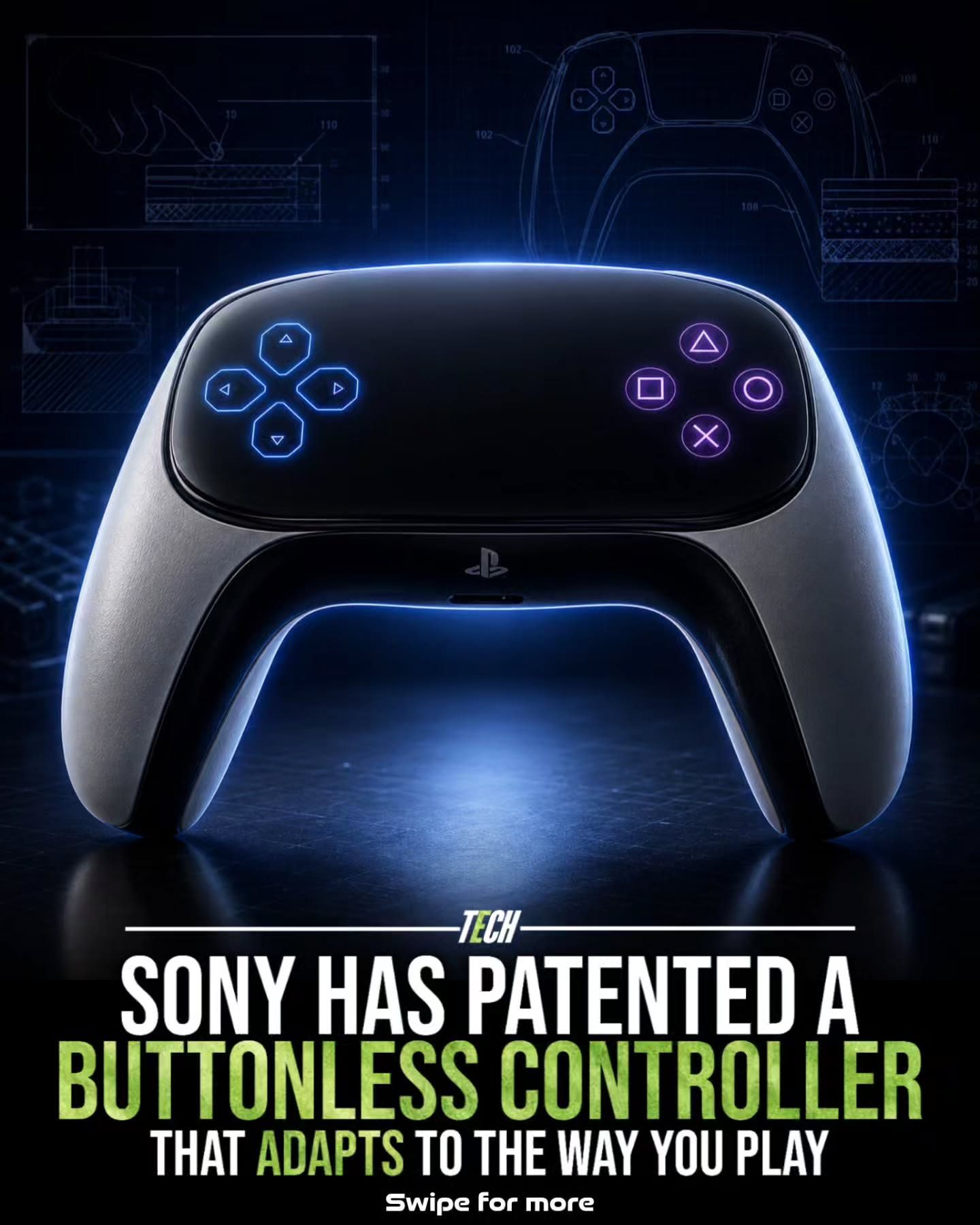
Gaming input devices have remained largely unchanged for decades, but Sony's newly patented buttonless controller could shift the paradigm. The patent describes a touch-sensitive surface replacing the traditional buttons, thumbsticks, and D-pad. This innovative design allows for a highly customizable control layout, adapting to different games in real-time.
Why This Matters
The gaming industry is always on the lookout for ways to enhance the player experience, and controller design is a key area of innovation. Sony's patent suggests a future where controllers are more responsive to individual games and player preferences. This could lead to more immersive and intuitive gaming experiences, reducing the learning curve for new games and potentially improving accessibility.
Touch-Sensitive Surface
The core of Sony's patent is a touch-sensitive surface that can detect a wide range of gestures. This surface replaces the fixed buttons, thumbsticks, and D-pad of traditional controllers. The patent specifies that the controller could recognize taps, swipes, pinches, presses, and joystick-like finger movements. This opens up a wealth of possibilities for game developers to create custom control schemes tailored to individual games.
Customizable Control Layout
One of the most exciting aspects of this patent is the ability to customize the control layout for each game. Because the surface is software-defined, the layout could automatically change depending on the game, genre, or even the player's preferences. This means that players could have a different control layout for a first-person shooter compared to a racing game, all on the same controller.
The customization doesn't stop at game genres. Players could also adjust the layout to better suit their personal playing style. For example, a player who prefers using their left hand for specific actions could reprogram the controller to accommodate that preference. This level of personalization could make gaming more comfortable and enjoyable for a broader range of players.
Main Discussion
The Evolution of Gaming Controllers
Gaming controllers have come a long way since their inception. From the simple joysticks of the early days to the sophisticated designs of modern controllers like the Sony DualSense, the evolution has been driven by a desire to create more immersive and intuitive gaming experiences. Sony's latest patent continues this trend, pushing the boundaries of what a gaming controller can be.
Traditional Controllers
Traditional gaming controllers have relied on a set of physical buttons, thumbsticks, and a D-pad. While this design has served gamers well for decades, it has its limitations. The fixed layout means that players have to adapt to the controller's design, rather than the other way around. This can lead to a steeper learning curve for new games and may not be as comfortable for all players.
The Buttonless Revolution
Sony’s patented buttonless controller aims to address these limitations. By replacing physical buttons with a touch-sensitive surface, the controller can adapt to different games and player preferences in real-time. This dynamic adaptability could make gaming more accessible and enjoyable for a broader range of players.
Key Features of the Buttonless Controller
Gesture Recognition
The touch-sensitive surface can recognize a wide range of gestures, including taps, swipes, pinches, presses, and joystick-like finger movements. This allows for a more natural and intuitive way of interacting with games. For example, a swipe gesture could be used to navigate menus, while a pinch gesture could zoom in or out in a game.
Real-Time Adaptability
The controller's ability to change its control layout in real-time is a game-changer. This means that the layout could automatically adjust depending on the game, genre, or player's preferences. For instance, a first-person shooter might require a different layout compared to a racing game. The controller could switch between these layouts seamlessly, providing a more immersive gaming experience.
Practical Tips
While Sony's buttonless controller is still in the patent phase, there are several practical tips that gamers can consider when thinking about the future of gaming controllers.
Experiment with Custom Control Schemes
If you're a gamer, you might already be familiar with custom control schemes. Many modern games allow players to remap buttons and adjust sensitivity settings. Experimenting with these options can help you find a control scheme that works best for you. This could be a good way to prepare for the potential shift towards more customizable controllers.
Explore Accessibility Options
Many modern controllers come with accessibility options that can make gaming more comfortable and enjoyable. Features like vibration feedback, adaptive triggers, and adjustable thumbstick sensitivity can help players of all abilities enjoy gaming. Exploring these options can give you a sense of how future controllers might adapt to individual needs.
Stay Open to Innovation
The gaming industry is constantly evolving, and new technologies are always on the horizon. Staying open to innovation can help you make the most of new gaming experiences. Whether it's a touch-sensitive controller or another groundbreaking technology, being receptive to change can enhance your gaming journey.
Important Takeaways
Sony's patent for a buttonless controller represents a significant step forward in gaming technology. The touch-sensitive surface and real-time adaptability offer a more intuitive and customizable gaming experience. While it's important to note that a patent does not guarantee a commercial product, the filing provides valuable insight into Sony's research and development efforts in the field of human-computer interfaces.
The Future of Gaming Controllers
The future of gaming controllers is likely to be more dynamic and adaptable. As technology advances, we can expect to see more controllers that can adapt to different games and player preferences in real-time. This could lead to a more personalized and immersive gaming experience for players of all abilities.
The Role of Patents in Innovation
Patents play a crucial role in the innovation process. They allow companies to experiment with new ideas and technologies without the fear of competition stealing their work. While not all patents result in commercial products, they provide valuable insights into a company's research and development efforts. In the case of Sony, the buttonless controller patent offers a glimpse into the future of gaming controllers.
Conclusion
Sony's patent for a buttonless controller highlights the potential for a more dynamic and adaptable gaming experience. The touch-sensitive surface and real-time adaptability offer a more intuitive and customizable way to interact with games. While the future of this technology is uncertain, it provides a glimpse into the exciting possibilities that lie ahead for gaming controllers. As the industry continues to evolve, staying open to innovation and experimenting with new technologies can enhance your gaming journey.
Watch the Reel
Questions readers ask
What makes Sony’s buttonless controller revolutionary?
Sony’s buttonless controller is revolutionary because it replaces traditional buttons and thumbsticks with a touch-sensitive surface. This allows for real-time adaptation to different games and player preferences, offering a more intuitive and customizable gaming experience.
How does the touch-sensitive surface on Sony’s controller enhance gameplay?
The touch-sensitive surface on Sony’s controller enhances gameplay by providing a highly customizable control layout. It adapts to different games in real-time, making the gaming experience more immersive and reducing the learning curve for new games.
Will the buttonless controller be compatible with all PlayStation games?
While the details of compatibility are not yet fully disclosed, the patent suggests a design that can adapt to various games. It is likely that Sony will develop the controller to be compatible with a wide range of games, ensuring a seamless transition for players.
What are the potential benefits of real-time adaptive gaming controls?
Real-time adaptive gaming controls offer several benefits, including increased immersion, reduced learning time for new games, and a more personalized gaming experience. By adjusting the control layout in real-time, players can enjoy a more intuitive and satisfying play experience.
When can we expect to see the buttonless controller in the market?
The release date for Sony’s buttonless controller has not been officially announced. As with any patent, there is no guarantee that the design will be produced and released to the market. It is best to stay updated with official Sony announcements for the most accurate information.
How does this new controller compare to traditional gaming controllers?
Sony’s buttonless controller differs from traditional gaming controllers by eliminating physical buttons and thumbsticks, instead utilizing a touch-sensitive surface. This design allows for greater flexibility and customization, potentially leading to a more intuitive and responsive gaming experience.
Related deep dives
Similar reads based on topic and creator.


Recent articles
Fresh deep dives from the latest Reels we unpacked.




Comments
Be the first to comment.