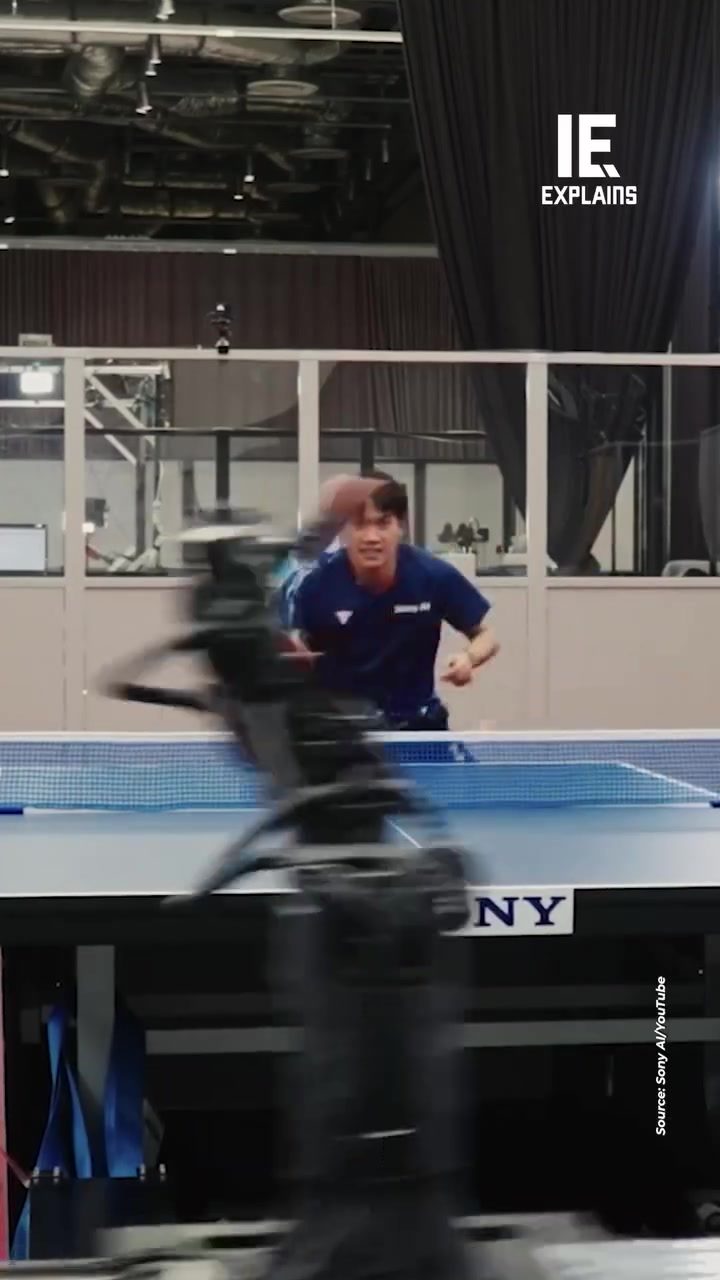
Sony AI's Project Ace and the Future of Physical AI
In the realm of sports and robotics, Sony AI's Project Ace has made a groundbreaking achievement. This innovative table tennis robot has become the first to defeat professional table tennis players in real matches, adhering to official International Table Tennis Federation (ITTF) rules. The results of these remarkable trials were published in the prestigious journal Nature, solidifying Ace's status as a pioneering force in the field of physical AI.
Why This Matters
The development of Project Ace signifies a monumental leap in the capabilities of AI-driven systems. Unlike pre-programmed robots, Ace demonstrates autonomous learning and adaptation, showcasing a new level of intelligence in physical AI. This breakthrough has profound implications for various industries, from sports to manufacturing, where precise, high-speed decision-making is crucial. Additionally, the technology behind Ace could revolutionize how we approach training and competition in sports, as well as enhance the performance of robots in real-world, unpredictable environments.
Main Discussion
The Technology Behind Project Ace
Project Ace is equipped with an array of advanced technologies that enable its extraordinary performance. At the core of the system is a custom 8-degree-of-freedom arm, which allows for precise and rapid movements. The robot is outfitted with 9 cameras and 3 event-based vision sensors, purpose-built to track a spinning ball moving faster than the human eye can follow. This sensor array provides the robot with a constant stream of high-resolution data, enabling it to react in mere milliseconds.
The AI powering Ace is trained entirely in a physics-accurate virtual table tennis environment. This simulation allows the AI to learn by playing millions of rallies against itself. By doing so, it develops a sophisticated understanding of the game's dynamics, from ball trajectory to spin, which it can then apply in real-world matches. This approach eliminates the need for pre-programming every possible shot, making the robot more adaptable and responsive.
Performance and Speed
One of the most astounding aspects of Project Ace is its reaction time. The robot achieves an end-to-end reaction time of just 20.2 milliseconds, making it 11 times faster than elite human players, who typically take around 230 milliseconds to react. This incredible speed is a direct result of the robot's advanced sensor technology and the AI's ability to make real-time adjustments mid-swing. Ace operates at 1,000 cycles per second, allowing it to handle spin up to 450 radians per second with over 75% return accuracy. This level of precision and speed is unparalleled in the world of physical AI.
Architecture and Adaptability
The architecture of Project Ace is designed for both strategic planning and motor control. One layer of the AI focuses on devising strategies, while another handles the actual motor control. This dual-layer architecture allows the robot to adjust its movements in real-time, ensuring it can respond to unexpected changes during a match. In trials conducted this past March, Ace demonstrated its capabilities by defeating three separate professional players, at least once each. This performance underscores the robot's ability to learn, adapt, and dominate in high-stakes, high-speed environments.
Practical Tips: Applying the Technology
Industrial Applications
The technology behind Project Ace has wide-ranging applications in various industries. For instance, the robot's precision and speed could be utilized in manufacturing for tasks that require meticulous control and rapid decision-making. In logistics, the AI's ability to adapt to unpredictable environments could enhance the efficiency of automated warehouses and distribution centers.
Sports Training and Enhancement
In the sports realm, Project Ace's technology could revolutionize training and competition. Coaches and athletes could use similar AI-driven systems to analyze performance, identify areas for improvement, and enhance overall strategy. This could lead to more effective training regimens and better-prepared athletes.
Research and Development
For researchers and developers, Project Ace serves as a proof of concept for physical AI systems. The robot's success demonstrates the potential of AI in operating in real-world, high-speed environments. This could inspire further advancements in robotics, AI, and machine learning, paving the way for more sophisticated and capable systems in the future.
Important Takeaways
The development of Project Ace represents a significant milestone in the field of physical AI. The robot's ability to outperform professional table tennis players highlights the immense potential of AI in real-world applications. Key takeaways include:
- Real-Time Adaptability: Project Ace's dual-layer architecture allows for real-time adjustments, making it highly adaptable in high-speed environments.
- Precision and Speed: The robot's 20.2-millisecond reaction time and 1,000 cycles per second motor control set new benchmarks for physical AI.
- Autonomous Learning: The AI's ability to learn from simulation and transfer that knowledge to the real world eliminates the need for pre-programming, making it more versatile and effective.
Conclusion
Sony AI's Project Ace is more than just a table tennis robot; it is a testament to the evolving capabilities of AI and robotics. By achieving unprecedented levels of speed, precision, and adaptability, Ace has demonstrated the potential for AI to revolutionize various industries. As we continue to explore and develop similar technologies, the future of physical AI looks increasingly promising, paving the way for more innovative and advanced applications.
Watch the Reel
Questions readers ask
What makes Sony AI's Project Ace unique compared to other robots?
Project Ace is unique because it is the first table tennis robot to defeat professional players in real matches following official ITTF rules. Its advanced sensors and AI allow it to adapt and learn autonomously, setting it apart from pre-programmed robots.
How does Project Ace's performance in high-speed, unpredictable environments benefit sports?
Project Ace's ability to excel in high-speed, unpredictable environments like table tennis can inspire new training methods and strategies for athletes. Its performance can help athletes enhance their skills and understand the game better through high-level practice.
What are the implications of Project Ace's win against professional players?
Project Ace's victory against professional players signifies a major advancement in physical AI and robotics. It demonstrates that AI can achieve a high level of proficiency in complex, physical tasks, paving the way for future developments in AI-driven systems.
Which journal published the results of Project Ace's trials, and why is this significant?
The results of Project Ace's trials were published in the journal *Nature*. This is significant because *Nature* is a highly respected scientific journal, indicating that the project's findings are noteworthy and have a substantial impact on the scientific community.
How does Project Ace contribute to the field of physical AI robotics?
Project Ace contributes to physical AI robotics by demonstrating autonomous learning and adaptation in a high-speed, dynamic environment. Its success showcases the potential for AI to excel in real-world, unpredictable scenarios, pushing the boundaries of what robots can achieve.
What are the potential applications of the technology used in Project Ace beyond table tennis?
The technology used in Project Ace has potential applications in various high-speed, unpredictable environments. These include other sports, as well as industries requiring precise, rapid decision-making and adaptability, such as autonomous vehicles and advanced manufacturing.
Related deep dives
Similar reads based on topic and creator.


Recent articles
Fresh deep dives from the latest Reels we unpacked.




Comments
Be the first to comment.