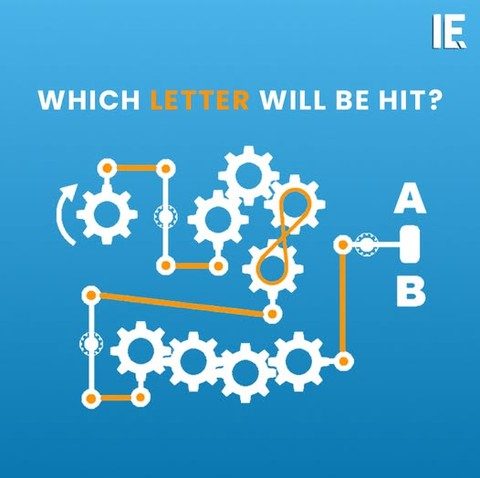
Gear Puzzles: Understanding Gear Rotations
Gear puzzles are fascinating mechanical brain teasers that challenge your understanding of gear rotations and the chain of motion. These puzzles involve following the path of gears and chains to predict the final outcome.
Why Gear Puzzles Matter
Gear puzzles are more than just mind-bending challenges; they offer a practical understanding of mechanical systems and the principles of motion. These puzzles can help enhance problem-solving skills and spatial reasoning. They are particularly valuable for anyone interested in engineering, mechanics, or just solving complex problems.
Gear Puzzle Mechanics
Basic Principles of Gear Motion
Gears are circular mechanisms with teeth that mesh together to transmit motion. The key to solving gear puzzles is understanding the direction of rotation. When two gears are meshed, they rotate in opposite directions. For example, if the first gear rotates clockwise, the adjacent gear will rotate counterclockwise.
Understanding Gear Ratios
Gear ratios are crucial in determining the speed and torque of the gears. The ratio is calculated by dividing the number of teeth on the driven gear by the number of teeth on the driving gear. This ratio helps in predicting the relative speeds of the gears in the system.
Chain Mechanisms
In many gear puzzles, a chain is used to connect gears. The chain's path and the direction it moves are essential in determining which gear will be hit first. Chains typically move in a straight line, but they can also follow the contours of the gears, affecting the outcome.
Predicting the Path
To solve a gear puzzle, you need to trace the path of the chain and predict which gear will be triggered first. This involves visualizing the motion of each gear and understanding how the chain will interact with them.
Practical Tips for Solving Gear Puzzles
Step-by-Step Approach
- Identify the Starting Gear: Determine which gear is the starting point of the chain’s motion.
- Trace the Chain’s Path: Follow the chain as it moves through the gears, noting the direction of each gear's rotation.
- Determine the Final Strike: Based on the chain's path, predict which gear will be hit first.
Visualization Tools
Using visual aids like diagrams or animations can help in solving gear puzzles. These tools allow you to see the motion of the gears and the chain more clearly, making it easier to predict the outcome.
Practice and Repetition
Like any skill, solving gear puzzles improves with practice. Regularly attempting different puzzles will help you become more proficient in understanding gear systems and predicting their outcomes.
Important Takeaways
The Importance of Visualization
Visualizing the motion of gears and chains is crucial in solving gear puzzles. This skill can be developed through practice and the use of visual aids.
Understanding Gear Ratios
Knowing the gear ratios can help in predicting the speed and torque of the gears, which is essential in solving the puzzles.
Following the Chain’s Path
Tracing the chain's path and understanding how it interacts with the gears is key to predicting the final outcome.
Conclusion
Gear puzzles are a fun and challenging way to enhance your understanding of mechanical systems. By following the chain's path and understanding gear rotations, you can predict which gear will be triggered first. Whether you are an engineering enthusiast or just enjoy solving complex puzzles, gear puzzles offer a rewarding experience.
Watch the Reel
Questions readers ask
What are the key principles of gear motion that I should understand to solve gear puzzles?
To solve gear puzzles, you should grasp that when two gears mesh, they rotate in opposite directions. The size of the gears determines the speed and direction of rotation. Larger gears turn slower, while smaller gears turn faster and in the opposite direction of the larger gear. Understanding this will help you predict the movement of gears and solve the puzzle.
How do gear puzzles help improve problem-solving skills and spatial reasoning?
Gear puzzles enhance problem-solving skills by encouraging logical thinking and step-by-step analysis. They improve spatial reasoning by requiring you to visualize and predict the movement of gears in three dimensions, which helps you understand how different components interact within a mechanical system.
What is the benefit of solving gear puzzles for those interested in engineering?
Gear puzzles offer hands-on experience with mechanical systems and principles of motion, which are fundamental to engineering. By solving these puzzles, aspiring engineers can gain practical insights into how machines work and develop a knack for troubleshooting and designing mechanical systems.
Are there different types of gear puzzles for beginners and advanced puzzlers?
Yes, there are various types of gear puzzles designed for different skill levels. Beginner puzzles typically involve fewer gears and simpler chains of motion, making them easier to solve. Advanced puzzles, on the other hand, feature more complex gear arrangements, multiple chains, and intricate movements, providing a greater challenge.
What strategies can be used to solve gear puzzles efficiently?
To tackle gear puzzles efficiently, start by identifying the input gear and trace the chain of motion step-by-step, thinking through the direction and speed of rotation. Use visual aids, such as drawing diagrams or using physical representations, to map out the gear movements. Take your time to analyze each gear's interaction, and break the puzzle down into smaller, manageable parts.
How can solving gear puzzles help me understand mechanical systems better?
Gear puzzles provide a practical way to learn about mechanical systems by demonstrating the principles of motion and the interconnections between different components. As you solve these puzzles, you'll gain a deeper understanding of how gears work together to transmit power and motion, which can be applied to real-world mechanical systems.
What are some tips for predicting gear movement in a gear puzzle?
To predict gear movement accurately, remember that adjacent gears always rotate in opposite directions. Use this rule to determine the direction of rotation for each gear in the puzzle. Additionally, consider the size of the gears; smaller gears will rotate faster, while larger gears will rotate slower. This will help you trace the chain of motion and predict the final outcome.
Related deep dives
Similar reads based on topic and creator.

Recent articles
Fresh deep dives from the latest Reels we unpacked.




Comments
Be the first to comment.