Social Media and Mental Health
Excessive use of social media can have a significant impact on mental health, according to a recent study published in the journal PLOS One. The study, which involved 900 adults, found that problematic internet use is associated with higher stress levels, negative emotions, and a neglect of real-life responsibilities.
Context/ Why This Matters
The findings from this study are particularly relevant in today's digital age, where social media has become an integral part of daily life for many. Understanding the potential negative effects of excessive screen time is crucial for maintaining overall well-being. The study highlights that while social media can offer numerous benefits, such as connectivity and access to information, it is essential to be mindful of the amount of time spent online.
Main Discussion
The Impact of Excessive Screen Time
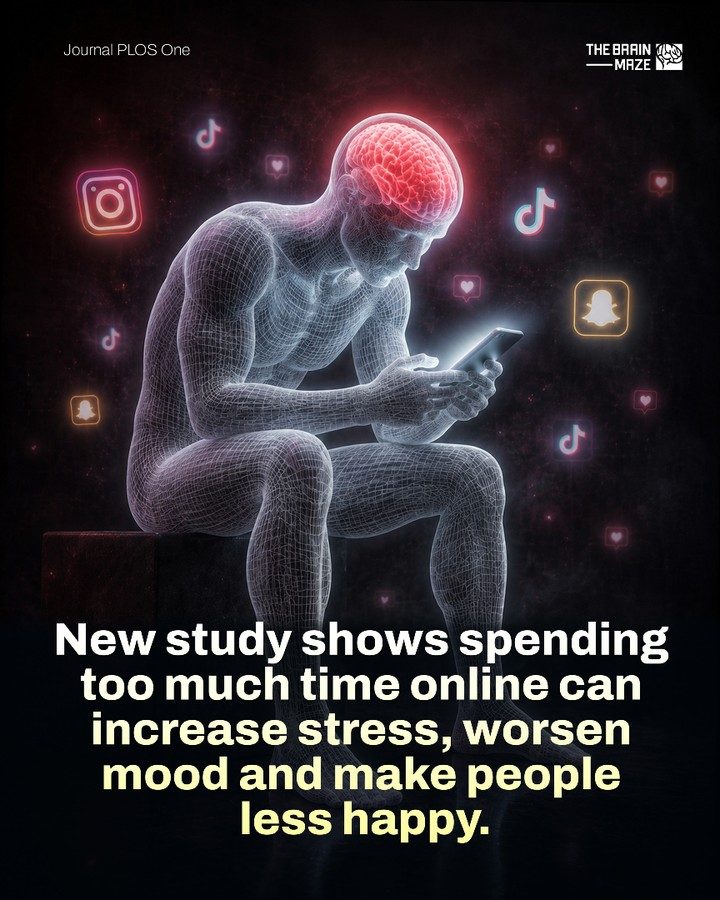
The study revealed that spending too much time online can increase stress and worsen mood. This is likely due to the constant stimulation and pressure to keep up with social media trends and interactions. The brain, as visualized in the study, can become overwhelmed by the barrage of information and expectations, leading to heightened stress levels and a general feeling of unhappiness. The brain graphic overlaid on the person hunched over a phone in the visualization emphasizes this point, showing how our minds can be consumed by digital distractions.
Physical and Social Consequences
Experts also caution that excessive screen time can reduce physical activity. This sedentary lifestyle can lead to increased exhaustion and a variety of health issues. The neglect of real-life responsibilities, as mentioned in the study, can further exacerbate these problems. When people spend too much time online, they may neglect important tasks and relationships, leading to a vicious cycle of stress and neglect.
Face-to-face connections are another area that can be weakened by excessive social media use. While social media platforms offer a means of staying connected, they often lack the depth and intimacy of in-person interactions. This can lead to feelings of isolation and a weakened sense of community, further contributing to negative emotions and stress.
Practical Tips
Setting Boundaries
One of the most effective ways to mitigate the negative effects of excessive social media use is by setting boundaries. This can include designating specific times for checking social media or setting limits on the amount of time spent online. By creating clear boundaries, individuals can ensure that their online activities do not interfere with their real-life responsibilities and relationships.
Mindful Use
Mindful use of social media involves being aware of how it affects your mood and well-being. Paying attention to your emotions and physical sensations while using social media can help you identify when it's time to take a break. Mindful use also includes recognizing the value of face-to-face interactions and making an effort to engage in meaningful conversations and activities with others.
Alternative Activities
Engaging in alternative activities can help balance the time spent on social media. Physical activities, such as exercise or outdoor recreation, can reduce stress and improve mood. Hobbies and creative pursuits can also provide a healthy outlet for stress and a sense of accomplishment. Making time for face-to-face interactions with friends and family can strengthen social connections and overall well-being.
Important Takeaways
Balance is Key
Balancing online activities with real-life responsibilities and interactions is essential for maintaining mental well-being. While social media can offer numerous benefits, it is important to be mindful of the amount of time spent online and the impact it has on your mental and physical health.
Pay Attention to Emotions
Paying attention to your emotions and physical sensations while using social media can help you identify when it's time to take a break. This mindfulness can help you maintain a healthy relationship with social media and prevent the negative effects of excessive use.
Seek Support
If you find that social media use is negatively impacting your mental well-being, it may be helpful to seek support from a mental health professional. They can provide strategies and tools to help you manage your online activities and improve your overall well-being.
Prioritize Face-to-Face Interactions
Face-to-face interactions are crucial for maintaining strong social connections and overall well-being. Making an effort to engage in meaningful conversations and activities with others can help strengthen these connections and reduce the negative effects of excessive social media use.
Conclusion
The study published in the journal PLOS One highlights the potential negative effects of excessive social media use on mental health. By setting boundaries, practicing mindful use, engaging in alternative activities, and prioritizing face-to-face interactions, individuals can mitigate these negative effects and maintain a healthy relationship with social media. Understanding the impact of excessive screen time is crucial for maintaining overall well-being in today's digital age.
Watch the Reel
Questions readers ask
How does excessive social media use affect stress levels?
Excessive social media use can significantly increase stress levels. This is because it can lead to increased feelings of anxiety, constant comparisons with others, and the pressure to maintain a certain online presence. It can also lead to feelings of FOMO (fear of missing out) which can also increase stress levels.
What are some of the negative emotions associated with excessive social media use?
Excessive social media use has been linked to a variety of negative emotions, including anxiety, depression, loneliness, and envy. These emotions can arise from constant comparisons with others, exposure to negative content, and the pressure to present a perfect image online.
How can managing screen time improve mood and reduce stress?
Managing screen time can help reduce stress and improve mood by allowing you to take breaks from the constant stimulation and pressure of social media. It can also help you reconnect with the real world, engage in meaningful activities, and improve your overall sense of well-being.
What are the benefits of reducing excessive screen time?
Reducing excessive screen time can have numerous benefits, including improved sleep, better focus, increased productivity, and enhanced real-life relationships. It can also help reduce feelings of stress, anxiety, and depression, leading to an overall improvement in mental health.
What are some practical steps to manage social media use and reduce stress?
To manage social media use and reduce stress, you can set specific times for checking social media, turn off notifications, delete social media apps from your home screen, and engage in offline activities such as reading, exercising, or spending time with loved ones.
What did the Journal PLOS One study find about the impact of social media on mental health?
The study, which involved 900 adults, found that problematic internet use, including excessive social media use, is associated with higher stress levels, negative emotions, and a neglect of real-life responsibilities. This underscores the importance of managing screen time to maintain overall well-being.
How can I balance the benefits and drawbacks of social media use?
To balance the benefits and drawbacks of social media, it's important to set boundaries and be mindful of your usage. This can include designating specific times for social media use, being selective about the content and platforms you engage with, and prioritizing real-life interactions and activities.
Related deep dives
Similar reads based on topic and creator.


Recent articles
Fresh deep dives from the latest Reels we unpacked.




Comments
Be the first to comment.