Snowflake Formation
Snowflakes are intricate ice crystals that form under specific atmospheric conditions. The beauty of these tiny structures lies in their diverse and symmetrical shapes, which are influenced by temperature and humidity. Understanding the formation process of snowflakes can provide insights into the fascinating world of meteorology and crystal growth.
Context / Why this matters
The study of snowflake formation is not just about appreciating winter's beauty. It is also about understanding the intricate mechanisms of crystal growth and how minute changes in the environment can lead to significant variations in structure. This knowledge can be applied to various fields, from materials science to climate studies.
Main discussion
The Science Behind Snowflake Formation
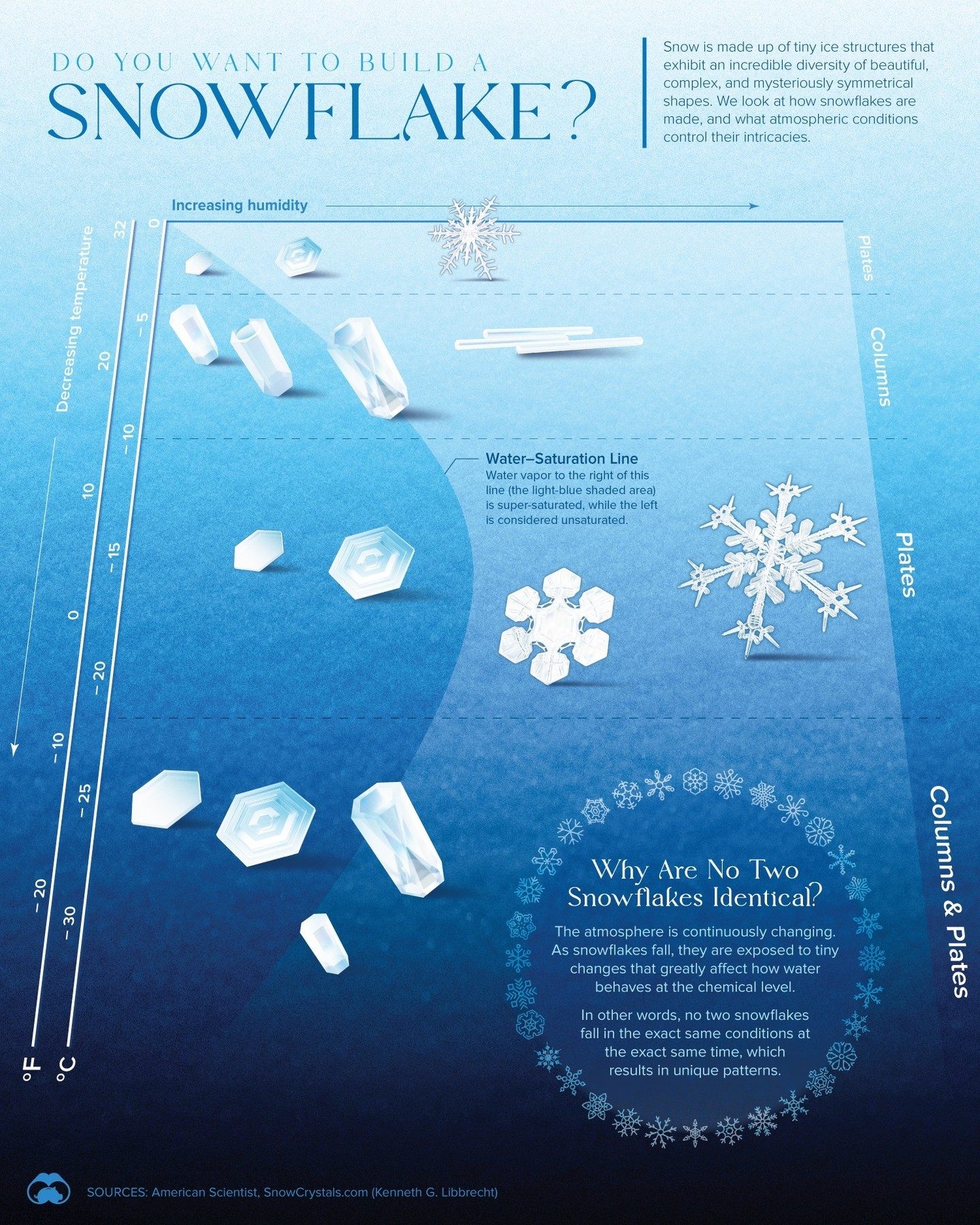
Snowflakes begin as tiny ice crystals in clouds. These crystals form when water vapor in the atmosphere condenses directly into ice, a process known as deposition. The shape of a snowflake is determined by the temperature and humidity of the air it passes through as it falls to the ground.
Temperature and Snowflake Structure
Temperature plays a crucial role in the formation of snowflakes. Different temperature ranges produce distinct snowflake shapes. For example, at temperatures around -2°C to -3°C, thin hexagonal plates form. As the temperature decreases further, columns and needles develop. At very low temperatures, around -15°C to -20°C, intricate, branching structures like dendritic crystals are more likely to form.
Water Saturation and Humidity
Humidity, or the amount of water vapor in the air, also influences snowflake formation. The term "water saturation" refers to the point at which air can hold no more water vapor. When the air is super-saturated (holds more water vapor than it typically can at a given temperature), it can lead to the formation of more complex and intricate snowflake shapes.
Why No Two Snowflakes Are Identical
The uniqueness of each snowflake is a result of the myriad of slight changes it encounters as it falls through the atmosphere. Each snowflake experiences different temperature, humidity, and pressure variations, leading to unique crystal patterns. Even the tiniest changes in these conditions can significantly alter the molecular structure of the ice crystals, resulting in the vast diversity of snowflake shapes and patterns.
The Role of Atmopsheric Conditions
Atmospheric conditions such as wind, air pressure, and the presence of other particles in the air also play a role in the formation of snowflakes. These conditions can affect the growth rate and direction of the ice crystals, contributing to the unique and complex structures we observe.
Practical tips
Observing Snowflakes
To appreciate the beauty of snowflakes, consider observing them closely. Here are some tips:
-
Use a Magnifying Glass: This will help you see the intricate details of the snowflake's structure.
-
Catch Them on a Dark Surface: A dark surface like a black piece of paper or fabric can make the snowflakes stand out more clearly.
-
Work Quickly: Snowflakes melt quickly, so you need to observe them as soon as possible after they land.
Creating Snowflake Art
You can also create your own snowflake art by following these steps:
-
Draw a Hexagon: Start by drawing a hexagon on a piece of paper. This will serve as the base of your snowflake.
-
Add Symmetrical Lines: Draw lines from each vertex of the hexagon to the center, creating a star shape. Then, add shorter lines or shapes symmetrically around the hexagon to create the intricate patterns found in real snowflakes.
-
Cut It Out: Once you're satisfied with your design, carefully cut out the snowflake shape.
-
Decorate: Use markers, colored pencils, or other art supplies to add color and detail to your snowflake.
Important takeaways
- Snowflakes are formed from tiny ice crystals that exhibit a wide variety of beautiful and complex shapes.
- Temperature and humidity are key factors in determining the structure and shape of snowflakes.
- The unique patterns of snowflakes result from the varying atmospheric conditions they encounter while falling.
- Observing and creating snowflake art can be a fun and educational activity.
Conclusion
Snowflakes are more than just pretty winter decorations; they are a testament to the fascinating interplay of physical and chemical processes in the atmosphere. By understanding how snowflakes form, we can gain insights into the broader principles of crystal growth and the intricate beauty of nature. Whether you're a science enthusiast or simply marveling at the beauty of winter, appreciating the intricacies of snowflake formation adds a new dimension to your experience.
Watch the Reel
Questions readers ask
How does temperature influence the shape of snowflakes?
Temperature plays a crucial role in determining the shape of snowflakes. Warmer temperatures (around -2°C to -4°C) typically result in simple, plate-like snowflakes, while colder temperatures (around -15°C to -16°C) often produce intricate, fern-like structures. Extremely cold temperatures (below -22°C) can lead to needle or columnar shapes.
Why are snowflakes symmetrical?
Snowflakes exhibit symmetry due to the uniform growth of ice crystals in all direction. Atoms and molecules arrange themselves around a central core in a highly structured way. The process of vapor diffusion and crystal growth maintains this symmetry.
How do atmospheric conditions affect the unique structure of snowflakes?
Atmospheric conditions, such as temperature and humidity, significantly impact the unique structure of snowflakes. Minor fluctuations in these conditions can lead to distinct growth patterns, resulting in a vast array of snowflake shapes. This sensitivity to environmental changes makes each snowflake a unique reflection of its formation environment.
What can the study of snowflake formation reveal about climate science?
The study of snowflake formation provides valuable insights into how environmental changes can affect crystal growth. This information can help meteorologists and climate scientists understand weather patterns, predict climate changes and their impacts.
What is the process of snowflake formation?
Snowflake formation begins with a tiny particle, like dust, around which water vapor condenses and freezes. As the ice crystal grows, it forms intricate patterns based on atmospheric conditions. These crystals continue to develop as they fall through the atmosphere, resulting in the diverse and unique shapes we associate with snowflakes.
How does humidity affect snowflake patterns?
Humidity influences the growth rate and shape of snowflakes. Higher humidity can lead to more complex and intricate patterns, as there is more water vapor available for crystal growth. Conversely, lower humidity may result in simpler, more basic shapes due to limited water vapor.
Related deep dives
Similar reads based on topic and creator.



Recent articles
Fresh deep dives from the latest Reels we unpacked.




Comments
Be the first to comment.