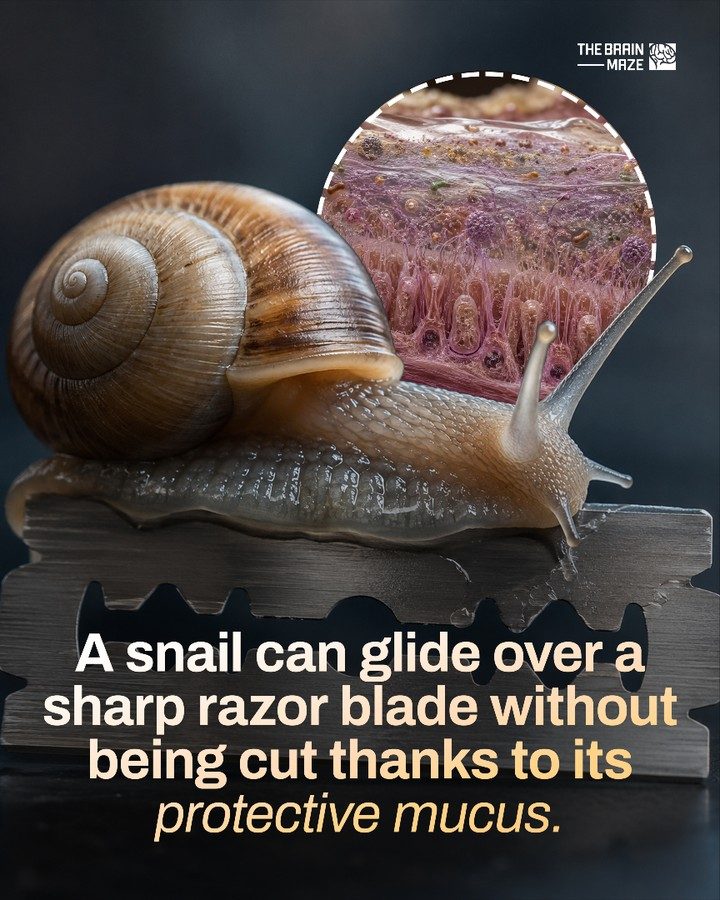
Snail's Protective Mucus
Snails gliding across razor blades without being cut might seem like a fantasy, but it's a fascinating example of nature's ingenuity. This remarkable ability is attributed to a thick layer of protective mucus that coats the snail's body, which acts as a barrier between the snail and the sharp edge of the blade. Their lightweight bodies and the secretions add to their extraordinary resilience.
Why This Matters
Understanding how snails protect themselves offers insights into the world of biology and natural adaptations. While the idea of a snail gliding over a razor blade might seem trivial, it highlights a unique biological mechanism that could inspire innovations in material science and protective coatings. The mucus not only shields the snail from physical harm but also plays a crucial role in its survival in various environments.
Main Discussion
The Protective Mucus
The mucus produced by snails is more than just a slippery substance; it's a complex and multifunctional biological barrier. This mucus layer is made up of water, glycoproteins, and minerals, which together create a tough, protective coating. This mucus isn't a single layer but a dynamic, ever-regenerating shield that continuously adapts to environmental challenges.
Properties of Snail Mucus
Snail mucus has several unique properties that make it an effective protective barrier:
- Lubrication: The mucus reduces friction, allowing the snail to move smoothly across surfaces, including sharp ones.
- Adhesion: It helps the snail adhere to surfaces, preventing it from slipping off.
- Hydration: The mucus keeps the snail's body hydrated, which is essential for its survival, especially in dry environments.
The Role of Lightweight Bodies
Snails' lightweight bodies also contribute to their ability to glide over sharp surfaces without getting cut. The minimal pressure exerted by their bodies reduces the blade's impact, making it less likely to slice through the mucus layer. The combination of their lightweight bodies and the protective mucus creates a natural defense mechanism that is both efficient and effective.
Environmental Adaptations
The mucus serves multiple purposes beyond protection. It helps snails navigate through various terrains, protects them from predators, and even aids in digestion by trapping bacteria and fungi. This adaptability makes snails a fascinating study for biologists and environmental scientists.
Limitations and Vulnerabilities
While the mucus is highly effective, it is not an impenetrable shield. Snails can still be harmed under certain conditions, such as prolonged exposure to extreme temperatures, chemicals, or physical trauma. The mucus's protective properties are not absolute, but they provide a significant advantage in many natural situations.
Practical Tips
While snails' protective mucus offers valuable insights, it also raises practical considerations. For those interested in understanding or protecting these creatures, here are a few tips:
Handling Snails
When handling snails, it's important to be gentle. Avoid picking them up by their shells, as this can cause injury. Instead, cup your hands under them and let them crawl into your palm. This reduces the risk of damaging their mucus layer.
Providing a Safe Environment
If you're keeping snails as pets, ensure their environment is moist and has plenty of hiding spots. This helps them feel safe and reduces stress, which can affect their mucus production.
Observing in the Wild
If you encounter snails in the wild, observe them from a distance. Avoid touching or handling them unnecessarily, as this can disrupt their natural behavior and potentially harm them.
Important Takeaways
- Snails produce a thick layer of protective mucus that shields their bodies from sharp surfaces and environmental hazards.
- Their lightweight bodies apply minimal pressure, further reducing the risk of injury from sharp objects.
- The mucus serves multiple functions, including lubrication, adhesion, and hydration, making it a crucial aspect of snail survival.
- Snails can still be harmed under certain conditions, so it's important to handle them with care and provide a safe environment.
Conclusion
The ability of snails to glide over razor blades without being cut is a testament to the wonders of natural adaptation. Their protective mucus and lightweight bodies are a fascinating study in biological engineering. Whether you're a scientist, a student, or just someone interested in the natural world, understanding this phenomenon can deepen your appreciation for the intricacies of life. The next time you see a snail, take a moment to marvel at the incredible mechanisms that help it thrive in its environment.
Watch the Reel
Questions readers ask
What is the primary function of a snail's mucus?
The primary function of a snail's mucus is to act as a protective barrier and lubricant. It allows snails to glide smoothly over surfaces and prevents damage from sharp objects, such as razor blades.
How does the mucus help snails glide over sharp surfaces?
The mucus provides a thick, protective layer that acts as a barrier between the snail's body and the sharp surface. This barrier prevents the snail from being cut while also acting as a lubricant to aid in smooth movement.
What makes snails' mucus an interesting subject for material science?
The unique properties of snails' mucus, such as its protective and lubricating abilities, make it an interesting subject for material science. Researchers are exploring how these properties can inspire innovations in protective coatings and other materials.
Can snails' mucus protect against all types of damage?
Snails' mucus provides excellent protection against sharp objects, but it may not protect against all types of damage. It is particularly effective against cuts and abrasions, which allows snails to glide over surfaces like razor blades without harm.
How does the mucus contribute to snails' overall resilience?
The mucus contributes to snails' overall resilience by creating a protective barrier and lubricating surfaces. This allows snails to move over rough or sharp terrain without sustaining injuries, ensuring their survival in diverse environments.
What are some potential applications of snail mucus in industry?
The unique properties of snail mucus could be applied in various industries. For instance, it could inspire new protective coatings for materials that require resistance to abrasion or sharp surfaces. Additionally, its lubricating properties might be used in industries where smooth movement is important, such as in machinery or medical devices.
What can we learn from how snails glide over sharp surfaces?
By studying how snails glide over sharp surfaces, we can gain insights into biological adaptations and mechanisms. This understanding could inspire advancements in material science and engineering, leading to the development of new protective coatings and materials that imitate the snail's remarkable resilience.
Related deep dives
Similar reads based on topic and creator.




Recent articles
Fresh deep dives from the latest Reels we unpacked.




Comments
Be the first to comment.