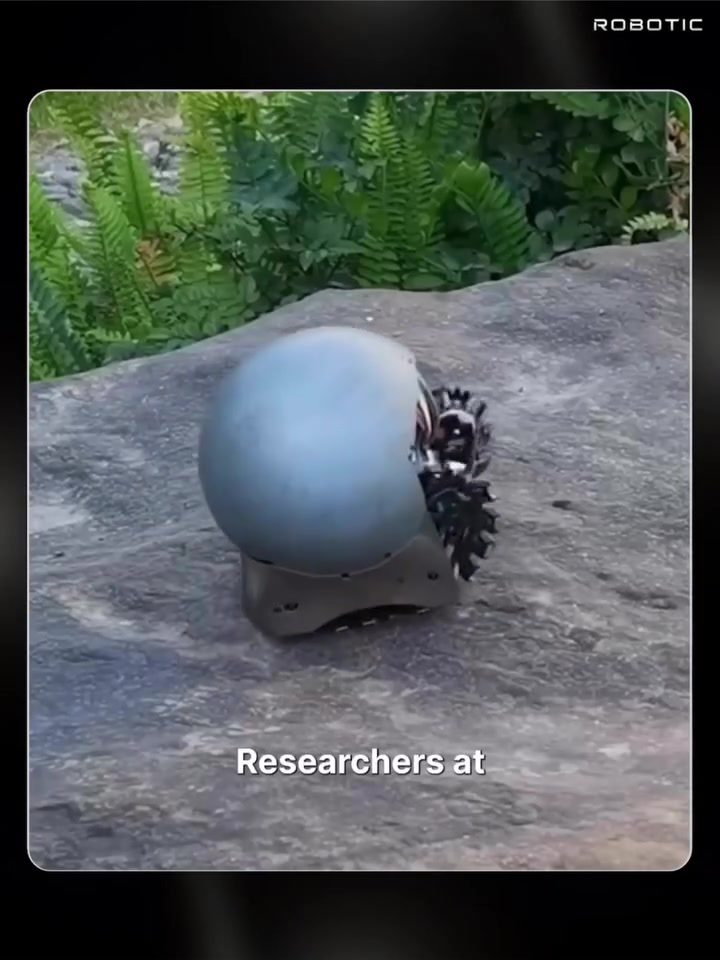
Snail-Inspired Robots
Snail robots, inspired by the unique movement and adhesion abilities of land snails, represent a significant advancement in robotic technology. These innovative robots, developed by researchers at the Chinese University of Hong Kong, Shenzhen, are designed to mimic the natural behaviors of snails, offering a range of practical applications for various challenging environments.
Why This Matters
The development of snail robots highlights a shift in robotic design from large, single-purpose machines to smaller, more adaptable units. This change is crucial for tasks that require agility, flexibility, and the ability to navigate complex terrains. Snail robots can move independently and connect to form larger, more complex structures, making them ideal for search operations, inspections, and creating temporary structures in challenging environments. This adaptability could be a game-changer in fields such as disaster response, environmental monitoring, and industrial inspections.
Main Discussion
Design and Functionality
Snail robots utilize a two-mode connection mechanism inspired by the adhesiveness of land snails. This mechanism allows the robots to switch between smooth movement and strong attachment, balancing mobility and secure connections. In the first mode, the robots can move freely across uneven terrain, climbing obstacles and navigating through rough surfaces. In the second mode, they can secure themselves firmly to a surface, allowing them to form stable structures. This dual functionality makes them highly versatile, capable of performing a wide range of tasks.
Mobility and Adaptability
The ability to move independently and connect with other units is a key feature of snail robots. These robots are designed to mimic the movement of snails, which are known for their ability to traverse various terrains with ease. This makes them highly adaptable to different environments, from rocky surfaces to muddy terrains. By connecting multiple units, snail robots can form larger structures that are capable of performing more complex tasks. This modular design allows for greater flexibility and adaptability, making them suitable for a variety of applications.
Practical Applications
The potential applications of snail robots are vast and diverse. One of the most promising areas is search and rescue operations. In disaster scenarios, these robots can navigate through debris and rough terrain to locate survivors or assess the damage. Their ability to form larger structures also makes them useful for creating temporary shelters or barriers in disaster-stricken areas.
Another area where snail robots can be beneficial is environmental monitoring. These robots can be deployed to inspect and monitor remote or hazardous environments, such as flooded areas, toxic waste sites, or volcanic regions. Their compact size and mobility make them well-suited for tasks that require close-up inspections and detailed data collection.
In industrial settings, snail robots can be used for inspections and maintenance. They can navigate through narrow spaces and rough surfaces to inspect pipelines, machinery, and other infrastructure. Their ability to combine and form larger structures can also be useful for tasks that require greater stability and complexity.
Current Developments and Testing
Scientists are currently testing these snail robots to further understand their capabilities and limitations. These tests highlight their ability to travel over uneven terrain, climb obstacles, and combine to form larger structures for performing more challenging tasks. The ongoing research aims to optimize their design and functionality, making them more efficient and effective in various applications.
Practical Tips
Understanding the Robotic Swarm
To make the most out of snail robots, it's essential to understand how they function as a robotic swarm. Each unit operates independently, allowing for a high degree of flexibility and adaptability. By connecting multiple units, the robots can form larger structures, which can be used for more complex tasks.
Deploying Snail Robots
When deploying snail robots, consider the specific requirements of the task at hand. Snail robots can be used for a variety of tasks, from search and rescue to environmental monitoring and industrial inspections. The key is to understand the environment and the specific challenges that need to be addressed.
Maintenance and Care
Like any other robotic system, snail robots require regular maintenance to ensure optimal performance. This includes cleaning, lubrication, and periodic checks to ensure that all components are functioning correctly. Regular updates and upgrades can also enhance their capabilities and adaptability.
Important Takeaways
The development of snail robots represents a significant advancement in robotic technology, offering a range of practical applications for various challenging environments. These robots are designed to mimic the natural behaviors of snails, allowing them to move independently and connect to form larger, more complex structures. This adaptability makes them ideal for tasks that require agility, flexibility, and the ability to navigate complex terrains.
By understanding their design, functionality, and practical applications, you can make the most out of snail robots. Whether for search operations, environmental monitoring, or industrial inspections, these robots offer a versatile and efficient solution for a variety of tasks.
Conclusion
The future of robotics is moving towards smaller, more adaptable units that can work together to perform complex tasks. Snail robots, with their unique design and functionality, are at the forefront of this evolution. By mimicking the natural behaviors of snails, these robots offer a versatile and efficient solution for a variety of applications, from search and rescue to environmental monitoring and industrial inspections. As research continues to optimize their design and functionality, snail robots have the potential to revolutionize the way we approach challenging tasks in various environments.
Watch the Reel
Questions readers ask
What makes snail robots unique in their design and functionality?
Snail robots stand out due to their dual-mode connection mechanism and small, agile design, inspired by land snails. They can navigate complex terrains independently and join together to form larger structures for enhanced functionality.
What are the primary applications of snail robots?
Snail robots are particularly useful for search operations, inspections, and disaster response. Their agility and adaptability make them ideal for tasks in challenging environments where flexibility and terrain navigation are crucial.
Who developed the concept of snail robots, and where are they based?
The concept of snail robots was developed by researchers at the Chinese University of Hong Kong, Shenzhen. Their work focuses on biologically inspired robotics, drawing inspiration from the natural behaviors of snails.
How do snail robots contribute to disaster response efforts?
Snail robots enhance disaster response by providing adaptable and flexible solutions for navigating through debris and rough terrains. Their ability to connect and form larger structures allows for more extensive and efficient search and rescue operations.
What are the advantages of snail robots in complex terrains?
Snail robots excel in complex terrains due to their small size and agility. They can easily maneuver through obstacles and rough surfaces, making them effective for inspections and search operations in environments that are difficult for larger robots to access.
Can snail robots operate independently or in groups?
Snail robots can operate both independently and in groups. They are designed to move autonomously and can connect to form larger, more complex structures, enhancing their capabilities and versatility in various applications.
What role do snail robots play in search operations?
Snail robots are highly effective in search operations due to their ability to navigate intricate environments and connect to form larger, more robust structures. This makes them invaluable for locating individuals in hard-to-reach areas during search and rescue missions.
Related deep dives
Similar reads based on topic and creator.



Recent articles
Fresh deep dives from the latest Reels we unpacked.




Comments
Be the first to comment.