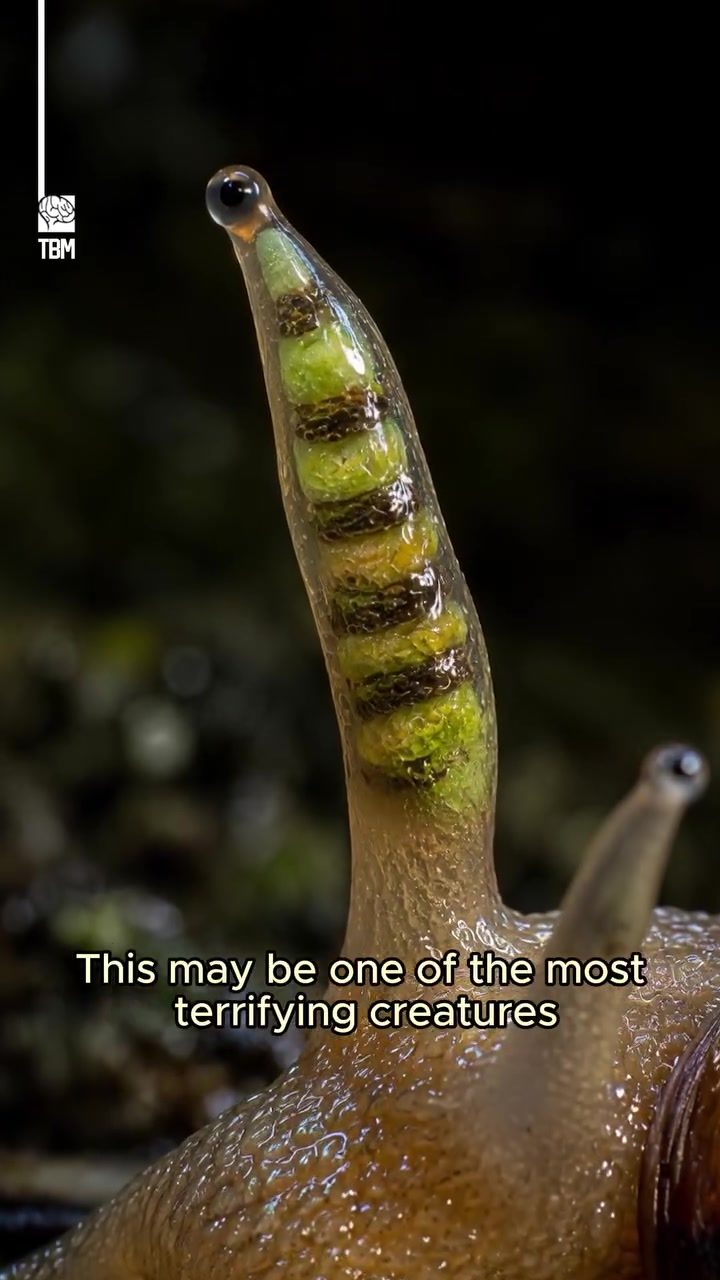
The Green-Banded Brood Sac and the Parasite that Controls Snails
Snails are common creatures in gardens, forests, and other earthy environments, even becoming a staple in some diets. However, there's a crucial, and often hidden, aspect of snail life that involves a terrifying parasite capable of taking control. Known as the green-banded brood sac, this tiny menace wields an extraordinary power over its snail hosts, ultimately influencing their behavior and ensuring its own survival.
Why This Matters
Snails, though unassuming, play a crucial role in ecosystems. However, they serve as hosts to a disturbing parasite. The green-banded brood sac (GBBS) parasite exemplifies how intricate and sometimes sinister, interactions can be between different species. Understanding this parasite and its control over the snail offers insights into the broader world of predator-prey dynamics and the life cycles of parasites. Recognizing how this parasite operates within its snail host and its subsequent life cycle helps cultivate a deeper understanding of ecological processes.
The Life Cycle of the Green-Banded Brood Sac Parasite
The parasite, the green-banded brood sac (GBBS), lays its eggs in such a manner that a snail, unknowingly, consumes them. Once the eggs enter the snail's digestive system, they hatch into tiny larvae. These larvae then infiltrate the snail's tissues, spreading throughout its body and appropriating nutrients for their growth.
As the parasite matures, it forms intricate structures, branching sacs, that invade the snail's tissues and eventually migrate to its eyes. This is where the transformation becomes apparent. The eye stalks of the snail swell and develop bright green, yellow, and dark bands, creating a deceptive, caterpillar-like appearance. This change isn't just aesthetic; it plays a critical role in the parasite's life cycle.
Behavior Modification
The GBBS parasite exhibits a remarkable ability to alter the snail's behavior. Infected snails are compelled to leave the safety of their hiding places and venture into exposed areas. This shift in behavior increases the snail's vulnerability to predators, particularly birds. Birds, attracted by the moving, colored eye stalks, often mistake them for insects and peck them off.
Reproduction and Continuation of the Cycle
Once the parasite is ingested by a bird, it enters the bird's digestive system and matures into an adult worm. The parasite then reproduces, completing its life cycle. The cycle continues when another snail consumes the parasite's eggs, perpetuating this intricate and sinister dance of survival.
The Role of Birds in the Parasite's Life Cycle
Birds play a pivotal role in the life cycle of the GBBS parasite. Their attraction to the modified eye stalks of the infected snails ensures the parasite's transition from one host to another. This interaction highlights the complex relationships between different species in an ecosystem and the role of parasites in shaping these dynamics. The evolution of the parasite's ability to control the snail's behavior and physical appearance is a testament to the intricate strategies parasites employ to ensure their survival and reproduction.
Conservation Implications
The presence of the GBBS parasite in snails underscores the importance of understanding and preserving natural ecosystems. Parasites like the GBBS play a critical role in maintaining the balance of various ecological processes. They can influence the population dynamics of their hosts and the species that prey on them. This can have cascading effects on the entire ecosystem, affecting everything from plant life to predator species.
Practical Tips
Understanding the intricacies of the GBBS parasite and its impact on snails offers practical insights that can benefit various fields, from ecology to conservation. Here are some tips for further exploration and application of this knowledge.
For Ecologists
- Study the parasite's impact on snail populations and how it affects local ecosystems.
- Investigate the role of birds in spreading the parasite and how this might influence their behavior and health.
- Examine the potential for the parasite to infect other species and the broader implications for biodiversity.
For Conservationists
- Protect and preserve natural habitats where snails and their parasites thrive.
- Educate the public about the importance of parasites in ecosystems and the role they play in maintaining ecological balance.
- Develop strategies to monitor and manage parasite populations to ensure the health of host species and broader ecosystems.
Important Takeaways
Understanding the green-banded brood sac parasite and its profound impact on snails provides a fascinating glimpse into the world of parasitology and ecology. This intricate dance between host and parasite highlights the complex relationships that exist within natural ecosystems and the role of parasites in shaping these dynamics. By studying the GBBS parasite, we gain a deeper appreciation for the delicate balance of life and the intricate strategies that species employ to ensure their survival.
The Importance of Parasites
Parasites, though often overlooked, play a crucial role in maintaining the health and balance of ecosystems. They influence the population dynamics of their hosts and the species that interact with them. The GBBS parasite, in particular, exemplifies how parasites can control their hosts' behavior and physical appearance, ensuring their survival and reproduction.
The Role of Birds
Birds, as predators, play a significant role in the life cycle of the GBBS parasite. Their attraction to the modified eye stalks of infected snails ensures the parasite's transition from one host to another. This interaction highlights the complex relationships between different species in an ecosystem and the role of predators in shaping these dynamics.
The Need for Conservation
The presence of the GBBS parasite in snails underscores the importance of preserving natural ecosystems. Parasites like the GBBS play a critical role in maintaining the balance of various ecological processes. They can influence the population dynamics of their hosts and the species that prey on them. This can have cascading effects on the entire ecosystem, affecting everything from plant life to predator species.
Conclusion
The green-banded brood sac parasite represents one of nature's most fascinating and terrifying examples of parasite-host interactions. Its ability to control the snail's behavior and physical appearance to ensure its own survival is a testament to the intricate strategies parasites employ. By understanding these interactions, we gain a deeper appreciation for the delicate balance of life and the complex relationships that exist within natural ecosystems. Preserving these ecosystems and the species that inhabit them ensures the continuation of these intricate dances of survival and the broader health of our planet.
Watch the Reel
Questions readers ask
What is the green-banded brood sac parasite and how does it affect snails?
The green-banded brood sac (GBBS) is a parasite that infects snails and manipulates their behavior. It alters the snail's actions to ensure its own survival, making the snail more susceptible to predators, who then consume the snail and release the parasite's offspring into the environment.
How does the green-banded brood sac parasite manipulate the behavior of its host snails?
The GBBS parasite manipulates snail behavior by altering their movement and activity patterns. Infected snails often exhibit odd behaviors, such as increased activity and climbing to higher, more visible locations. This makes them more likely to be eaten by predators, facilitating the parasite's life cycle.
Why do parasitized snails exhibit such unusual behaviors?
Parasitized snails exhibit unusual behaviors due to the influence of the GBBS parasite. These behaviors, such as climbing to higher ground and becoming more visible, increase the chances of the snail being eaten by predators. The parasite's offspring can then complete their life cycle in the predator, ensuring the parasite's survival.
What role do parasites play in snail ecosystems?
Parasites like the GBBS play a significant role in snail ecosystems by influencing the dynamics between species. They alter the behavior of snails, affecting their interactions with predators and other organisms. This can impact the balance of the ecosystem by changing the predation patterns and the distribution of snails.
How does the parasite ensure its survival within the snail host?
The GBBS parasite ensures its survival by manipulating the snail's behavior to increase its chances of being eaten by a predator. Once the snail is consumed, the parasite's offspring are released into the predator's digestive system, where they can continue their life cycle. This strategy is crucial for the parasite's survival and reproduction.
What are the typical symptoms of a snail infected with the green-banded brood sac?
Snails infected with the green-banded brood sac parasite often show visible changes in behavior. They may move to higher, more exposed locations, exhibit increased activity, and become more visible to predators. These changes are part of the parasite's strategy to ensure its survival and reproduction.
Can the green-banded brood sac parasite infect other species besides snails?
The GBBS parasite primarily targets snails as its host. However, its life cycle involves transmission to other species through predation. When a snail infected with the GBBS parasite is consumed by a predator, the parasite's offspring can be released into the predator's digestive system, potentially affecting other species in the ecosystem.
Related deep dives
Similar reads based on topic and creator.



Recent articles
Fresh deep dives from the latest Reels we unpacked.




Comments
Be the first to comment.