Choosing Better, Not Perfect
The products you buy every week can significantly impact your health. Choosing better options doesn't mean eating perfectly or spending a fortune on specialty foods. Small, incremental changes can make a meaningful difference over time. This guide will help you make smarter choices in your grocery shopping, focusing on bread, cottage cheese, and butter.
Why This Matters
Everyday nutritional choices are critical to overall health. Simple swaps can improve your diet, enhancing your nutritional intake without drastically changing your eating habits. By selecting better versions of common foods, you can boost your health and well-being.
Main Discussion
Bread: The Foundation of Your Diet
Understanding Bread Labels
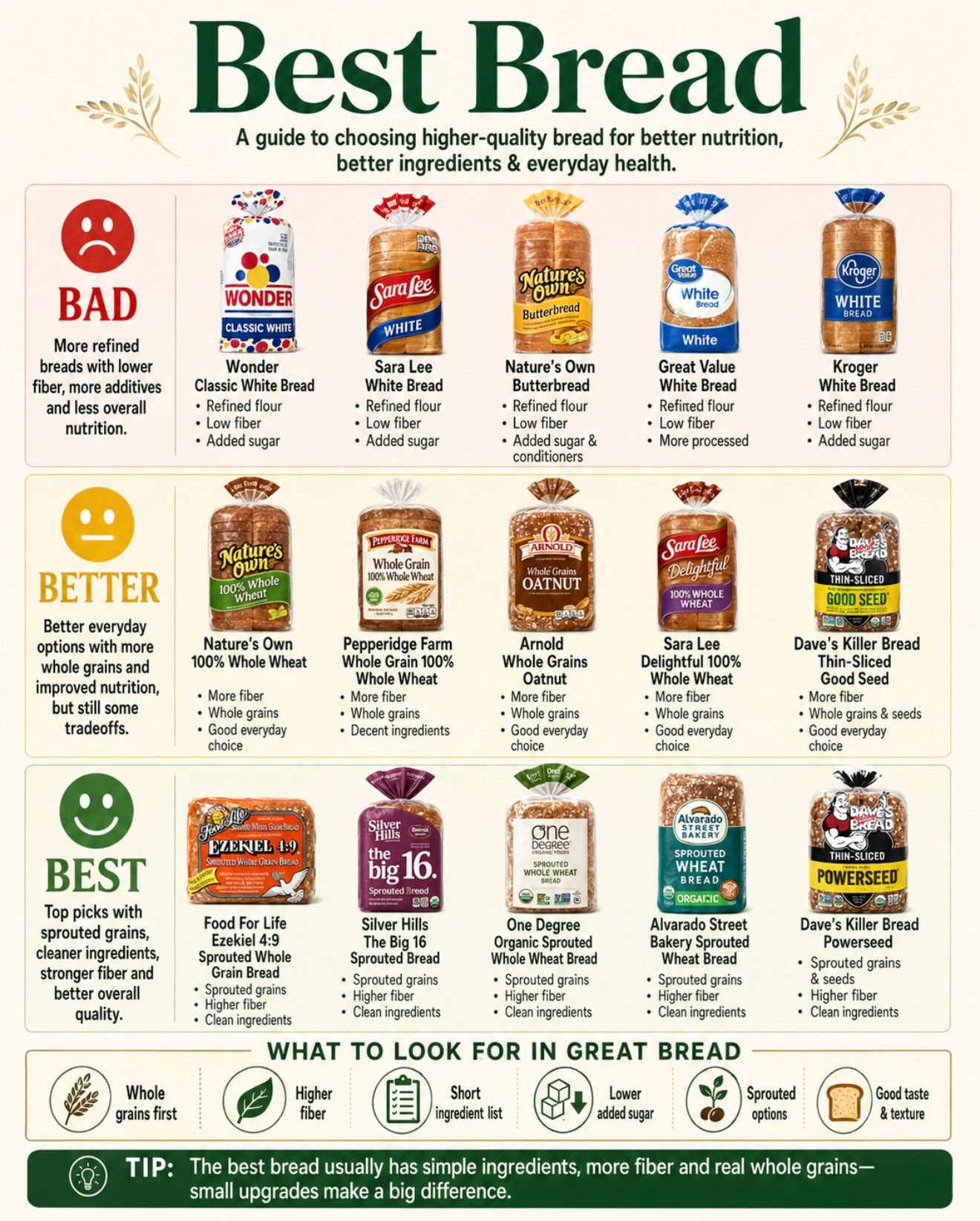
Bread is a staple in many diets, but not all breads are created equal. When shopping for bread, look for whole grains as the first ingredient and at least 3–5g of fiber per serving. These factors ensure you're getting more nutrients and less processed flour.
Best Bread Choices
-
Best: Ezekiel 4:9 Sprouted Whole Wheat
- Key Features: Higher fiber, cleaner ingredients, and a delicious taste.
- Why It's Best: This bread is made from sprouted whole grains, which increases its nutritional value and digestibility.
-
Better: Nature's Own 100% Whole Wheat
- Key Features: Whole grains, good everyday choice.
- Why It's Better: This bread is a solid choice for those looking for a higher-quality bread without additives.
-
Bad: Wonder Classic White Bread
- Key Features: Refined flour, added sugar.
- Why It's Bad: Refined flour and added sugars offer fewer nutrients and more empty calories.
Cottage Cheese: Protein Powerhouse
Cottage cheese is a versatile, high-protein food. However, not all cottage cheeses are equal in terms of protein content and sodium levels.
Best Cottage Cheese Choices
-
Best: Friendship Dairies No Salt Added
- Key Features: Higher protein, ultra-filtered, no added salt.
- Why It's Best: This option offers high protein and low sodium, making it a healthier choice.
-
Better: Daisy 4% Cottage Cheese
- Key Features: 13g protein, creamy texture.
- Why It's Better: With a good protein content and a creamy texture, this is a reliable choice.
-
Bad: Great Value Cottage Cheese
- Key Features: Lower protein, higher sodium.
- Why It's Bad: The lower protein and higher sodium levels make this a less desirable option.
Butter: Real vs. Fake
Butter is a staple in many kitchens, but the type you choose can make a big difference in your health.
Best Butter Choices
-
Best: Plugra European Style Butter
- Key Features: Rich, creamy flavor, excellent for baking.
- Why It's Best: This butter is made from simple ingredients and offers a rich, creamy flavor, perfect for both cooking and baking.
-
Better: Land O Lakes Salted Butter
- Key Features: Great for cooking, simple ingredients.
- Why It's Better: While it may not be as rich as Plugra, it is a good choice for cooking due to its simple ingredients.
-
Bad: Blue Bonnet Vegetable Oil Spread
- Key Features: Contains additives, heavily processed.
- Why It's Bad: Vegetable oil spreads are often made from heavily processed oils and contain additives, making them a less healthy choice.
Practical Tips
Making Smart Choices at the Grocery Store
Bread:
- Avoid: Breads with refined flour and added sugars. These breads often have fewer nutrients and are more processed.
- Choose: Breads with whole grains as the first ingredient and at least 3–5g of fiber per serving. These options offer more nutrients and are less processed.
Cottage Cheese:
- Avoid: Cottage cheese with lower protein content and higher sodium levels. These options are less nutritious and can be high in sodium.
- Choose: Cottage cheese with higher protein and lower sodium. Look for brands that are ultra-filtered and have no added salt.
Butter:
- Avoid: Vegetable oil spreads and heavily processed butters. These options are often made from processed oils and contain additives.
- Choose: Real butter made from cream. Look for brands with simple ingredients and rich, creamy flavors.
Cooking and Baking with Better Ingredients
When cooking and baking, using higher-quality ingredients can enhance the flavor and nutritional value of your meals. Opt for real butter, whole-grain bread, and high-protein cottage cheese to improve the overall quality of your dishes.
Additional Food Swaps
-
Oil:
- Opt for extra virgin olive oil that's cold-extracted and, if possible, from a single origin with a harvest date. This ensures you're getting a high-quality, pure oil.
-
Peanut Butter:
- Choose peanut butter that contains just peanuts (and maybe a little salt). Avoid added sugars and hydrogenated oils.
-
Oatmeal:
- Pick oatmeal that’s plain and minimally processed, then add your own fruit, nuts, seeds, or cinnamon. This allows you to control the ingredients and avoid added sugars and preservatives.
-
Chocolate:
- Aim for 70% cocoa or higher with a short ingredient list if you’re craving chocolate. This ensures you're getting a higher-quality, less processed chocolate.
-
Coffee Creamer:
- Choose coffee creamer with less added sugar and fewer oils. This is generally a better option for everyday use.
Important Takeaways
- Small Changes Matter: Making small, incremental changes in your daily choices can significantly improve your overall health and well-being.
- Read Labels: Pay attention to the ingredients and nutritional content of the foods you buy. Opt for whole grains, higher protein, and fewer processed ingredients.
- Focus on Progress: Remember, the goal is progress, not perfection. Gradual improvements in your diet are more sustainable and effective in the long term.
Conclusion
Choosing better versions of everyday foods can make a meaningful impact on your health. By focusing on whole grains, higher protein, and fewer processed ingredients, you can enhance your nutrition without drastically changing your diet. Making small, incremental changes over time will lead to better health and well-being.
Watch the Reel
Questions readers ask
What are the key things to look for when choosing a healthier bread?
When selecting healthier bread, focus on whole grain breads with at least 3-5 grams of fiber per slice. Opt for breads with minimal added sugars—ideally less than 2 grams per slice. Also, check for a shorter ingredients list, indicating fewer additives and preservatives.
Which types of cheese are best for nutritional benefits?
For the best nutritional benefits, choose cheeses that are high in protein, such as mozzarella, cheddar, and Greek-style cottage cheese. These cheeses provide essential nutrients like calcium and vitamin D. Additionally, opt for lower-fat varieties or those lower in sodium.
What are some healthy alternatives to regular butter?
Healthy butter alternatives include margarine with plant sterols, olive oil, and avocado oil. These options are lower in saturated fats and have a lower cholesterol impact on the body. You can also consider nut butters, such as almond or cashew butter, which provide healthy fats and additional nutrients.
What should I avoid when buying bread and why?
When buying bread, avoid those with high levels of added sugars, excessive sodium, and refined grains. These ingredients can lead to inflammation, weight gain, and other health issues. Also, steer clear of breads with artificial ingredients and preservatives, as they have no nutritional benefits and can be harmful to your health.
Which cottage cheese brands are best for nutrition?
For the best nutritional benefits, look for cottage cheese brands that are high in protein and low in fat. Greek-style cottage cheeses, such as Good Culture or Friend's Farm, are excellent choices. These brands typically offer a higher protein content and fewer calories, making them a healthier option for your diet.
How can I identify healthier bread options at the grocery store?
Identify healthier bread options by prioritizing whole grain varieties and checking for the whole grain stamp on the packaging. Ensure the bread has a high fiber content and low added sugars. Additionally, opt for brands that use simple, recognizable ingredients and avoid those with long lists of additives.
What makes whole grain bread a better choice for me?
Whole grain bread is better for you because it contains all parts of the grain, including the bran, germ, and endosperm, which provide essential nutrients such as fiber, vitamins, and minerals. Whole grain bread helps promote digestive health, reduces the risk of chronic diseases, and provides a more balanced source of energy.
Related deep dives
Similar reads based on topic and creator.




Recent articles
Fresh deep dives from the latest Reels we unpacked.




Comments
Be the first to comment.