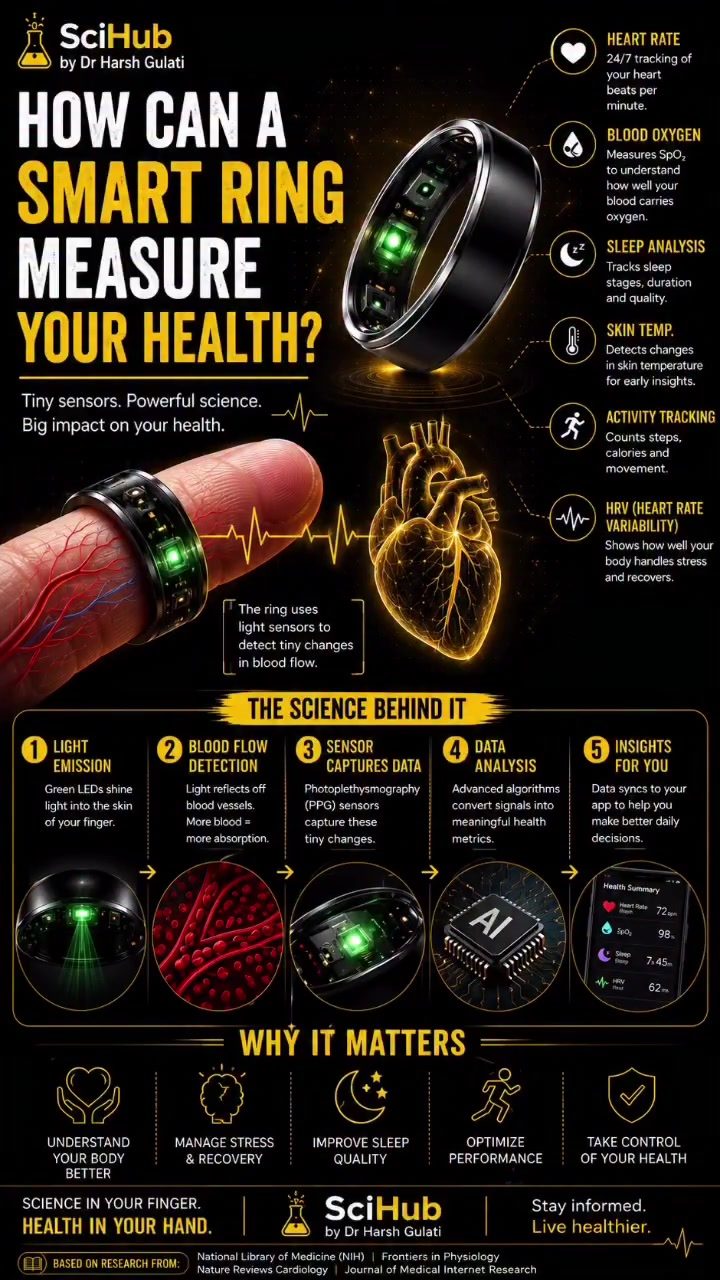
Smart Ring Health Tracking
Smart rings are one of the latest innovations in wearable technology, combining advanced biosensors and engineering to monitor various health metrics. These small devices pack a powerful punch, offering features that help you better understand your body and daily wellness patterns. Let's dive into the science behind these rings and explore their capabilities and benefits.
Why This Matters
In today's fast-paced world, keeping track of your health has become more important than ever. Smart rings offer a convenient and discreet way to monitor key health metrics. By providing real-time data, they help users make informed decisions about their wellness, from managing stress to optimizing performance.
The Science Behind Smart Rings
Smart rings, such as those from SciHub, use advanced biosensors, green LED lights, and photoplethysmography (PPG) technology to detect tiny changes in blood flow. PPG is a non-invasive optical technique that uses light to monitor blood volume changes at the microvascular level. The light reflections are analyzed by intelligent algorithms to estimate important health metrics.
Key Health Metrics Tracked
Heart Rate
One of the primary metrics tracked by smart rings is heart rate. By continuously monitoring your heart rate, these devices can help you understand your body's responses to different activities, stress levels, and sleep patterns. This data is crucial for optimizing performance and managing overall health.
Blood Oxygen (SpO₂)
Blood oxygen levels are another critical metric monitored by smart rings. Low SpO₂ levels can indicate underlying health issues, making this a valuable metric for early detection and management of potential problems. Smart rings provide real-time SpO₂ readings, allowing users to stay informed about their oxygen saturation levels at all times.
Sleep Quality and Sleep Stages
Sleep is essential for overall health and wellness. Smart rings track sleep quality and sleep stages, providing insights into how well you are resting. By analyzing data on sleep stages, including deep, light, and REM sleep, users can make adjustments to improve their sleep hygiene and overall health.
Skin Temperature
Skin temperature is an often-overlooked but important health metric. Smart rings monitor skin temperature, which can provide valuable insights into the body's stress levels, metabolic rate, and even the onset of infections or illnesses. Changes in skin temperature can serve as early indicators of potential health issues, allowing users to take proactive measures.
Heart Rate Variability (HRV)
Heart rate variability (HRV) is a measure of the variation in time between each heartbeat. High HRV is generally associated with better health and resilience to stress. Smart rings can track HRV, helping users understand their body's response to stress and providing insights into overall health and fitness levels.
Activity Tracking
Many smart rings also offer activity tracking features, allowing users to monitor their daily movements and exercise routines. This data is invaluable for optimizing performance and setting fitness goals. By tracking activity levels, smart rings help users stay motivated and accountable in their fitness journeys.
Benefits of Using a Smart Ring
Understand Your Body
One of the primary benefits of using a smart ring is the ability to gain a deeper understanding of your body. By continuously tracking key health metrics, these devices provide real-time data that can help you make informed decisions about your wellness. This data can reveal patterns and trends that might otherwise go unnoticed, allowing you to take proactive measures to improve your health.
Manage Stress and Recovery
Stress management is crucial for overall well-being. Smart rings can help monitor stress levels by tracking metrics such as heart rate variability and skin temperature. This data can provide insights into how your body responds to stress and help you develop strategies for better stress management and recovery.
Improve Sleep Quality
Sleep is essential for both physical and mental health. Smart rings track sleep quality and sleep stages, providing valuable insights into your sleep patterns. By understanding your sleep data, you can make adjustments to improve your sleep hygiene and overall well-being.
Optimize Performance
For athletes and fitness enthusiasts, optimizing performance is key. Smart rings can track various health metrics, including heart rate, blood oxygen, and activity levels, providing valuable data for optimizing performance. This data can help users set and achieve fitness goals, whether they are training for a marathon or simply trying to stay active.
Take Control of Your Health
Ultimately, the goal of using a smart ring is to take control of your health. By providing real-time data and insights, these devices empower users to make informed decisions about their wellness. Whether you are looking to manage stress, optimize performance, or improve sleep quality, a smart ring can be a valuable tool in your health journey.
Practical Tips for Using a Smart Ring
Wearing the Ring
For accurate readings, it's essential to wear your smart ring properly. Place it on your finger comfortably, ensuring that the sensors are in close contact with your skin. Avoid placing it on a finger that is exposed to frequent movement or pressure.
Tracking and Monitoring
Regularly monitor your data to gain insights into your health patterns. Check your app for updates on your heart rate, blood oxygen levels, sleep quality, and other metrics. Set reminders to review your data and make adjustments to your lifestyle as needed.
Understanding the Data
Learn to interpret the data provided by your smart ring. Understand the significance of different metrics and how they relate to your overall health. Use the insights to make informed decisions about your wellness and set achievable goals.
Maintaining the Ring
Keep your smart ring clean and in good condition. Regularly clean the sensors to ensure accurate readings. Follow the manufacturer's guidelines for recharging and maintenance to extend the life of your device.
Consulting Healthcare Professionals
While smart rings offer valuable insights, they are not medical devices and should not replace advice or diagnosis from a healthcare professional. If you notice any concerning trends or abnormal readings, consult a healthcare provider for a comprehensive evaluation.
Important Takeaways
Smart rings represent a significant advancement in wearable technology, offering a convenient and discreet way to monitor key health metrics. By providing real-time data, these devices empower users to make informed decisions about their wellness. From managing stress to optimizing performance, smart rings can be a valuable tool in your health journey. However, it's essential to remember that they are not medical devices and should be used as a complement to professional healthcare advice.
Conclusion
Smart rings, such as those from SciHub, offer a powerful and convenient way to monitor your health. With advanced biosensors and intelligent algorithms, these devices provide real-time data on key health metrics, helping you understand your body and make informed decisions about your wellness. Whether you are looking to manage stress, optimize performance, or improve sleep quality, a smart ring can be a valuable tool in your health journey.
Watch the Reel
Questions readers ask
How do smart rings track heart rate and blood oxygen levels?
Smart rings use advanced biosensors, such as photoplethysmography (PPG), to track heart rate and blood oxygen levels (SpO2). The sensors emit light and measure the reflection to calculate these vital metrics, providing accurate real-time data.
Can smart rings help improve sleep quality?
Yes, smart rings can help improve sleep quality by monitoring sleep patterns, including duration, sleep stages, and movements. By analyzing this data, users can gain insights into their sleep habits and make adjustments to enhance overall sleep quality.
What are the benefits of using a smart ring for stress management?
Smart rings can aid in stress management by tracking heart rate variability (HRV), which is an indicator of stress levels. By monitoring HRV, users can identify stress patterns, practice relaxation techniques, and take proactive steps to manage stress effectively.
How do smart rings optimize physical performance?
Smart rings can optimize physical performance by tracking metrics such as heart rate, sleep quality, and activity levels. They provide insights into recovery status, exercise intensity, and overall fitness, helping users to fine-tune their training and achieve their performance goals.
Are smart rings suitable for everyday use?
Yes, smart rings are designed for everyday use. They are compact, discreet, and can be worn comfortably throughout the day and night. This makes them ideal for continuous health monitoring without disrupting daily activities.
What health metrics can smart rings track in real-time?
Smart rings can track a variety of health metrics in real-time, including heart rate, blood oxygen levels, sleep patterns, and stress levels. Some advanced models may also track body temperature, respiration rate, and even blood pressure.
How do smart rings compare to other wearable health devices?
Compared to other wearable health devices, smart rings are more compact and discreet, making them less obtrusive. They offer similar health tracking capabilities, but their small size and continuous monitoring features make them a convenient choice for users seeking real-time health data without the bulk of larger devices.
Related deep dives
Similar reads based on topic and creator.


Recent articles
Fresh deep dives from the latest Reels we unpacked.




Comments
Be the first to comment.