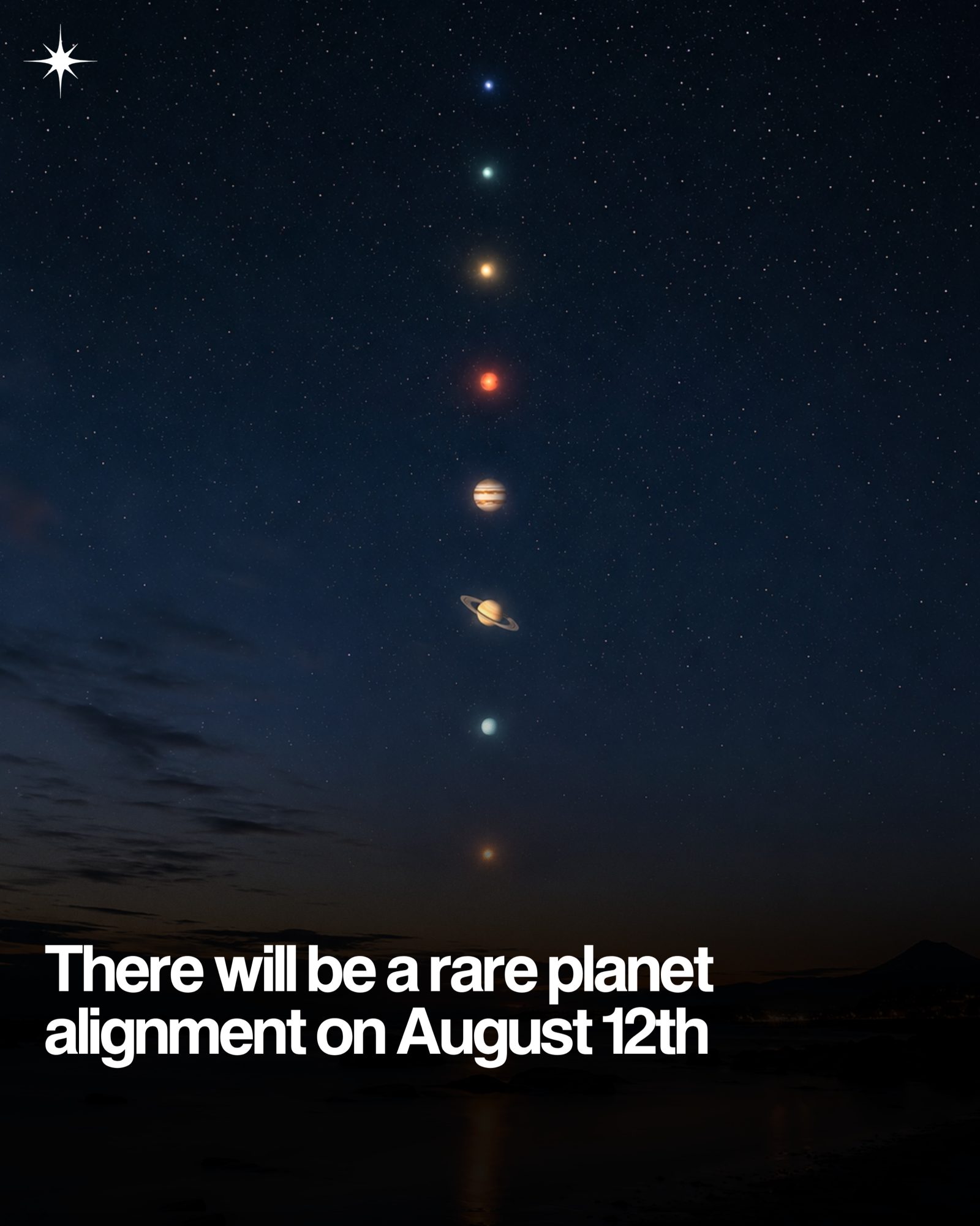
Rare Planet Alignment: A Spectacular Celestial Event
On August 12, 2026, skywatchers will be treated to a remarkable astronomical event: a rare alignment of six planets. Mercury, Venus, Mars, Jupiter, Saturn, and Uranus will all appear in a line along the ecliptic, visible before sunrise. This alignment creates one of the most impressive planetary displays of the year, offering a unique opportunity for both amateur and professional astronomers to observe the planets in a striking formation.
Why This Matters
Watching a planetary alignment is more than just a visual treat; it offers insights into the dynamics of our solar system. The planets will be visible from Earth in a way that highlights their orbital paths and the celestial mechanics at play. This event is a reminder of the beauty and complexity of the cosmos, encouraging people to look up and appreciate the wonders of space.
Understanding the Planetary Alignment
The Planets Involved
The six planets—Mercury, Venus, Mars, Jupiter, Saturn, and Uranus—each have unique characteristics that contribute to the visual spectacle.
- Mercury is the smallest and closest to the Sun, making it a challenging planet to observe.
- Venus is the brightest planet in the sky, often visible even during daylight.
- Mars is known for its reddish hue, often called the "Red Planet."
- Jupiter is the largest planet in our solar system, famous for its Great Red Spot and numerous moons.
- Saturn is renowned for its stunning ring system.
- Uranus is the seventh planet from the Sun, appearing as a faint blue-green dot.
The Ecliptic and Planetary Orbits
The ecliptic is the plane of Earth's orbit around the Sun. From our perspective, the planets appear to move along this path. During the alignment, the planets will appear grouped together, but they won't form a perfect straight line in three-dimensional space. This illusion is due to our vantage point on Earth.
Visibility and Timing
The alignment will be visible before sunrise. This is a crucial point because the planets will be more easily seen against the dark sky. Early morning sky observation often requires patience and clear conditions, but the reward is a unique celestial view.
Practical Tips for Observing the Alignment
Choose the Right Location
Find a spot with an unobstructed view of the eastern horizon. This could be a field, a hilltop, or even a rooftop. Ensure there are no tall buildings, trees, or hills that could block your view.
Use the Right Equipment
While the naked eye can provide a basic view, using binoculars or a telescope will enhance the experience. Telescopes, especially those with a low magnification, can offer a detailed look at the planets and their unique features. Binoculars are a good middle ground, providing a wider view and easier setup.
Prepare for Comfort
Observing the sky can take time, so dress warmly and bring a chair or blanket to sit on. A thermos with a hot beverage can also make the experience more comfortable.
Important Takeaways
A planetary alignment is a rare and exciting event that offers a unique glimpse into the beauty and complexity of our solar system. This alignment is not just a visual spectacle but also an opportunity to deepen your understanding of celestial mechanics.
Remember to mark your calendars for August 12, 2026. Take advantage of this rare opportunity to look up and marvel at the wonders of the cosmos. Whether you're an experienced astronomer or a curious beginner, this event promises to be a memorable experience.
Conclusion
The celestial event on August 12, 2026, offers a chance to see six planets aligned along the ecliptic. This rare alignment of Mercury, Venus, Mars, Jupiter, Saturn, and Uranus will create a breathtaking display in the early morning sky. This is a unique opportunity to appreciate the beauty and mechanics of our solar system. So, set your alarm for an early morning and look up to the sky—it's a moment you won't want to miss.
Watch the Reel
Questions readers ask
Which six planets will align on August 12, 2026?
The six planets that will align are Mercury, Venus, Mars, Jupiter, Saturn, and Uranus. This alignment is particularly notable as it includes both inner and outer planets.
What time is the best to view this planetary alignment?
The planetary alignment will be visible before sunrise. This means early risers will have the best opportunity to catch a glimpse of Mercury, Venus, Mars, Jupiter, Saturn, and Uranus all in a line.
Why is the 2026 planetary alignment considered rare?
This alignment is considered rare because it involves six planets and is visible from Earth. It's a special event that provides an excellent opportunity to observe the planets. The planets will be visible in a way that showcases the orbital paths.
Do I need special equipment to see the alignment?
The alignment will be visible to the naked eye, making it accessible for everyone. However, binoculars or a telescope can enhance the viewing experience, allowing you to see the planets more clearly and even spot some of their features, such as Jupiter's moons or Saturn's rings.
Will the planets actually be in a straight line in space?
While the planets will appear in a straight line from our perspective on Earth, they won't be perfectly aligned in space. The alignment is a result of their orbits being on a similar plane, known as the ecliptic, and their positions coinciding when viewed from Earth.
How often do such planetary alignments occur?
Alignments of six planets are relatively rare. They typically occur once or twice in a decade, but the exact frequency and visibility can vary. The 2026 alignment is a special event that skywatchers can look forward to.
Can this alignment be seen from any location on Earth?
The alignment will be visible from most locations on Earth, but the best viewing conditions will be from areas with clear skies and a low horizon, especially in the east-northeast direction. City dwellers may face challenges due to light pollution from the Sun.
Related deep dives
Similar reads based on topic and creator.




Recent articles
Fresh deep dives from the latest Reels we unpacked.




Comments
Be the first to comment.