The 2026 Six-Planet Parade
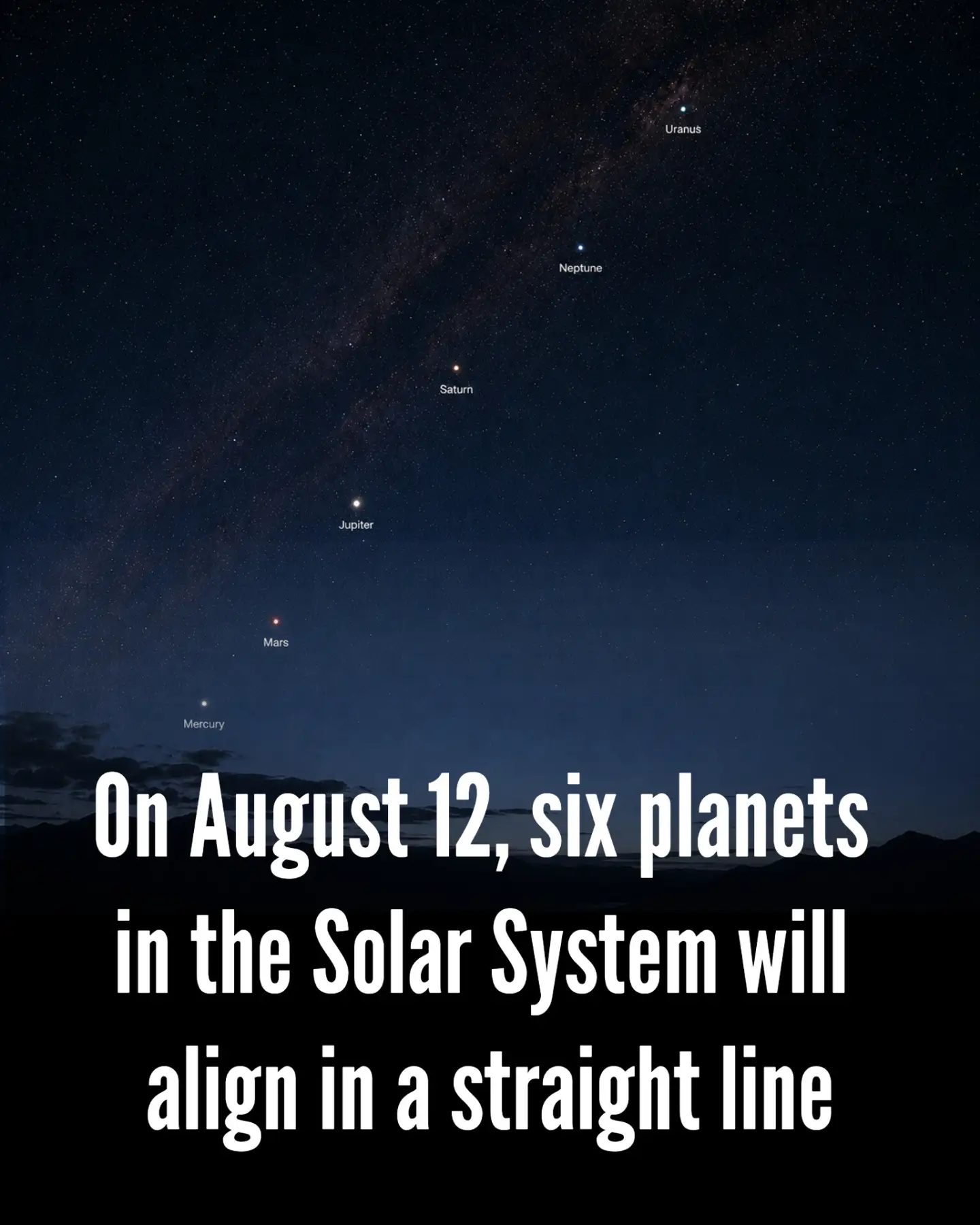
On August 12, 2026, early risers will have a unique opportunity to witness a celestial spectacle like no other: a six-planet alignment. This rare event, which includes Jupiter, Mercury, Mars, Uranus, Saturn, and Neptune, will stretch across the pre-dawn sky along the ecliptic, creating the illusion of a celestial parade.
The Planetary Parade
The Planets Involved
The lineup will feature six planets: Jupiter, Mercury, Mars, Uranus, Saturn, and Neptune. Each of these celestial bodies has its own distinct characteristics and viewing challenges.
-
Jupiter and Mercury will be positioned low near the eastern horizon, making them somewhat challenging to spot due to the approaching dawn. To see them, you will need a clear, unobstructed view of the horizon.
-
Mars and Saturn are typically the easiest to spot with the naked eye. If you know Mars's reddish hue, you will have an easier time identifying it. Saturn, on the other hand, is known for its subtle yellowish hue.
-
Uranus and Neptune both are usually difficult to spot with the naked eye. However, you could spot Uranus with binoculars, while Neptune may require a telescope.
The Perseid Meteor Shower and Solar Eclipse
This alignment will coincide with two other celestial phenomena: the Perseid meteor shower and a total solar eclipse. The Perseids, one of the most iconic meteor showers, will be near its peak, offering a stunning display of shooting stars just after the planets are visible. The solar eclipse will occur during the day, adding yet another layer to this day of celestial events.
Why This Event Matters
This event is significant for several reasons. For starters, planetary alignments are relatively rare, making this a unique opportunity for stargazers. The alignment of six planets is particularly noteworthy, as it offers a chance to see a large portion of the solar system’s planets in a single view.
Unforgettable Astronomy
On August 12, 2026, the sky will host planets before dawn, a solar eclipse during the day, and Perseid meteors after dark—a remarkable combination of celestial events. This makes it one of the most unforgettable astronomy dates in the year. Even if the weather and visibility conditions are not ideal, the sheer rarity of the event makes it worth planning around.
Practical Tips
When to Observe
The best time to observe the six planets will be 30–60 minutes before sunrise. This window allows for the planets to be visible without the sun washing out the sky. However, the exact time will depend on your location and the weather conditions. In the Northern Hemisphere, the planets will be visible mostly in the early morning sky.
What You Will Need
-
Binoculars will help spot Uranus, and telescope for Neptune.
-
Naked-eye observation will work well for Mars and Saturn, and possibly Jupiter and Mercury, depending on your viewing conditions.
Important Takeaways
How to Prepare
To fully enjoy the 2026 planetary parade, you will need to plan ahead. Check your local weather forecast to ensure the sky is clear. Find an unobstructed view of the eastern horizon, and if possible, use a telescope or binoculars for a better view of Uranus and Neptune.
Location Matters
Location can significantly affect your viewing experience. Those in the Northern Hemisphere may have the best opportunity, particularly in regions with minimal light pollution. If you are in the Southern Hemisphere, the alignment might be visible but may require more effort to observe.
The Ecliptic View
Understanding the ecliptic plane is essential for this event. The ecliptic is the path the Sun appears to take across the sky over the course of a year, and the planets align along this path. Knowing this will help you mentally map out where to look for the planets.
Conclusion
The six-planet alignment on August 12, 2026, is a remarkable event that offers stargazers a unique opportunity to witness a celestial spectacle. With careful planning and the right equipment, you can enjoy a memorable experience that combines the awe of a planetary parade and the excitement of a meteor shower and solar eclipse.
Watch the Reel
Questions readers ask
What planets will be visible during the 2026 planetary alignment?
The six planets that will align in the pre-dawn sky on August 12, 2026, are Jupiter, Mercury, Mars, Uranus, Saturn, and Neptune.
Why is the 2026 planetary alignment considered rare?
The 2026 alignment is rare because it involves six planets visible to the naked eye or with the aid of binoculars or a telescope, and it coincides with the Perseid meteor shower and a total solar eclipse.
What challenges might viewers face when trying to see Jupiter and Mercury during the alignment?
Viewers may find it challenging to spot Jupiter and Mercury due to their low position near the eastern horizon and the approaching dawn. A clear, unobstructed view of the horizon is essential for observing these planets.
Will the Perseid meteor shower be visible during the planetary alignment?
Yes, the Perseid meteor shower will coincide with the planetary alignment, adding to the spectacle. However, the best time to view the meteor shower might be slightly different from the optimal viewing window for the planets.
Will the total solar eclipse be visible during the planetary alignment?
The total solar eclipse will occur on the same day as the planetary alignment, but it will not be visible at the same time as the pre-dawn planetary parade. The eclipse will be visible later in the day and only in a specific path.
What is the ecliptic, and why is it relevant to the planetary alignment?
The ecliptic is the apparent path that the Sun traces out in the sky as the Earth orbits around it. During the planetary alignment, the planets will stretch along this path, creating the illusion of a celestial parade across the pre-dawn sky.
When is the best time to view the 2026 planetary alignment?
The best time to view the 2026 planetary alignment is just before dawn on August 12, 2026. During this time, the planets will be visible in the pre-dawn sky, stretching along the ecliptic.
Related deep dives
Similar reads based on topic and creator.




Recent articles
Fresh deep dives from the latest Reels we unpacked.




Comments
Be the first to comment.