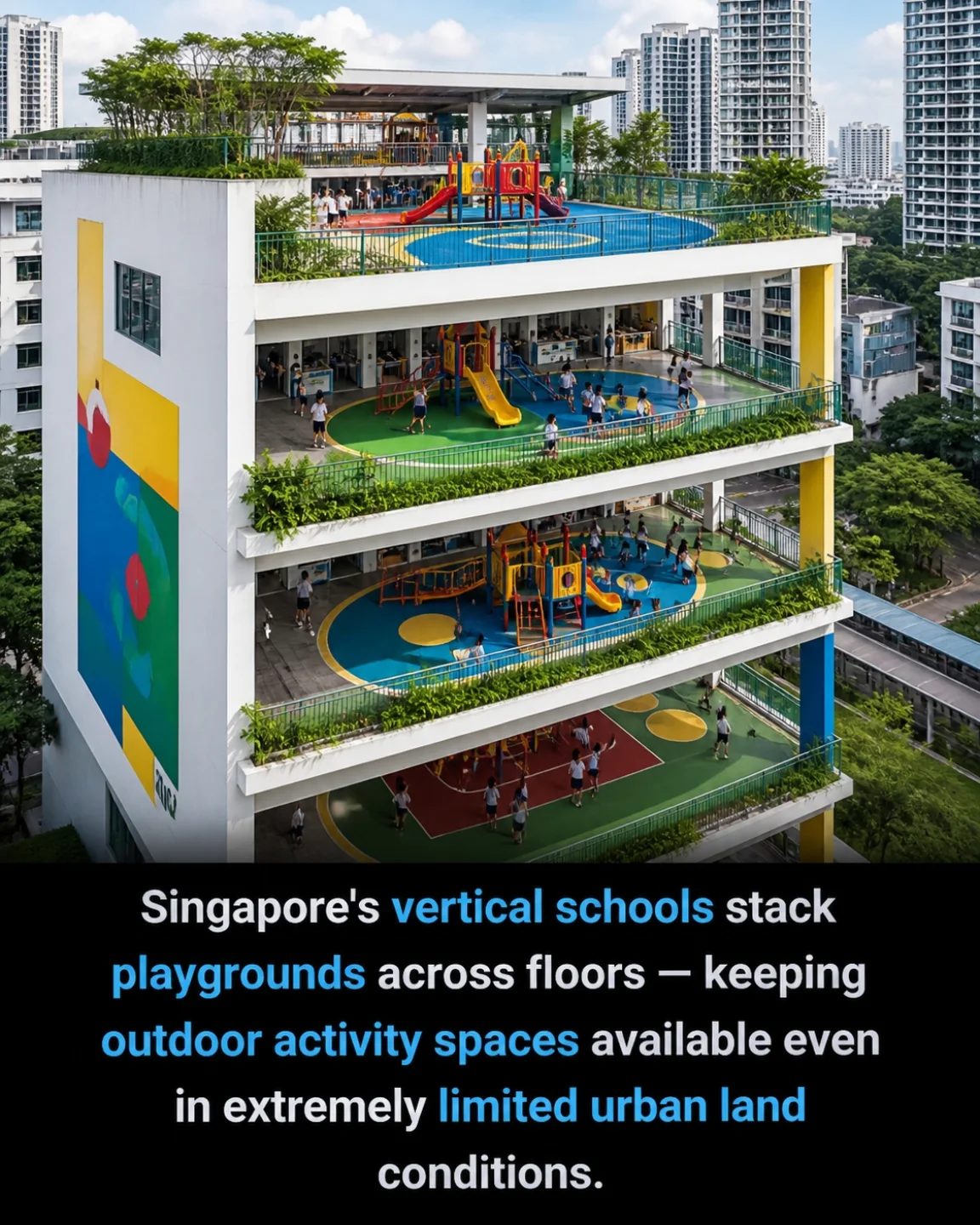
Vertical School Design: Maximizing Outdoor Activity Spaces in Urban Singapore
In Singapore, the innovative concept of vertical schools is redefining how educational institutions can make the most of limited urban land. These schools are designed to stack playgrounds across multiple floors, ensuring that students have access to outdoor activity spaces despite the city's dense urban environment. This approach not only addresses the challenge of limited land but also promotes active and healthy lifestyles for students.
Context / Why this matters
Singapore is known for its urban density, with limited open spaces available for public use. This poses a significant challenge for educational institutions, especially schools, which traditionally require large outdoor areas for playgrounds and other recreational activities. Vertical school design offers a practical solution to this problem. By stacking playgrounds across multiple floors, these schools can provide ample outdoor activity spaces while minimizing their footprint on the ground. This design is particularly important in a city like Singapore, where land is at a premium and every square meter counts.
Main discussion
The Concept of Vertical Schools
Vertical schools are an architectural marvel that combines the principles of sustainable urban planning with innovative design. The concept involves constructing school buildings with multiple floors, each incorporating a playground area. This vertical layout allows schools to maximize the use of limited urban land while providing students with the necessary outdoor spaces for recreation and physical activities.
The design of vertical schools often includes features such as rooftop gardens, green walls, and open-air terraces. These features not only enhance the aesthetic appeal of the buildings but also contribute to the overall well-being of the students. The green spaces provide a natural setting for learning and play, helping to create a more conducive environment for both academic and physical development.
Addressing Urban Land Challenges
One of the primary advantages of vertical school design is its ability to address the challenge of limited urban land. In a densely populated city like Singapore, finding sufficient land for large school campuses is a significant challenge. Vertical schools offer a solution by stacking playgrounds and other recreational areas across multiple floors. This design allows schools to maximize the use of available land while providing students with the necessary outdoor spaces.
Benefits for Students
Vertical schools offer numerous benefits for students, including access to outdoor activity spaces, natural light, and fresh air. These features contribute to the overall well-being of the students, promoting physical activity and a healthy lifestyle. The vertical layout also provides ample opportunities for creativity and innovation, allowing students to engage in various activities such as gardening, sports, and outdoor learning.
The design of vertical schools often includes features such as rooftop gardens, green walls, and open-air terraces. These features not only enhance the aesthetic appeal of the buildings but also contribute to the overall well-being of the students. The green spaces provide a natural setting for learning and play, helping to create a more conducive environment for both academic and physical development.
Practical tips
Design Considerations
When designing vertical schools, it is essential to consider factors such as safety, accessibility, and sustainability. Safety measures such as railings, barriers, and proper drainage systems should be in place to ensure the safety of the students. Accessibility features such as ramps, elevators, and wide staircases should be incorporated to accommodate students with disabilities. Sustainability features such as rainwater harvesting, solar panels, and energy-efficient lighting should be integrated to minimize the environmental impact of the buildings.
Integration with Curriculum
Vertical schools can be integrated with the curriculum to enhance the learning experience of the students. For example, rooftop gardens can be used for hands-on learning in subjects such as biology and environmental science. Green walls can be incorporated into the curriculum for teaching students about plant life and sustainability. Outdoor classrooms and activity areas can be used for physical education, sports, and other recreational activities.
Community Involvement
Vertical schools can also benefit from community involvement. Parents, local businesses, and community organizations can collaborate with the school to enhance the overall learning experience of the students. For example, local businesses can sponsor outdoor activities and sports events, while community organizations can provide resources and support for educational programs. Parental involvement can also be encouraged through volunteer programs and parent-teacher associations.
Important takeaways
Vertical school design is an innovative approach to addressing the challenge of limited urban land in Singapore. By stacking playgrounds and other recreational areas across multiple floors, these schools can maximize the use of available land while providing students with the necessary outdoor spaces. The design of vertical schools offers numerous benefits for students, including access to outdoor activity spaces, natural light, and fresh air. Additionally, vertical schools can be integrated with the curriculum to enhance the learning experience of the students and benefit from community involvement.
Conclusion
In summary, vertical school design is a practical and innovative solution to the challenge of limited urban land in Singapore. By maximizing the use of available land while providing students with ample outdoor activity spaces, these schools offer a more conducive environment for both academic and physical development. The design of vertical schools can also be integrated with the curriculum to enhance the learning experience of the students and benefit from community involvement. As urbanization continues to pose challenges for educational institutions, vertical school design offers a promising approach to creating sustainable and inclusive learning environments.
Watch the Reel
Questions readers ask
What are vertical schools and why are they important in Singapore?
Vertical schools in Singapore are innovative structures designed with stacked playgrounds across multiple floors to maximize outdoor activity spaces. This design is crucial due to the city's high urban density and limited land, ensuring that students have access to play areas despite the cramped environment.
How do vertical schools address the challenge of limited land?
By stacking playgrounds vertically, these schools make efficient use of the available land. This approach allows for more outdoor play areas within a smaller footprint, making it an ideal solution for densely populated urban areas like Singapore.
What are the benefits of vertical schools for students?
Vertical schools promote active and healthy lifestyles by providing ample outdoor activity spaces. These spaces encourage physical activity and social interaction, contributing to the overall well-being of students living in urban environments.
How do vertical schools maximize outdoor play spaces?
Vertical schools maximize outdoor play spaces by utilizing the vertical dimension of the building. By stacking playgrounds on multiple floors, these schools ensure that students have access to outdoor areas without requiring excessive land, making the most of the limited urban space.
Are there any unique design features in Singapore's vertical schools?
One of the unique design features of vertical schools in Singapore is the integration of green spaces and natural elements into the playgrounds. This not only enhances the aesthetic appeal but also creates a more inviting and beneficial environment for students to engage in outdoor activities.
What other benefits do vertical schools offer besides maximizing outdoor play areas?
In addition to maximizing outdoor play areas, vertical schools in Singapore offer efficient use of space, which can lead to cost savings in land acquisition and infrastructure. They also set a precedent for innovative urban design solutions that other densely populated cities might emulate.
How do vertical schools promote active lifestyles in urban environments?
Vertical schools promote active lifestyles by ensuring that students have ready access to outdoor play areas within the school premises. This accessibility encourages regular physical activity, which is essential for maintaining a healthy lifestyle, particularly in urban settings where opportunities for outdoor play might be limited.
Related deep dives
Similar reads based on topic and creator.


Recent articles
Fresh deep dives from the latest Reels we unpacked.




Comments
Be the first to comment.