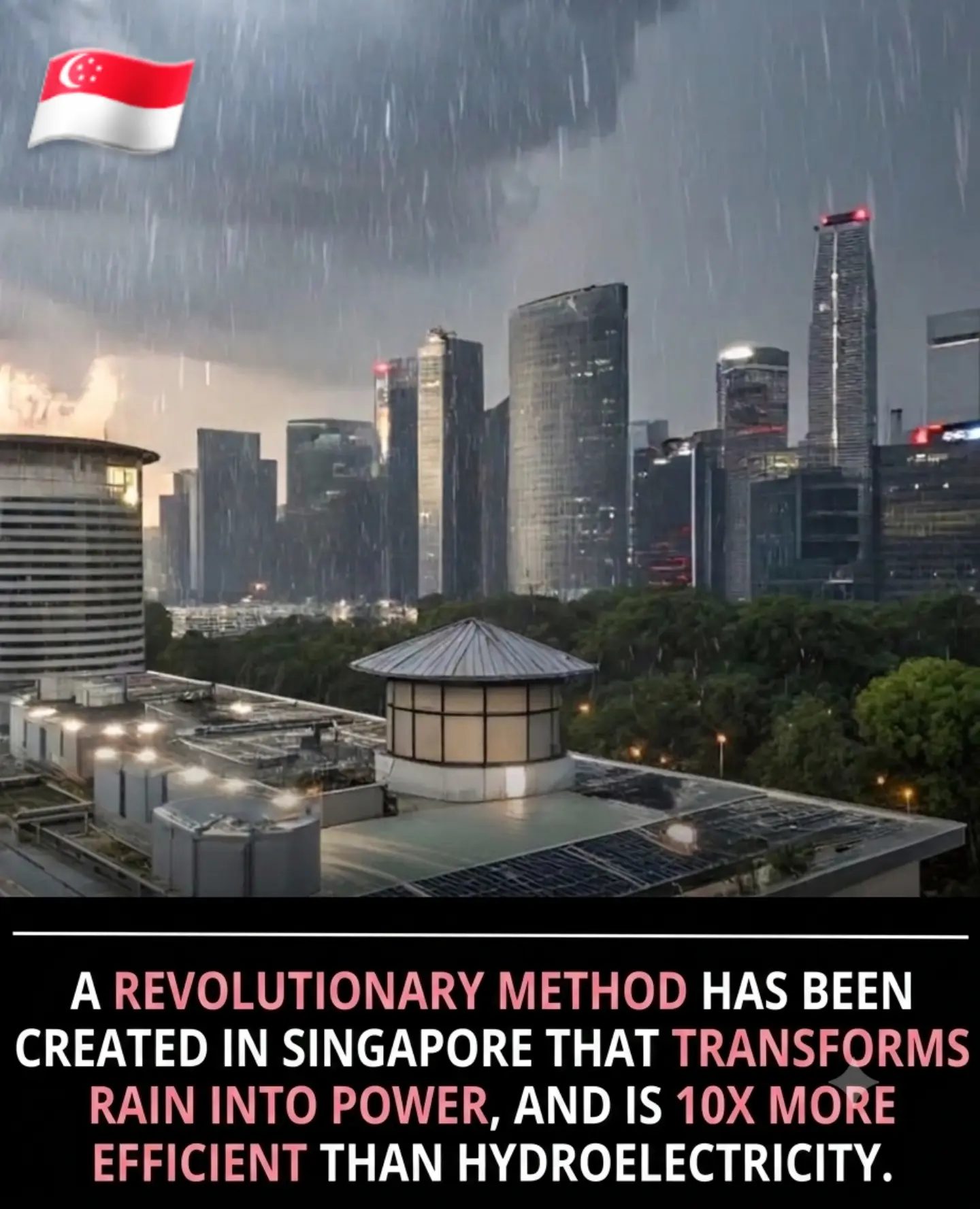
Rain-Based Electricity Generation: Revolutionizing Urban Energy
Singapore, a city known for its innovative spirit, has recently made strides in harnessing the power of rain. A new method, created in Singapore, transforms rain into electrical power, claiming to be 10 times more efficient than traditional hydroelectricity. This advancement is centered around droplet-based electricity generators (DEGs), a cutting-edge field focused on capturing energy from falling raindrops. Understanding this technology provides a glimpse into the future of urban renewable energy solutions.
Context and Importance of Rain-Powered Energy
Singapore's initiative to harness the power of rain is significant for several reasons. First, it addresses the challenge of intermittent rainfall, making power generation more sustainable. Secondly, it offers a decentralized solution for urban energy grids. Finally, it underscores the potential of innovative technologies which maximize the use of available resources.
How Droplet-Based Electricity Generators (DEGs) Work
Understanding the Technology
Droplet-based electricity generators (DEGs) function differently from traditional hydroelectric systems. Traditional hydroelectric power plants rely on the continuous force of flowing water to spin turbines, generating electricity. In contrast, DEG technology uses a field-effect transistor (FET)-like structure to capture the high energy density of individual water droplets.
When a raindrop hits a specially treated surface, it bridges an aluminum electrode and an indium tin oxide substrate. This action creates a closed-loop circuit, significantly enhancing the instantaneous power density. The unique design of DEGs allows them to harness the kinetic energy of raindrops more efficiently, making them a promising alternative to conventional hydro-power.
The Key Components
The core components of a DEG include:
- Aluminum Electrode: Acts as one of the conductive surfaces.
- Indium Tin Oxide (ITO) Substrate: Serves as the other conductive surface.
- Field-Effect Transistor (FET)-like Structure: Facilitates the capture of energy from the raindrop's impact.
When a raindrop hits the surface, it creates a temporary electrical connection between the aluminum electrode and the ITO substrate, thereby generating electrical power.
Practical Applications and Benefits
Urban Energy Solutions
DEGs offer a decentralized and efficient solution for urban energy needs. In a city like Singapore, where space is a premium, DEGs can be integrated into building facades, rooftops, and urban infrastructure without requiring large land areas. This makes them ideal for dense urban environments where traditional hydroelectric plants are impractical.
Environmental Advantages
By harnessing the power of rain, DEGs contribute to a more sustainable and eco-friendly energy landscape. They reduce the reliance on fossil fuels and help mitigate the environmental impact of energy generation. Additionally, they can operate in areas where traditional hydroelectric plants are not feasible due to lack of continuous water flow.
Scalability and Durability
Current research is focused on scaling these surface architectures to withstand continuous environmental exposure and effectively manage intermittent rainfall. This includes developing materials that are durable, weather-resistant, and capable of maintaining consistent performance over extended periods. Scaling up these technologies will be crucial for their widespread adoption and integration into urban energy grids.
Economic and Social Benefits
The economic benefits of DEGs are substantial. By providing a decentralized energy source, they can reduce costs associated with transmitting power over long distances. Moreover, they offer a reliable and sustainable energy solution, contributing to energy security and independence. Socially, the adoption of such technologies can foster a sense of innovation and sustainability within communities, promoting a greener lifestyle.
Practical Tips for Implementing Rain-Powered Energy
Assessing Feasibility
Before implementing DEGs, assess the feasibility of integrating them into your urban infrastructure. Consider factors such as rainfall patterns, available surfaces, and the local energy demand. Conducting a thorough feasibility study can help determine the potential benefits and challenges of adopting this technology.
Designing for Efficiency
Designing DEG systems to maximize efficiency involves careful consideration of the materials and surface treatments used. Choose materials that are conductive and durable, and ensure that the surface architecture is optimized for capturing the energy from raindrops. Additionally, consider the orientation and placement of the DEG surfaces to maximize exposure to rainfall.
Integration with Existing Energy Systems
Integrating DEGs with existing energy systems requires careful planning. Develop strategies for seamlessly integrating the generated power into the existing energy grid. Consider hybrid systems that combine DEGs with other renewable energy sources, such as solar and wind, to create a comprehensive and reliable energy solution.
Maintenance and Monitoring
Regular maintenance and monitoring are essential for the long-term success of DEG systems. Develop a maintenance plan that includes regular inspections, cleaning, and upkeep of the surfaces. Use monitoring systems to track the performance and efficiency of the DEG units, ensuring they continue to operate at optimal levels.
Important Takeaways
Droplet-based electricity generators (DEGs) represent a groundbreaking advancement in rain-powered energy. They offer a sustainable, efficient, and decentralized solution for urban energy grids. Key takeaways include:
- Efficiency: DEGs are claimed to be 10 times more efficient than traditional hydroelectricity at an instantaneous level.
- Scalability: Current research is focused on scaling these technologies to withstand environmental exposures and manage intermittent rainfall.
- Decentralization: DEGs provide a decentralized energy solution, making them ideal for urban environments.
Conclusion
The development of droplet-based electricity generators (DEGs) in Singapore marks a significant leap forward in harnessing the power of rain. By capturing the energy from falling raindrops, these innovative technologies offer a sustainable and efficient solution for urban energy needs. As research continues to advance, DEGs hold the promise of revolutionizing urban energy grids, making cities more sustainable and self-sufficient. The future of energy is bright, and rain-powered technologies are poised to play a crucial role in shaping a greener tomorrow.
Watch the Reel
Questions readers ask
How does Singapore's droplet-based electricity generators (DEGs) work?
DEGs work by capturing the energy from falling raindrops. When a raindrop hits the surface of a DEG, it creates a small electrical charge due to the triboelectric effect. This charge is then harvested and converted into usable electricity, making the process highly efficient compared to traditional hydroelectricity.
Why is rain-based electricity generation beneficial for urban areas like Singapore?
Rain-based electricity generation offers several benefits for urban areas. It provides a decentralized energy source, reducing reliance on large power plants. This method also supports urban sustainability by utilizing a readily available resource—rain. Additionally, it can contribute to instantaneous electricity generation, helping to meet power demands during peak usage times.
How does the efficiency of Singapore's rain power system compare to traditional hydroelectricity?
Singapore's rain power system is notably more efficient than traditional hydroelectricity. The drople-based electricity generators can generate electricity with 10 times the efficiency of conventional hydroelectric methods. This is a significant improvement, especially in urban settings where space and resources are limited.
What are the advantages of decentralized energy systems like the rain power technology in Singapore?
Decentralized energy systems, such as those utilizing rain power, offer several advantages. They reduce the need for extensive infrastructure like power lines and large-scale dams. This not only saves costs but also minimizes environmental impact. Additionally, decentralized systems can enhance energy resilience by providing localized power sources.
How does Singapore's rain power technology address the challenges of intermittent rainfall?
Singapore's rain power technology addresses intermittent rainfall by capturing energy from individual raindrops, making it effective even in light rain. The DEGs can generate electricity continuously as long as it is raining, ensuring a steady supply of power during wet periods. This makes it a reliable source of renewable energy in areas with variable weather conditions.
What role does Singapore's rain energy research play in global energy innovation?
Singapore's rain energy research is a significant contributor to global energy innovation. By developing and implementing efficient rain power technology, Singapore demonstrates the feasibility of harnessing energy from an abundant and often overlooked resource. This pioneering work can inspire similar initiatives worldwide, promoting a more sustainable and diverse energy landscape.
Related deep dives
Similar reads based on topic and creator.



Recent articles
Fresh deep dives from the latest Reels we unpacked.




Comments
Be the first to comment.