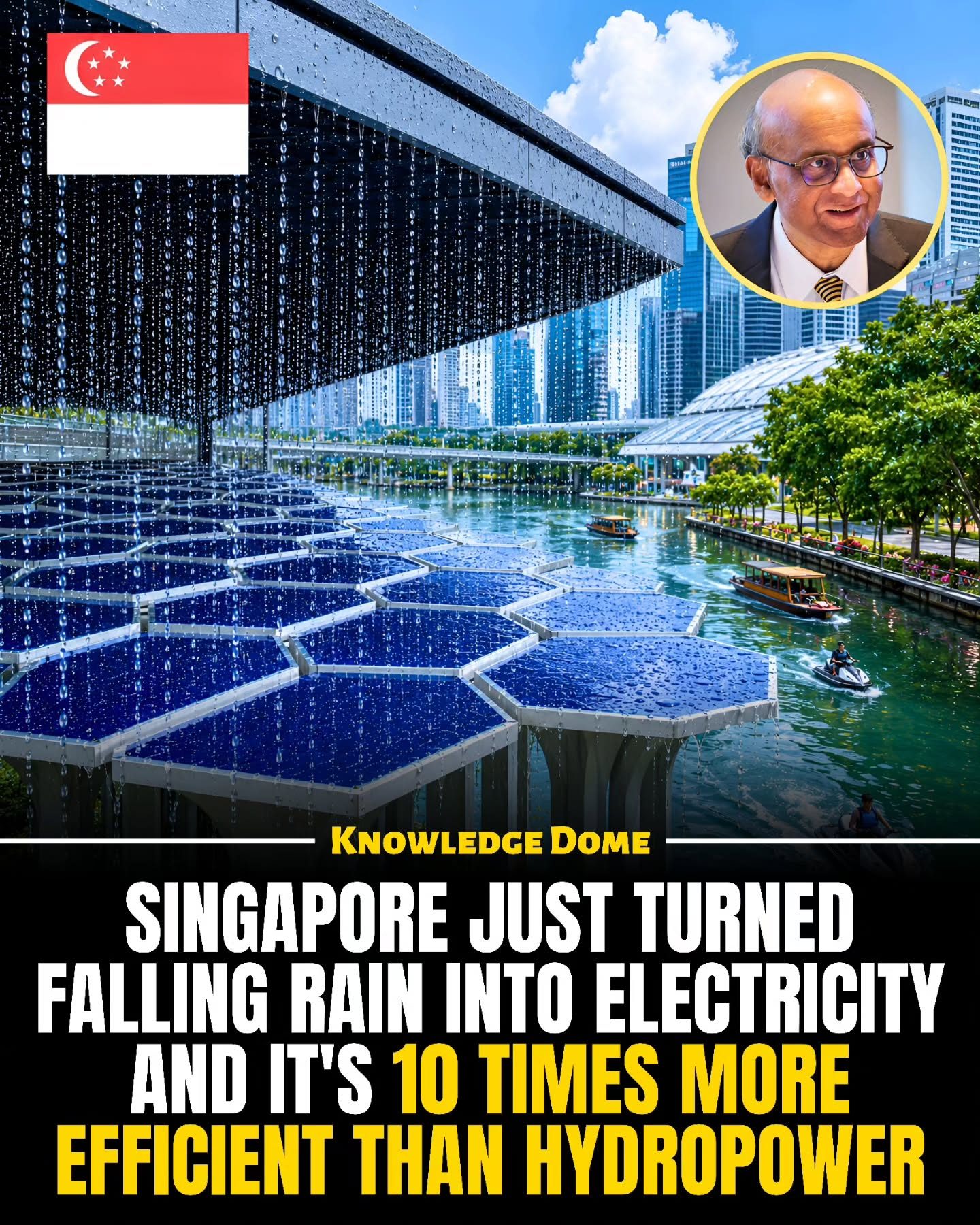
Singapore's Innovative Rain-to-Electricity Technology
Rainwater is a common and often underutilized resource, especially in cities that experience high rainfall. Researchers in Singapore have developed a groundbreaking method to harness the energy from falling raindrops, transforming it into usable electricity. This technology, known as a plug-flow system, uses tiny vertical tubes to guide water droplets through a controlled path, generating a charge that can be converted into electricity.
Why This Matters
Singapore's new rain-to-electricity technology addresses several critical issues. First, it offers a clean and renewable energy source in a world increasingly concerned about climate change and sustainability. Second, it provides a practical solution for urban areas with limited space, where traditional hydropower systems requiring large dams or rivers are impractical. By leveraging the city's abundant rainfall, this technology can integrate seamlessly into urban infrastructure, making it a versatile and efficient energy solution.
Understanding the Technology
This technology relies on the principles of charge separation and fluid movement. As water droplets travel through narrow vertical tubes, they interact with the tube surfaces, building up electrical energy. This process, known as a plug-flow system, is highly efficient and has shown promising results in lab tests. The small setup was able to light up 12 LEDs, demonstrating the potential to convert even simple rain into useful power.
How It Works
The system consists of vertical tubes that guide water droplets through a controlled path. As the droplets move through the tubes, they create a charge due to the interaction with the tube surfaces. This charge can then be collected and converted into electricity. The efficiency of this method is significantly higher than traditional hydropower systems, making it a more viable option for urban areas.
Efficiency Compared to Traditional Hydropower
Traditional hydropower systems require large-scale infrastructure like dams and rivers, which often have significant environmental and social impacts. In contrast, Singapore's rain-to-electricity technology is much more efficient. The system is reportedly 10 times more efficient than traditional hydropower, making it a cleaner and more sustainable solution.
Practical Applications
The potential applications of this technology are vast, particularly in urban environments. Singapore, with its high annual rainfall, is an ideal location for implementing this system. Scientists are exploring various locations for these tiny energy harvesters, including rooftops, building walls, windows, and street poles. By integrating these systems into existing infrastructure, cities can generate electricity from rainfall without needing large, dedicated spaces.
Practical Tips
If you're considering implementing similar technology, here are some practical tips to keep in mind:
- Location Selection: Choose areas with high rainfall and easy access to water flow. Rooftops, building walls, and street poles are ideal locations.
- Design and Installation: Ensure the vertical tubes are properly installed to guide water droplets effectively. The design should maximize the surface area for interaction.
- Maintenance: Regular maintenance is crucial to keep the system operational. Clean the tubes periodically to remove any debris that could obstruct water flow.
- Integration with Existing Infrastructure: Integrate the system with existing power grids to make the most of the generated electricity.
Important Takeaways
- Efficiency: This technology is 10 times more efficient than traditional hydropower.
- Sustainability: It provides a clean and renewable energy source, reducing reliance on non-renewable resources.
- Versatility: The system can be integrated into various urban locations, making it highly versatile.
- Scalability: While the current lab tests are small-scale, the technology has the potential to be scaled up for larger applications.
Conclusion
Singapore's innovative rain-to-electricity technology represents a significant leap forward in renewable energy solutions. By harnessing the power of falling raindrops, cities can generate clean and efficient electricity, reducing their carbon footprint and reliance on traditional power sources. The versatility and efficiency of this technology make it a promising solution for urban areas looking to integrate sustainable energy practices into their infrastructure.
Watch the Reel
Questions readers ask
How does Singapore's new rain-to-electricity method work?
Singapore's innovative method uses a plug-flow system with tiny vertical tubes to guide falling raindrops. As the droplets move through these tubes, they generate a charge through fluid movement and charge separation, which is then converted into usable electricity.
What are the benefits of using rain energy in urban areas?
Harnessing rain energy in urban areas provides a clean, renewable power source that helps reduce dependence on traditional energy grids. It's particularly beneficial for cities with high rainfall and limited space for other renewable energy solutions.
How efficient is the conversion of raindrop energy into electricity?
The efficiency of converting raindrop energy into electricity varies based on factors like rainfall intensity and the design of the system. Singapore's method aims to maximize this efficiency through precise control of water droplet movement and effective charge separation within the tube system.
Can this technology be implemented in other countries besides Singapore?
Yes, the technology can be adapted for use in other countries, particularly those with high rainfall. The specific design and implementation may vary depending on local weather patterns and infrastructure, but the core principles can be applied universally.
What makes Singapore's rain-to-electricity system different from other renewable energy sources?
Unlike solar or wind power, rain-to-electricity generation doesn't require large, open spaces or specific weather conditions. It leverages the natural movement of raindrops through a controlled system to create energy, making it a unique and space-efficient renewable energy solution for urban environments.
What role do the tiny vertical tubes play in this technology?
The tiny vertical tubes are crucial for directing the raindrops in a controlled manner, ensuring optimal charge separation and fluid movement. This design enhances the efficiency of the energy conversion process, transforming the kinetic energy of the raindrops into electrical energy.
How does Singapore's rain-to-electricity technology contribute to sustainability goals?
By generating electricity from rainwater, this technology reduces the need for conventional power sources, thereby lowering carbon emissions. It also promotes a more sustainable use of resources, particularly in urban areas where space for renewable energy infrastructure is limited.
Related deep dives
Similar reads based on topic and creator.


Recent articles
Fresh deep dives from the latest Reels we unpacked.




Comments
Be the first to comment.