International Math Scores: A Global Ranking
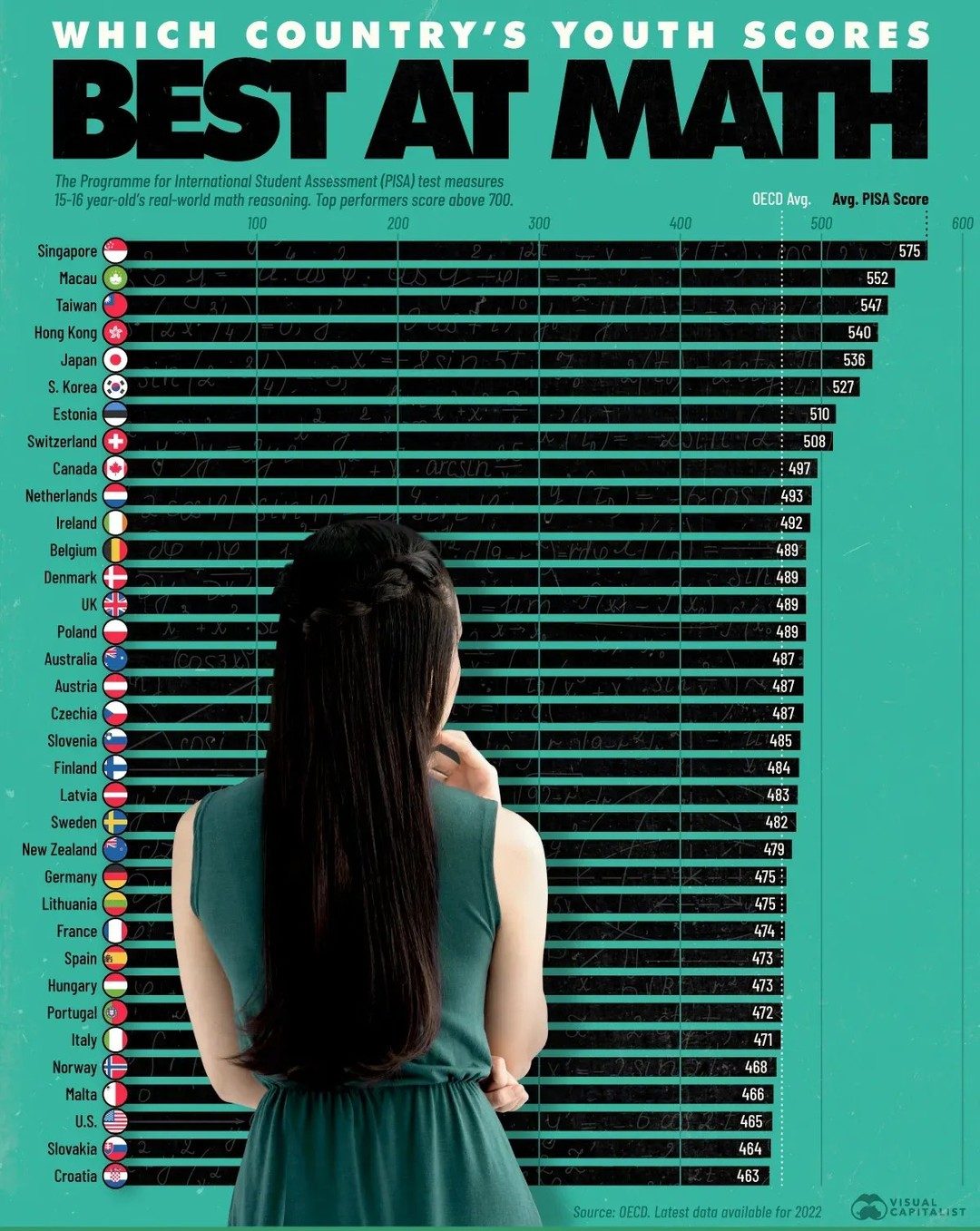
The Programme for International Student Assessment (PISA) evaluates 15-16 year-olds' proficiency in problem-solving and mathematics. The latest data, for 2022, reveals a stark contrast between leading and trailing countries.
Context: Why this matters
Math proficiency is a critical indicator of a country's educational and economic competitiveness. The top performers in PISA scores often reflect strong educational systems and high levels of real-world math reasoning, which translate into better job prospects and economic performance. Conversely, countries with lower scores may face challenges in fostering innovation and maintaining a skilled workforce.
Global Math Performance Rankings
Top Performers
Singapore leads the world in math performance, with an average score of 575. This outstanding achievement is followed closely by Japan and South Korea, with scores of 536 and 527, respectively. These countries consistently rank high in international assessments, reflecting their robust educational systems and emphasis on mathematical proficiency. The success of these Asian economies underscores the impact of targeted educational strategies and a strong focus on real-world math reasoning.
Middle Ground
Countries such as Estonia, Macau, and Finland perform well, with scores ranging between 500 and 550. These nations demonstrate a solid commitment to education, though they still trail behind the top performers. Their performance highlights the importance of a balanced approach to education, integrating math proficiency with other essential skills.
Trailing Countries
The United States ranks 33rd out of 35 countries, with an average score below the OECD average of 478. This performance is significant as it indicates a gap in math proficiency within the country. Other trailing countries include Croatia, Colombia, and Indonesia, which also fall below the OECD average. These rankings underscore the need for educational reforms and targeted interventions to improve math performance in these regions.
Factors Influencing Math Scores
Several factors contribute to the variance in math scores across countries. These include the quality of teachers, curriculum design, educational resources, and societal attitudes towards education. Countries with higher scores often invest heavily in teacher training, adopt rigorous curricula, and foster a culture that values education.
Quality of Teachers
Teacher training and professional development are crucial in enhancing math education. Effective teachers are more likely to inspire students and foster a deeper understanding of mathematical concepts. Countries with top-performing students typically invest in comprehensive teacher training programs, ensuring that educators are well-equipped to deliver high-quality instruction.
Curriculum and Resources
A well-designed curriculum that emphasizes real-world applications of mathematics can significantly impact student performance. Countries that excel in math often integrate problem-solving skills and critical thinking into their curriculum. Furthermore, access to educational resources, such as textbooks, technology, and learning materials, plays a vital role in enhancing math proficiency.
Societal Attitudes
Societal attitudes towards education and math can also influence student performance. Cultures that value academic achievement and encourage the pursuit of excellence in mathematics are more likely to see higher scores. Parental involvement, community support, and a positive learning environment are essential factors in fostering a strong math education culture.
Practical Tips for Improving Math Scores
For Students
- Practice Regularly: Consistent practice is key to improving math skills. Regularly solving problems and practicing exercises can reinforce learning and enhance understanding.
- Apply Concepts: Try to apply mathematical concepts to real-world situations. This can make learning more engaging and relevant.
- Seek Help: Don't hesitate to ask for help from teachers, tutors, or peers. Understanding difficult concepts early can prevent cumulative learning challenges.
- Stay Curious: Maintain a curious mindset and explore different areas of mathematics. Curiosity can drive deeper learning and a love for the subject.
For Teachers
- Professional Development: Engage in ongoing professional development to stay updated with the latest teaching methods and educational research. This can enhance your ability to deliver effective instruction.
- Use Technology: Incorporate technology into your teaching. Interactive tools, online resources, and educational apps can make learning more engaging and accessible.
- Encourage Problem-Solving: Encourage students to think critically and solve problems independently. This can foster a deeper understanding of mathematical concepts and real-world applications.
- Create a Positive Learning Environment: Foster a positive and supportive learning environment where students feel comfortable asking questions and making mistakes.
For Parents
- Support Learning: Show interest in your child's learning and encourage them to practice math regularly. Provide a supportive and encouraging environment.
- Encourage Practice: Make math a part of daily activities and encourage problem-solving through real-life situations. This can make learning more engaging and applicable.
- Seek Resources: Look for additional resources, such as tutors, online courses, or educational apps, to support your child's learning. A multi-faceted approach can enhance understanding and retention.
- Maintain Communication: Maintain open communication with teachers and stay informed about your child's progress. Regular feedback can help address any learning challenges early.
Important Takeaways
Singapore's lead in global math performance underscores the importance of a well-structured educational system that emphasizes real-world application, critical thinking, and problem-solving skills. Countries with high scores often invest in quality teacher training, comprehensive curricula, and supportive learning environments. Conversely, trailing countries like the United States face challenges that require targeted interventions and reforms.
Conclusion
The global ranking of math scores highlights the disparities in educational outcomes and the need for strategic improvements. Top performers like Singapore, Japan, and South Korea demonstrate the impact of a robust educational system and a strong emphasis on real-world math reasoning. Countries with lower scores can learn from these examples and implement targeted interventions to enhance their educational systems. By addressing key factors such as teacher training, curriculum design, and societal attitudes, any country can work towards improving math proficiency and fostering a more educated and competitive population.
Watch the Reel
Questions readers ask
What is the Programme for International Student Assessment (PISA)?
PISA is an international assessment that evaluates the problem-solving and mathematics proficiency of 15-16 year-olds in participating countries. It is conducted by the Organisation for Economic Co-operation and Development (OECD).
How did Singapore perform in the 2022 PISA math scores?
Singapore topped the global math scores in the 2022 PISA assessments, demonstrating exceptional math proficiency among its 15-16 year-olds. This positions Singapore as a leading country in the world of problem-solving and mathematics.
What is the significance of Singapore's high math scores?
Singapore's high math scores in PISA reflect a robust math proficiency among its students, which can be instrumental in fostering innovation and maintaining a skilled workforce in the country. The scores are also a testament to Singapore's strong math curriculum and teaching methodologies.
Why does the US rank 33rd in global math scores?
The US ranking of 33rd in global math scores suggests that there is substantial room for improvement in math proficiency among American 15-16 year-olds. This may pose challenges in enhancing the country's competitiveness in the job market and global economic performance.
Which countries typically perform well in the PISA Math Scores?
Asian countries, such as Singapore, Japan, and South Korea, typically perform well in PISA Math Scores. These countries have consistently ranked high in international mathematics assessments, showcasing a strong emphasis on math proficiency in their educational systems.
How do global math rankings impact a country's competitiveness?
Global math rankings, like those from PISA, serve as a key indicator of a country's competitiveness in the job market and global economic performance. High math proficiency scores often correlate with better job prospects, innovation, and economic growth.
What can other countries learn from Singapore's math performance?
Other countries can learn from Singapore's emphasis on real-world math reasoning and problem-solving skills. By adopting effective teaching methodologies and curricula, countries can improve their math proficiency scores and enhance their global competitiveness.
Related deep dives
Similar reads based on topic and creator.

Recent articles
Fresh deep dives from the latest Reels we unpacked.




Comments
Be the first to comment.