Silicon in EV Batteries: The Path to Longer Range and Lower Costs
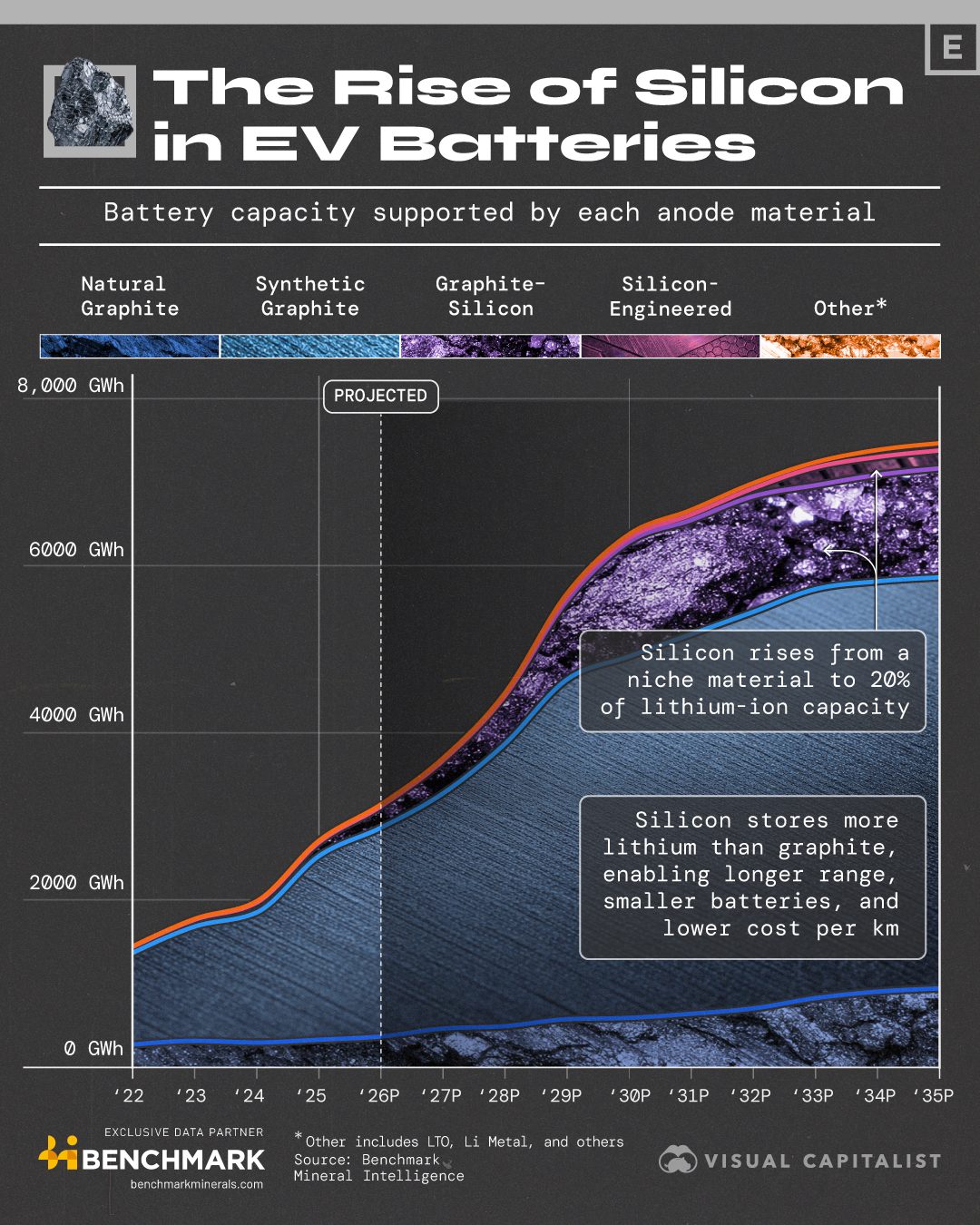
Silicon's role in electric vehicle (EV) battery anodes is poised for significant growth, with projections indicating a jump from 5% to approximately 20% by 2035. This shift is driven by silicon's superior lithium storage capacity compared to traditional graphite, paving the way for EVs with extended range and reduced operational costs.
The Rise of Silicon in EV Batteries
Silicon's potential in EV batteries lies in its ability to store far more lithium than graphite. This characteristic is crucial for enhancing battery performance, as lithium is the key component in lithium-ion batteries, which power most EVs today. By increasing the amount of lithium that can be stored, silicon anode materials can enable EVs to travel farther on a single charge and at a lower cost per kilometer.
Why This Matters
As the demand for EVs continues to rise, so does the need for more efficient and cost-effective battery technologies. The integration of silicon into EV batteries addresses two critical areas:
-
Longer Driving Range: With silicon's ability to store more lithium, EVs can achieve longer driving ranges, reducing the need for frequent recharging and making them more practical for daily use.
-
Lower Costs: The efficiency gains from using silicon anodes can lead to lower operational costs. This includes reduced energy costs and potentially lower maintenance expenses, making EVs more affordable over their lifespan.
The Benefits of Silicon for EV Batteries
Here's a breakdown of the advantages that silicon brings to the table:
Enhanced Battery Capacity
Silicon anodes can store more lithium than graphite, thereby increasing the overall battery capacity. This translates to more energy available for powering the vehicle, resulting in a longer driving range. For instance, a battery with a silicon anode could potentially increase the range of an EV by 20% to 30% compared to a graphite-based battery.
Lower Cost per Kilometer
The increased energy storage capacity of silicon anodes means that EVs can travel further on the same amount of energy. This reduces the cost per kilometer driven, making EVs more economical over the long term.
Improved Performance
Silicon can also contribute to improved battery performance, including faster charging times and better durability. These factors make EVs more convenient and reliable for everyday use.
Practical Tips for Potential EV Buyers and Enthusiasts
As silicon becomes more prevalent in EV batteries, potential buyers and enthusiasts should keep the following tips in mind:
Stay Informed on Battery Technology
Stay up-to-date with the latest advancements in battery technology, particularly regarding silicon anodes. Understanding the benefits and potential challenges of new technologies can help you make more informed purchasing decisions.
Consider the Long-Term Costs
When evaluating the cost of an EV, consider not just the upfront price but also the long-term savings associated with improved battery efficiency. An EV with a silicon anode could save you significant amounts over time due to lower energy and maintenance costs.
Research Different EV Models
Different EV manufacturers may adopt silicon anodes at different rates. Researching various models and their battery compositions can help you identify the best value for your needs.
Look for Reliable Data
Reliable data sources, such as Benchmark Minerals, provide valuable insights into the projected growth and benefits of silicon in EV batteries. Use these resources to stay informed about the evolving landscape of EV technology.
Important Takeaways
Here are the key points to remember about the rise of silicon in EV batteries:
-
Rapid Growth: Silicon's share in EV battery anodes is projected to grow from 5% to 20% by 2035.
-
Superior Performance: Silicon can store more lithium than graphite, leading to longer driving ranges and lower costs per kilometer.
-
Economic Benefits: The increased efficiency and lower operational costs of silicon anodes make EVs more affordable over their lifespan.
-
Stay Informed: Keep up with the latest developments in battery technology to make informed purchasing decisions.
Conclusion
The rise of silicon in EV batteries represents a significant step forward in the quest for more efficient and affordable electric vehicles. By enabling longer driving ranges and lower costs, silicon anodes are poised to revolutionize the EV market. As this technology continues to develop, staying informed and making strategic choices will be crucial for both current and potential EV owners. Embrace the future of electric mobility with the confidence that comes from understanding the transformative potential of silicon in EV batteries.
Watch the Reel
Questions readers ask
How does silicon improve the range of EV batteries?
Silicon's superior lithium storage capacity allows it to hold more lithium ions than traditional graphite anodes. This increased capacity translates to longer driving ranges for electric vehicles, making them more practical for daily use.
What are the projected changes in silicon usage in EV batteries by 2035?
By 2035, the integration of silicon in EV battery anodes is expected to increase from the current 5% to around 20%. This significant jump is driven by the benefits silicon offers in terms of battery performance and cost efficiency.
Why is silicon considered a game-changer for EV battery costs?
Silicon's ability to store more lithium means that batteries can be made smaller and lighter without sacrificing capacity, reducing the amount of materials needed. This can lead to lower production and operational costs, making electric vehicles more affordable in the long run.
How does silicon compare to graphite in EV battery anodes?
Silicon can store roughly 10 times more lithium than graphite, making it a superior choice for EV battery anodes. This high storage capacity is crucial for extending the range of electric vehicles and enhancing overall battery performance.
What advancements can we expect in EV battery technology by 2035?
By 2035, advancements in silicon anode technology are expected to lead to significant improvements in EV battery range and cost. These improvements will make electric vehicles more competitive with traditional internal combustion engine vehicles.
Will the use of silicon in EV batteries affect the overall cost of electric vehicles?
Yes, the integration of silicon in EV batteries is expected to reduce overall costs. As batteries become more efficient, the amount of raw materials required decreases, leading to cost savings in production. Additionally, lower operational costs from extended ranges will make EVs more economical to own.
What benefits does silicon bring to the future of EV battery technology?
Silicon's potential to revolutionize EV batteries lies in its ability to enhance driving range and reduce costs. By 2035, silicon-based batteries are expected to offer longer ranges and lower operational costs, making electric vehicles a more attractive option for a wider range of consumers.
Related deep dives
Similar reads based on topic and creator.


Recent articles
Fresh deep dives from the latest Reels we unpacked.




Comments
Be the first to comment.