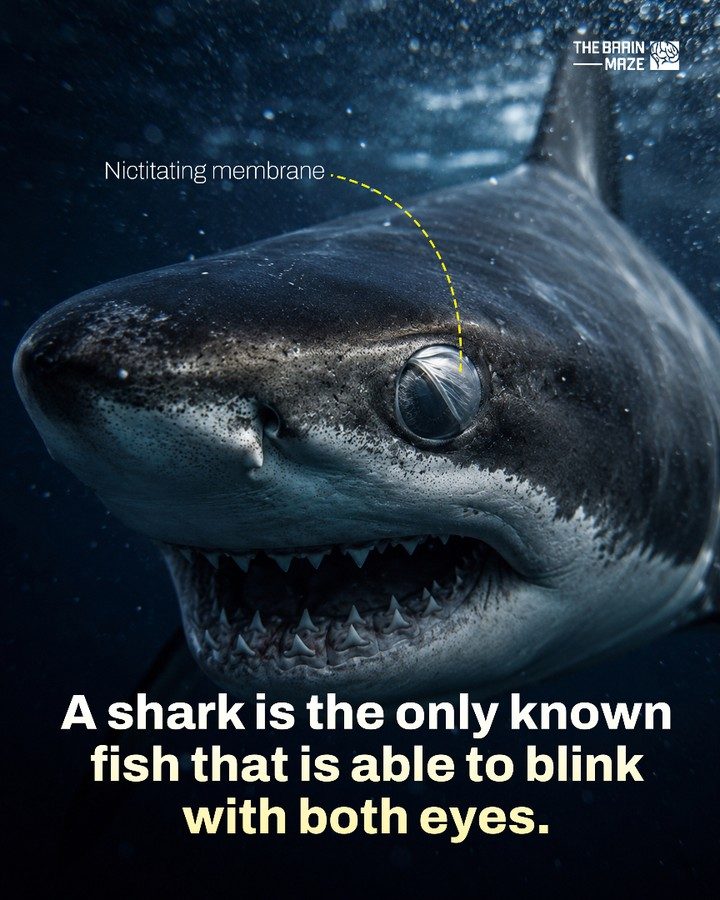
Shark Eye Blinking and the Nictitating Membrane
The unique ability of sharks to blink with both eyes is a fascinating aspect of their biology. Unlike humans, who use eyelids to protect their eyes, sharks have a special transparent membrane called the nictitating membrane that serves this purpose. This membrane allows sharks to maintain clear vision while shielding their eyes from potential harm, especially during hunting.
Context: Why This Matters
Understanding the eye blinking mechanism in sharks provides valuable insights into their extraordinary adaptations for survival in the ocean. The nictitating membrane not only protects the shark's eyes but also allows them to maintain visual acuity, which is crucial for their predatory behavior. This remarkable feature highlights the evolutionary advantages that sharks have developed to thrive in their underwater environment.
Main Discussion
The Nictitating Membrane
The nictitating membrane, also known as the third eyelid, is a key component of a shark's eye structure. This transparent layer can slide across the eye, providing protection without obstructing vision. Unlike the opaque eyelids in humans, the translucent nature of the nictitating membrane allows sharks to keep their vision sharp while defending their eyes from debris, water pressure, and potential injuries from prey.
Advantages in the Ocean
The nictitating membrane gives sharks a significant advantage in their oceanic habitat. Shark eyes are exposed to a range of environmental challenges, including turbulence, debris, and the sudden movements of prey. The ability to blink and protect the eyes without losing sight ensures that sharks can effectively stalk, attack, and feed on prey. This mechanism enhances their predatory skills and increases their chances of survival in a competitive underwater ecosystem.
Comparison with Other Marine Life
While sharks are the only known fish capable of blinking with both eyes, the nictitating membrane is a feature shared by various other marine animals. Some birds, reptiles, and even certain mammals possess a similar mechanism. However, sharks' unique use of the membrane for continuous underwater protection and hunting makes it a standout feature in marine biology.
Practical Tips
Scuba Diving and Marine Observation
For scuba divers and marine enthusiasts, understanding the nictitating membrane can enhance the observation experience. Knowing that sharks can protect their eyes while maintaining clear vision helps in interpreting their behavior during dives. It also underscores the importance of approaching marine life with caution and respect for their natural defenses.
Conservation Efforts
Recognizing the unique adaptations of sharks, such as the nictitating membrane, can contribute to conservation efforts. This understanding can inform strategies to protect shark habitats and ensure the survival of these apex predators. Conservationists and researchers can use this knowledge to develop guidelines for sustainable marine practices and policies.
Important Takeaways
- Nictitating Membrane Function: The nictitating membrane in sharks provides a transparent shield that protects the eyes without blocking vision.
- Predatory Advantage: This membrane allows sharks to maintain clear vision during hunting, enhancing their predatory effectiveness.
- Unique Adaptation: Sharks are the only known fish capable of blinking with both eyes, making this feature a distinct adaptation in marine biology.
- Evolutionary Significance: The nictitating membrane represents an evolutionary advantage that has contributed to sharks' success as apex predators in the ocean.
Conclusion
The nictitating membrane in sharks is a remarkable adaptation that sets them apart in the marine world. This translucent shield not only protects their eyes but also ensures their vision remains clear, giving them a significant advantage in their predatory lifestyle. Understanding this unique feature can enhance our appreciation for these powerful predators and inform efforts to protect and conserve shark populations in the ocean.
Watch the Reel
Questions readers ask
How does the nictitating membrane help sharks in hunting?
The nictitating membrane, or third eyelid, allows sharks to protect their eyes from potential threats while maintaining clear vision. This is particularly beneficial during hunting, as it enables sharks to keep a sharp eye on their prey without compromising their ability to see clearly.
What makes the nictitating membrane different from human eyelids?
The nictitating membrane is different from human eyelids in several ways. It is transparent, allowing sharks to see through it, and it moves horizontally across the eye rather than vertically. Additionally, sharks have the ability to move both of their nictitating membranes at the same time, unlike humans who can only move one eyelid at a time.
Can the nictitating membrane be found in other animals besides sharks?
Yes, the nictitating membrane is not unique to sharks. Many other animals, such as birds, reptiles, and some mammals, also possess a third eyelid, though the structure and function can vary between species.
How does the nictitating membrane contribute to a shark’s eye structure?
The nictitating membrane is a key component of a shark's eye structure. It is positioned between the cornea and the inner eyelid, and it can be drawn across the eye to provide protection. This unique feature enhances the shark's ability to protect its eyes while hunting or navigating through various underwater environments.
Why is maintaining visual acuity so important for sharks?
Visual acuity is crucial for sharks because they rely heavily on their vision for hunting and survival. The ability to see clearly allows them to spot prey, navigate their environment, and avoid potential hazards. The nictitating membrane helps sharks maintain this visual acuity by protecting their eyes without obstructing their vision.
How does the nictitating membrane help sharks in different environmental conditions?
The nictitating membrane aids sharks in various underwater environments by providing a protective layer against debris, strong currents, and potential predators. This adaptation enables sharks to explore different habitats and hunt effectively without risking damage to their eyes.
Are there any other unique features of sharks' eyes?
In addition to the nictitating membrane, sharks' eyes have several other unique features. These include a reflective layer called the tapetum lucidum, which enhances low-light vision, and a unique arrangement of photoreceptor cells that allows sharks to detect movement and changes in light levels, making them formidable hunters in the ocean.
Related deep dives
Similar reads based on topic and creator.




Recent articles
Fresh deep dives from the latest Reels we unpacked.




Comments
Be the first to comment.