AI and the Future of Coding and Work
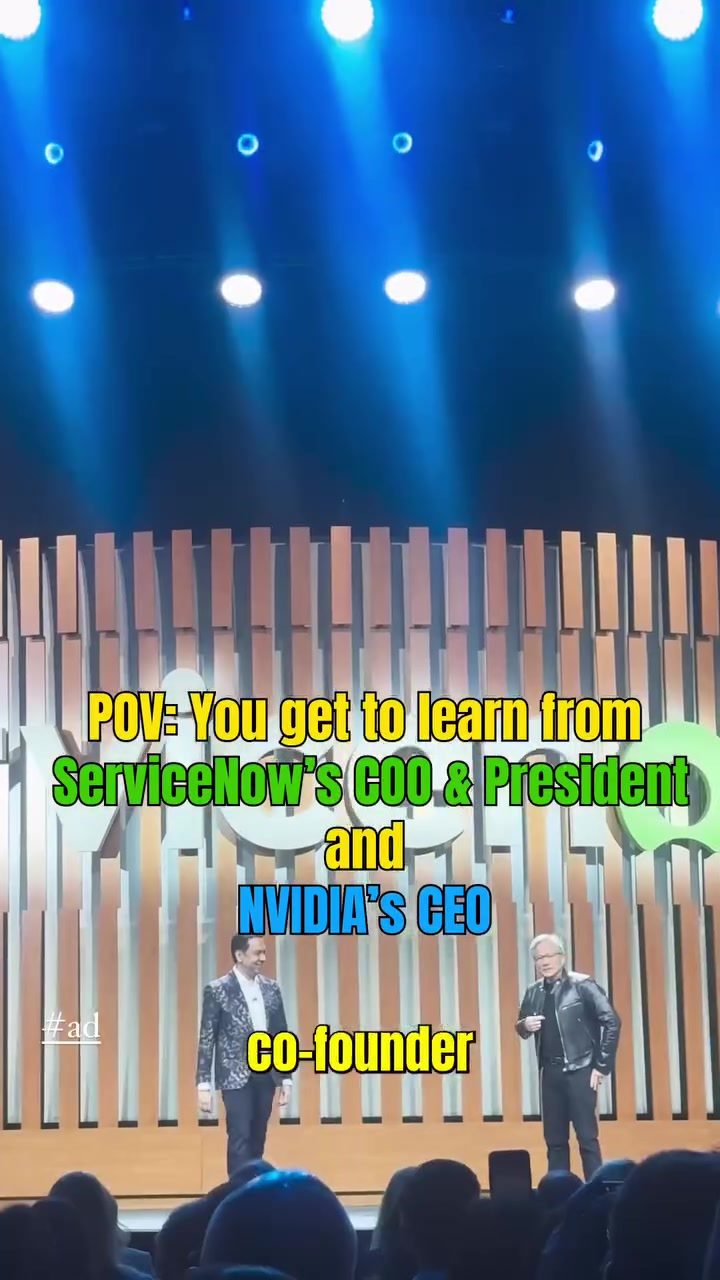
Artificial Intelligence (AI) is rapidly evolving, and recent insights from key figures in the tech industry highlight its transformative potential in coding and the broader work landscape. ServiceNow, a leading digital workflow company, hosted a conference where the COO and President, CJ Desai, and the CEO and Co-founder of NVIDIA, Jensen Huang, shared significant predictions about AI's future. Their discussions centered on three key areas: multimodality, multishot capabilities, and intentional computing.
Context / Why this matters
Understanding where AI is headed is crucial for professionals across various industries. As AI continues to integrate into work processes, staying informed about these advancements can help individuals and organizations leverage technology more effectively. The insights from ServiceNow's conference provide a forward-looking perspective on how AI will shape the future of work and coding.
Main Discussion
The Rise of Multimodality in AI
One of the most compelling predictions is the increase in multimodality, where AI systems will be able to process multiple forms of sensory input. This advancement mirrors human sensory capabilities, allowing AI to gather and interpret information from various sources simultaneously. For example, an AI system might analyze visual data, audio inputs, and text inputs all at once. This enhanced capability can lead to more accurate and context-aware decision-making, making AI systems more effective in complex environments.
Multishot Capabilities
Another major development is the emergence of multishot capabilities in AI. This refers to AI's ability to perform multiple tasks concurrently and make informed decisions about which task to prioritize next. Imagine an AI system that can manage a project, respond to customer inquiries, and optimize workflows all at the same time. This level of multitasking and decision-making can significantly enhance productivity and efficiency in various professional settings.
Intentional Computing
Intentional computing is another groundbreaking trend. This concept involves using AI to make coding more accessible and efficient. AI tools can transform sketches or whiteboard diagrams into fully functional wireframes, which can then be converted into operational applications. This capability democratizes coding, making it more approachable for non-developers and accelerating the development process for seasoned professionals.
Practical Tips
Staying Curious and Adaptable
The rapid advancements in AI underscore the importance of staying curious and adaptable. Professionals should remain open to learning new technologies and integrating them into their workflows. Attending conferences, workshops, and online courses can provide valuable insights and practical skills to stay ahead of the curve.
Embracing Multimodal Inputs
To leverage multimodal capabilities, professionals should explore tools and platforms that support multiple forms of input. For instance, integrating visual, auditory, and textual data in AI-driven analytics can provide a more comprehensive understanding of complex situations. This approach can be particularly useful in fields like data analysis, customer service, and project management.
Implementing Multishot Systems
Incorporating multishot systems into daily workflows can streamline tasks and improve productivity. For example, using AI to manage multiple projects, handle customer inquiries, and optimize workflows can free up time for more strategic tasks. Businesses should look for AI solutions that can handle multiple tasks simultaneously, ensuring seamless integration into existing systems.
Utilizing Intentional Computing
To benefit from intentional computing, professionals can use AI tools that simplify the coding process. These tools can transform simple sketches and diagrams into functional wireframes, making it easier to develop applications quickly. This capability is particularly useful for startups and small businesses that may not have extensive coding resources.
Important Takeaways
The future of AI in coding and work is exciting and multifaceted. Key takeaways from the ServiceNow conference include the importance of multimodal inputs, the potential of multishot capabilities, and the transformative power of intentional computing. These advancements can significantly impact various industries, from software development to customer service. Staying informed and adaptable will be crucial for professionals looking to leverage these technologies effectively.
Conclusion
The insights shared at the ServiceNow conference provide a clear roadmap for the future of AI in coding and work. As technology advances rapidly, it is essential to stay curious and grow with these developments. By embracing multimodal inputs, multishot capabilities, and intentional computing, professionals can position themselves at the forefront of this technological revolution. The future is here, and it is up to us to decide how we want to be a part of it. Whether in coding, project management, or customer service, AI's transformative potential is undeniable. Staying informed and adaptable will be key to thriving in this rapidly evolving landscape.
Watch the Reel
Questions readers ask
What are multimodal capabilities in AI and why are they significant?
Multimodal capabilities in AI refer to the ability to process and integrate multiple sensory inputs, such as text, images, and voice, similar to how humans perceive the world. This is significant because it enables AI to understand and interact with complex environments more effectively, making it a game-changer in how we interact with AI, especially in coding and workplace applications.
How does AI’s multishot capability enhance productivity?
AI’s multishot capability allows it to efficiently handle multiple tasks at once, much like a human multitasking. This is particularly beneficial in the workplace, as it can significantly improve productivity by managing various tasks simultaneously. For example, an AI system could process large amounts of data, analyze text, and respond to voice commands all at the same time.
What is intentional computing and how will it impact the future of work?
Intentional computing refers to AI systems designed to understand and respond to user intent, enhancing user interactions with technology. This will impact the future of work by making AI-driven tools more intuitive and effective, ultimately streamlining workflows and improving overall efficiency. It will make everyday tasks easier and more intuitive to complete.
What insights were shared by CJ Desai and Jensen Huang at the ServiceNow Conference?
During the ServiceNow Conference, CJ Desai and Jensen Huang discussed the future of AI in the workplace, emphasizing the importance of multimodality, multishot capabilities, and intentional computing. They highlighted how these advancements will transform coding and workplace efficiency, providing a glimpse into the evolving landscape of AI-driven work environments.
How will AI advancements in multimodal and multishot capabilities change the workplace?
Advancements in multimodal and multishot capabilities will enable AI to handle complex tasks more efficiently, making it a valuable asset in the workplace. These capabilities will allow AI to process various types of data and perform multiple tasks simultaneously, leading to increased productivity and more efficient workflows.
What role does NVIDIA play in AI advancements, as discussed at the conference?
NVIDIA, a leading technology company, is at the forefront of AI advancements, particularly in the areas of multimodality and multishot capabilities. Their work in developing powerful AI systems was highlighted at the ServiceNow Conference, showcasing how these innovations will shape the future of coding and workplace efficiency.
Related deep dives
Similar reads based on topic and creator.


Recent articles
Fresh deep dives from the latest Reels we unpacked.




Comments
Be the first to comment.