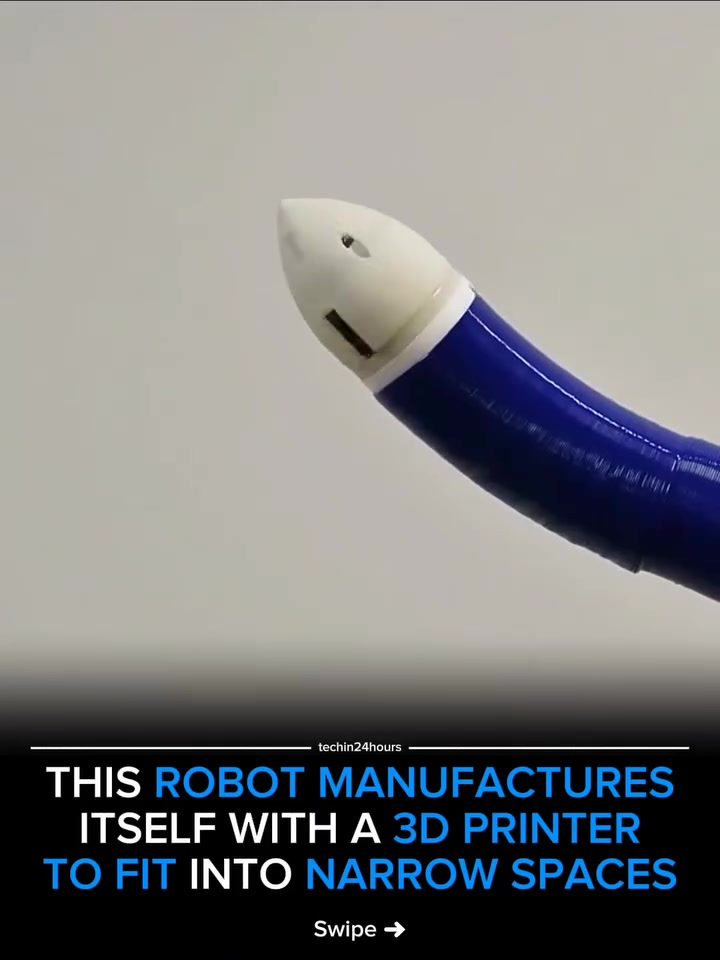
Self-Replicating Robots: The Future of Adaptable Robotics
Self-replicating robots represent a groundbreaking advancement in the field of robotics, offering unique capabilities that traditional robots cannot match. These innovative machines, like the FiloBot showcased by techin24hours, are designed to grow and adapt their bodies as they move, allowing them to navigate through tight and difficult-to-reach spaces. This capability opens up new possibilities for various applications, from search-and-rescue missions to environmental monitoring.
Why This Matters
The ability of self-replicating robots to manufacture themselves and adapt to their environment is a game-changer. Unlike conventional robots that rely on wheels or legs, these robots can grow by adding new body segments, enabling them to squeeze through narrow spaces and navigate complex terrains. This adaptability makes them ideal for situations where traditional robots face limitations.
Inspiration from Nature
The design of self-replicating robots is inspired by climbing plants, which use their environment to grow and climb. Similarly, these robots sense light and gravity to determine where to grow next, allowing them to bend around obstacles and navigate through tight spaces. This bio-inspired approach not only enhances their functionality but also makes them more efficient in challenging environments.
Main Discussion
How Self-Replicating Robots Work
Self-replicating robots, such as the FiloBot, are equipped with built-in 3D printers. These printers continuously create new body segments as the robot moves, allowing it to grow and adapt to its surroundings. This continuous manufacturing process enables the robot to navigate through spaces that other robots cannot access.
Key Components and Technology
3D Printing: The core technology behind self-replicating robots is 3D printing. The robot's built-in 3D printer uses a filament to create new body segments, layer by layer. This allows the robot to grow and adapt its shape as needed.
Sensors: These robots are equipped with sensors that detect light and gravity, helping them decide where to grow next. This sensing capability is crucial for their adaptability and navigation through complex environments.
Material Selection: The choice of material for 3D printing is critical. Filaments like PLA (Polylactic Acid) or ABS (Acrylonitrile Butadiene Styrene) are commonly used due to their durability and ease of use in 3D printing.
Applications and Use Cases
Search-and-Rescue Missions: Self-replicating robots can be invaluable in search-and-rescue operations. Their ability to navigate through narrow spaces and adapt to different terrains makes them ideal for locating and assisting people in disaster zones.
Infrastructure Inspections: These robots can inspect infrastructure such as pipelines, bridges, and buildings. Their adaptability allows them to reach areas that are difficult or dangerous for humans to access, ensuring thorough inspections and maintenance.
Environmental Monitoring: Self-replicating robots can monitor environmental conditions in hard-to-reach areas. They can collect data on air quality, soil moisture, and other environmental parameters, providing valuable insights for environmental research and conservation.
Exploration: In scientific exploration, such as in space or underwater, self-replicating robots can adapt to unknown and changing environments, making them ideal for missions where adaptability and durability are crucial.
Practical Tips
Design Considerations: When designing a self-replicating robot, consider the type of environment it will operate in. The robot's sensors, 3D printer, and material selection should be tailored to the specific needs of the mission.
Maintenance and Upkeep: Regular maintenance of the 3D printer and sensors is essential to ensure the robot's functionality. Keep the printer's nozzle clean and well-calibrated, and periodically check the sensors for any malfunctions.
Safety Measures: Ensure that the robot operates safely in its environment. This includes protecting the 3D printer from damage and ensuring that the robot does not cause harm to its surroundings.
Software Updates: Keep the robot's software up-to-date to take advantage of the latest improvements and features. Software updates can enhance the robot's sensing capabilities, navigation, and 3D printing efficiency.
Important Takeaways
- Self-replicating robots represent a significant leap forward in robotics, offering unique capabilities that conventional robots lack.
- These robots can adapt to their environment by growing and changing their shape, making them ideal for complex and challenging missions.
- The technology behind self-replicating robots, including 3D printing and sensing, is continually evolving, opening up new possibilities for their applications.
- Practical considerations, such as design, maintenance, and safety, are crucial for the successful deployment of self-replicating robots.
Conclusion
As we continue to explore the potential of robotics, self-replicating robots stand out as a groundbreaking innovation. Their ability to grow and adapt to their environment makes them invaluable for a wide range of applications, from search-and-rescue missions to environmental monitoring. By understanding and leveraging the technology behind these robots, we can unlock new possibilities for adaptable and efficient robotics in the future.
Watch the Reel
Questions readers ask
How do self-replicating robots grow and adapt to their surroundings?
Self-replicating robots, such as the Filobot, use 3D printing to create new body segments as they move. This process allows them to grow and adapt, making them capable of navigating through tight and complex spaces that traditional robots cannot access. The continuous addition of new segments enables them to evolve and tackle various challenges in different environments.
What are the key advantages of self-replicating robots over traditional robots?
Self-replicating robots offer several key advantages over traditional robots. They can grow and adapt their structures, making them ideal for environments with tight spaces or complex layouts. Additionally, their ability to 3D print new segments reduces the need for human intervention, enhancing their autonomy and sustainability.
What is the Filobot, and how does it demonstrate 3D printing in robotics?
The Filobot is a self-replicating robot that showcases the innovative use of 3D printing in robotics. It grows by adding new body segments, which are 3D printed as it moves. This capability allows the Filobot to adapt to its environment, navigate through challenging terrains, and perform tasks in areas where traditional robots would struggle.
How can self-replicating robots be applied in real-world scenarios?
Self-replicating robots have a wide range of potential applications. They can be used in search-and-rescue missions to reach victims in hard-to-access areas. Additionally, they are useful in environmental monitoring, where they can adapt to various terrains and collect data in previously inaccessible locations. Furthermore, their self-replicating nature makes them valuable for long-term, autonomous operations in remote areas.
What role does 3D printing play in the development of self-replicating robots?
3D printing is crucial in the development of self-replicating robots as it enables these machines to manufacture new body segments on the go. This technology allows robots to grow and adapt in real-time, making them more versatile and capable of handling a wide range of tasks and environments. The integration of 3D printing into robotics represents a significant advancement, pushing the boundaries of what robots can achieve.
Related deep dives
Similar reads based on topic and creator.


Recent articles
Fresh deep dives from the latest Reels we unpacked.




Comments
Be the first to comment.