Beetle Structural Coloration
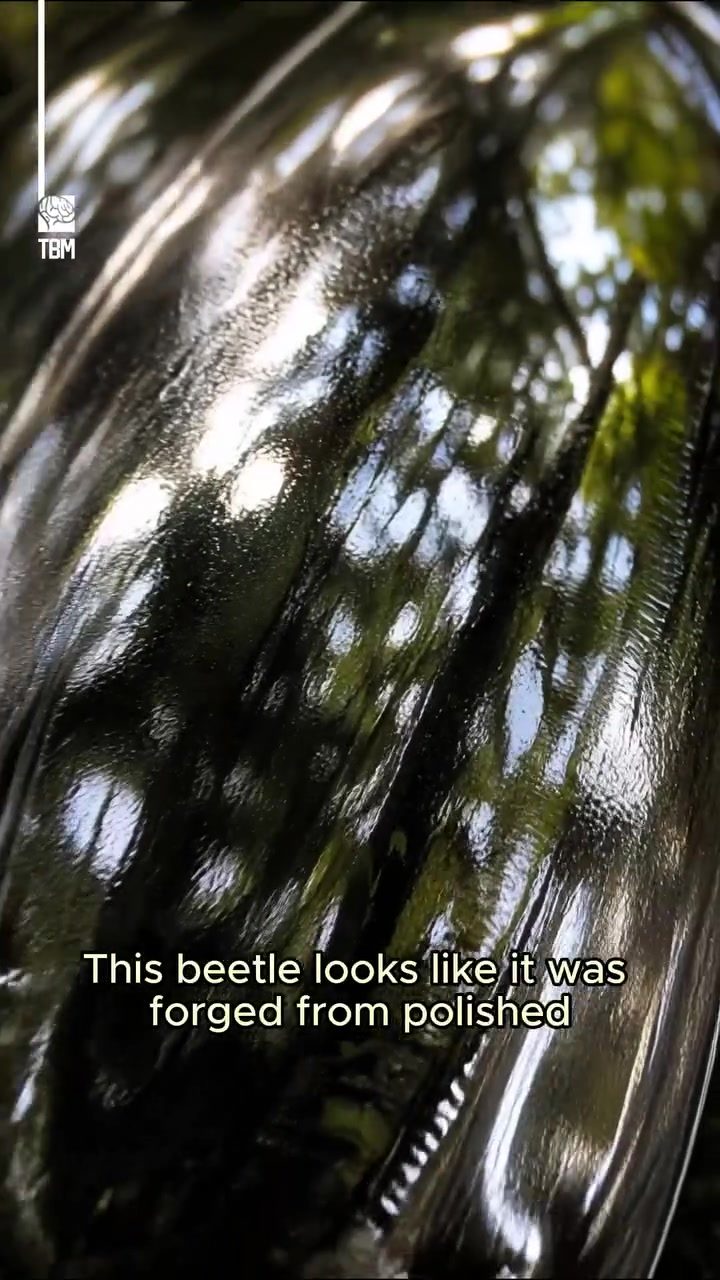
The Chrysina limbata, commonly known as the Mirror Beetle, is a fascinating creature found in the cloud forests of Central America. Its most striking feature is its mirrored exoskeleton, which gives it a polished chrome appearance. Unlike most insects, the Mirror Beetle’s dazzling appearance doesn’t come from traditional pigments but from a remarkable phenomenon called structural coloration.
Why This Matters
The unique reflective properties of the Mirror Beetle's shell have captivated scientists and nature enthusiasts alike. Understanding how this beetle achieves its metallic sheen could provide insights into advanced materials and technologies. This phenomenon is a prime example of how nature can inspire innovative solutions in fields such as optics, nanotechnology, and materials science.
What is Structural Coloration?
Structural coloration is a phenomenon where the color is produced by the microstructure of the surface rather than by pigments. In the case of the Mirror Beetle, tiny, microscopic layers on its shell bend and reflect light in a way that creates a chrome-like effect. These layers act as a series of reflectors that bounce back the light, making the beetle appear almost identical to a mirror. This is different from the way most insects and animals produce color, which typically involves pigments that absorb certain wavelengths of light.
The Science Behind the Chrome Effect
The key to the Mirror Beetle’s reflective properties lies in the intricate structure of its exoskeleton. The layers of the beetle’s shell are arranged in a way that they interfere with light, creating a brilliant, metallic shine. This structure is so precise that it can reflect light in a highly controlled manner, making the beetle one of the most reflective organisms in nature.
The Role of Light and Reflection
Understanding how the Mirror Beetle reflects light requires a bit of delving into optics. When light hits the beetle’s shell, it encounters multiple layers that are spaced just right to create constructive and destructive interference. This interference amplifies certain wavelengths of light, giving the beetle its chrome appearance. The beetle bounces back its surroundings with a metallic shine, making it look as if it's forged from polished chrome.
Habitat and Adaptation
The Mirror Beetle lives in the cloud forests of Central America, where its unique appearance serves as a form of camouflage. The reflective exoskeleton helps it blend in with the shiny foliage of the forest, protecting it from predators and making it a less visible target. This adaptive trait is a testament to nature's ingenuity and the endless ways in which it finds to ensure survival.
Practical Tips for Observing Structural Coloration
If you’re lucky enough to encounter a Mirror Beetle or any other insect with structural coloration, there are a few tips to help you observe and appreciate its unique appearance:
- Lighting Conditions: Observe the beetle in well-lit conditions. The reflective properties of its shell are best seen when there is ample natural light.
- Close Examination: Use a magnifying glass or a microscope to get a closer look at the exoskeleton. The intricate layers that create the chrome effect are best appreciated up close.
- Angle of View: Change your viewing angle to see how the reflection changes. The beetle’s reflective properties can vary depending on the angle at which you observe it.
Important Takeaways
- Natural Reflectivity: The Mirror Beetle’s shell is one of the most reflective in the insect world, thanks to its unique structural coloration.
- Mimicry: The beetle’s chrome-like appearance is a result of microscopic layers that bend and reflect light, creating a mirror-like illusion.
- Adaptive Camouflage: Its reflective exoskeleton helps the beetle blend in with its surroundings, providing a natural form of camouflage.
- Scientific Intrigue: The study of structural coloration in the Mirror Beetle could lead to advancements in materials science, optics, and nanotechnology.
Conclusion
The Chrysina limbata, or Mirror Beetle, is a marvel of nature. Its incredible ability to produce a polished, reflective surface through structural coloration is both awe-inspiring and scientifically significant. By studying this beetle, we can gain insights into the natural world and potentially develop new technologies inspired by its unique properties. Whether you’re a nature lover or a scientist, the Mirror Beetle is a fascinating subject that showcases the wonders of the natural world.
Watch the Reel
Questions readers ask
What makes the Mirror Beetle's appearance so unique?
The Mirror Beetle's appearance is unique due to its polished chrome look, which is a result of structural coloration. This means the beetle's exoskeleton reflects light in a way that creates a metallic sheen, unlike most insects that use pigments for coloration.
Where can the Mirror Beetle be found?
The Mirror Beetle is native to the cloud forests of Central America. These environments provide the ideal conditions for the beetle to thrive, showcasing its distinctive reflective properties.
What is structural coloration and how does it apply to the Mirror Beetle?
Structural coloration is a phenomenon where the color and appearance of an object are determined by the way light interacts with its physical structure, rather than through pigments. In the Mirror Beetle, this results in a chrome-like sheen due to the unique arrangement of its exoskeleton.
How might the Mirror Beetle's reflective properties be useful in other fields?
The reflective properties of the Mirror Beetle could inspire advancements in materials science and optics. By studying how the beetle achieves its metallic sheen, scientists may develop new materials with similar reflective qualities, or create advanced optical technologies.
What are some other examples of structural coloration in nature?
There are several examples of structural coloration in nature, including the shimmering wings of the Morpho butterfly and the iridescent feathers of certain birds. These examples, like the Mirror Beetle, display vibrant colors and reflections due to the interaction of light with their unique structures.
Related deep dives
Similar reads based on topic and creator.




Recent articles
Fresh deep dives from the latest Reels we unpacked.




Comments
Be the first to comment.