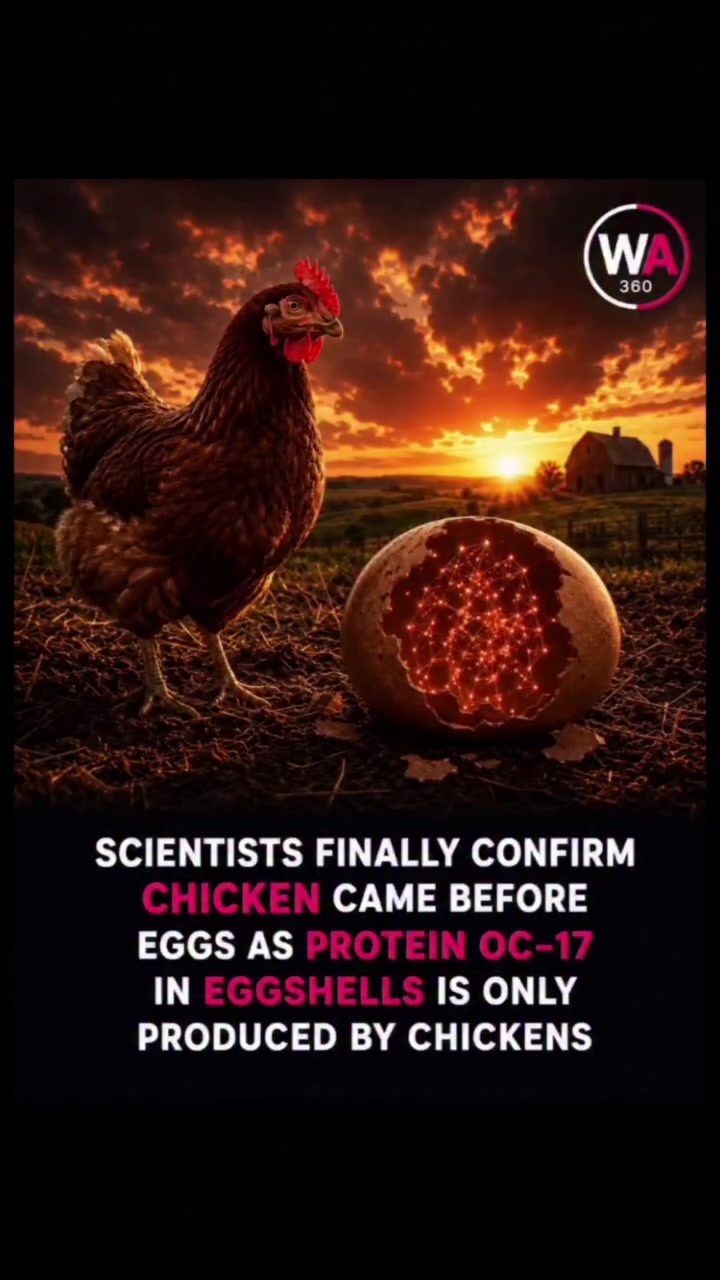
The Age-Old Riddle: Chicken or Egg?
The question of whether the chicken or the egg came first has long been a topic of debate and curiosity. The age-old mystery is not merely a philosophical question; it touches on fundamental concepts in biology and evolution. Researchers have finally shed light on this conundrum, providing a concrete and surprising answer.
Why this matters
Understanding the origin of the chicken and egg is more than just a fun fact. It delves into the intricate processes of biological development and evolution. The answer to this question reveals important aspects of how species evolve and how specific proteins play crucial roles in biological processes.
Main discussion
The Role of Protein OC-17
At the heart of this mystery lies a specific protein called OC-17, or ovocleidin-17. This protein is essential for the formation of a chicken's eggshell. OC-17 acts as a catalyst, accelerating the development of the eggshell. The protein is uniquely produced within a chicken's ovaries, making it a key component in the biology of chicken egg formation.
The Process of Eggshell Formation
The formation of a chicken eggshell is a complex biological process. It begins with the secretion of various proteins and minerals from the chicken's ovaries. OC-17 plays a pivotal role in this process by facilitating the hardening and structuring of the eggshell. Without OC-17, the eggshell would not form correctly, making it impossible for a true chicken egg to exist.
The Evolutionary Perspective
The discovery that OC-17 is produced exclusively by chickens has significant evolutionary implications. It suggests that the chicken had to exist first in order to produce the protein necessary for the creation of a true chicken egg. This means that the chicken came before the egg in evolutionary terms, as the protein required for eggshell formation is a product of the chicken's own biology.
The Role of Research
Researchers have used advanced scientific methods to unravel this mystery. By studying the genetic and biochemical processes involved in eggshell formation, they have been able to pinpoint the exact protein responsible for this critical function. This research not only answers the age-old question but also provides deeper insights into the mechanisms of biological development and evolution.
Practical tips
While the chicken-and-egg riddle is primarily a scientific curiosity, it serves as a reminder of the intricacies of biological processes. Here are a few tips for those interested in learning more about the fascinating world of biology:
Explore Biological Research
For those intrigued by the chicken-and-egg mystery, exploring the broader field of biological research can be enlightening. Understanding how proteins and genetic materials function can provide a deeper appreciation for the complexities of life.
Follow Scientific Discoveries
Staying updated on the latest scientific discoveries can be both educational and inspiring. By following research in biology and genetics, one can gain a better understanding of the mechanisms that govern life on Earth.
Engage with Scientific Communities
Joining scientific communities and forums can provide opportunities to discuss and learn from experts in the field. Engaging with these communities can deepen one's knowledge and provide new perspectives on scientific mysteries.
Important takeaways
The discovery that chickens came before eggs is a testament to the power of scientific research. It highlights the importance of proteins in biological processes and sheds light on the evolutionary mechanisms that govern life. Understanding this mystery not only satisfies our curiosity but also provides valuable insights into the natural world.
Conclusion
The chicken-and-egg riddle has finally been solved, thanks to the dedicated work of researchers. The discovery that OC-17 is produced exclusively by chickens confirms that the chicken came first. This revelation underscores the intricate and fascinating world of biology and evolution, reminding us that nature is full of surprises. By delving deeper into biological research and staying curious, we can continue to uncover the mysteries that have long captivated human imagination.
Watch the Reel
Questions readers ask
How did scientists determine that chickens existed before chicken eggs?
Scientists conducted research on a specific protein, OC-17, which is crucial for the development of the egg. By studying this protein, they were able to understand the evolutionary timeline and confirm that chickens indeed preceded their eggs.
What is the significance of the protein OC-17 in this discovery?
The protein OC-17 plays a pivotal role in the development of the chicken egg. By identifying and understanding the function of this protein, researchers could trace the evolutionary steps that led to the formation of the egg, thereby clarifying the sequence of events between the chicken’s existence and the development of its eggs.
How does the discovery of chickens before eggs impact our understanding of biological development?
This discovery provides insights into the intricate processes of biological development and evolution. It highlights how specific proteins can drive significant evolutionary changes, influencing the development of new traits and species over time.
What are the key differences between a chicken's egg before and after understanding the protein OC-17?
Before understanding the protein OC-17, the development of a chicken's egg was shrouded in mystery. After studying OC-17, scientists have a clear understanding of how the egg forms, which helps explain the evolutionary steps that led to the development of the modern chicken egg.
How does the timeline of chicken evolution help answer the chicken vs. egg debate?
The timeline of chicken evolution shows that chickens, as a species, existed before the specific biological mechanisms that allow them to produce eggs were fully developed. This timeline supports the conclusion that chickens came first, clarifying the age-old debate.
Why is it important to know which came first—chickens or eggs?
Knowing which came first is crucial because it provides a concrete example of how evolution shapes species over time. It helps illustrate the complex interplay between genetic mutations, biological processes, and environmental factors that drive evolution.
What are the next steps for researchers studying the origins of chickens and eggs?
Researchers will likely continue to study the roles of other key proteins and genetic factors involved in egg development. This ongoing research will further enhance our understanding of the intricate biological processes that govern species evolution and the development of specific traits.
Related deep dives
Similar reads based on topic and creator.




Recent articles
Fresh deep dives from the latest Reels we unpacked.




Comments
Be the first to comment.