De-Extinction of Extinct Species
De-extinction, the process of resurrecting extinct species, is a fascinating and complex field of biology. Scientists around the world are working on restoring life to animals that have disappeared from the face of the Earth. This endeavor involves a deep understanding of genetics, cloning, and genome editing. It is a process that involves significant challenges, but significant progress has already been made.
Context / Why this matters
Our ability to genetically manipulate life has advanced significantly over the centuries. From creating glow-in-the-dark pets to modifying crops for better yields, the applications of genetic engineering are vast. De-extinction, though, is a different frontier. It represents a profound endeavor to undo the damage of extinction and bring back species that once roamed the Earth. It's a topic that captures the imagination and raises many questions. What drives this desire to bring back extinct species? And what are the scientific processes that make this possible?
Main discussion
The timeline of extinction
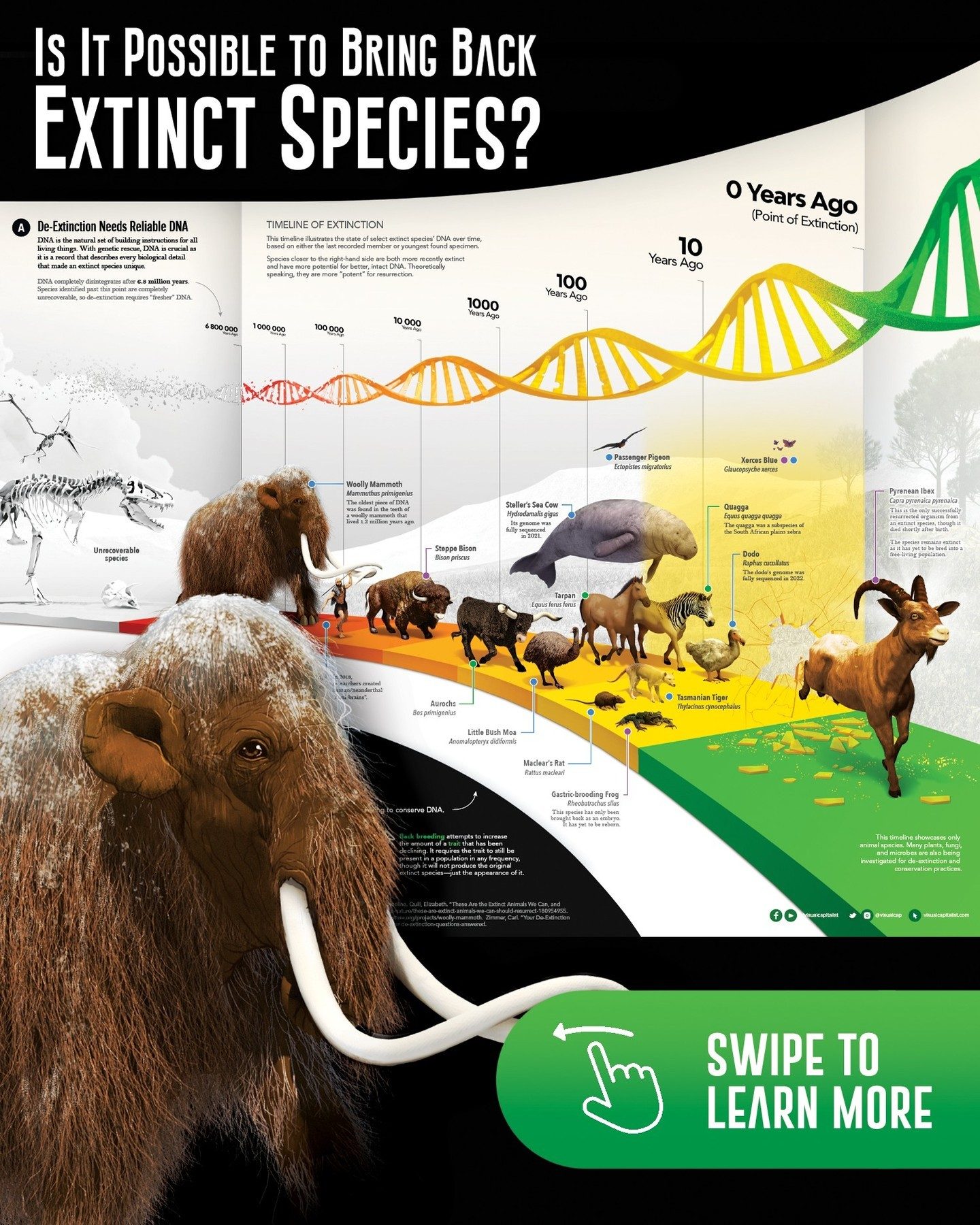
The timeline of extinction spans millions of years, from the relatively recent extinction of the Tasmanian Tiger to the extinction of the mammoths 10,000 years ago. This timeline illustrates the challenge of de-extinction: the older the species, the harder it is to retrieve intact DNA. De-extinction requires reliable DNA, which degrades and becomes fragmented over time.
Key extinct species
Some of the species highlighted in the infographic include the Woolly Mammoth, Steppe Bison, Passenger Pigeon, and Xerces Blue. These species were selected based on their cultural and ecological significance. The Woolly Mammoth, for example, was a keystone species in the Pleistocene ecosystem, and its reintroduction could have significant implications for Arctic conservation. The Passenger Pigeon, once the most abundant bird in North America, went extinct in the early 20th century due to overhunting and habitat loss. Bringing back such species could restore lost biodiversity and ecosystems.
Methods for de-extinction
There are two main scientific methods for de-extinction: cloning and genome editing. Cloning involves creating a genetically identical copy of an organism, while genome editing allows for the modification of an organism's genetic material to mimic the genes of an extinct species.
Cloning
Cloning is a process that involves transferring the nucleus of a somatic cell from a donor into an enucleated egg cell. This new cell can then develop into an embryo and be implanted into a surrogate mother. Cloning has been successfully used to create several species, including sheep and cattle. However, successful cloning of extinct species would require obtaining viable DNA, which is a significant challenge for older species.
Genome editing
Genome editing is a more recent development that allows for precise modification of an organism's DNA. Techniques such as CRISPR-Cas9 can be used to edit the genome of a living species to mimic the genes of an extinct one. This method offers more flexibility and precision compared to cloning, as it does not require intact DNA.
Practical Tips
To successfully bring back a species, researchers need to address several practical challenges. These include:
DNA preservation
Preserving DNA is a critical factor in de-extinction. This is especially challenging for older species, where DNA degradation is more extensive. Scientists must rely on preserved specimens, such as museum specimens and frozen tissues, to retrieve usable DNA.
Finding a suitable surrogate
For cloning, finding a suitable surrogate is essential. The surrogate must be genetically compatible with the extinct species. This can be challenging, as many extinct species have no close living relatives.
Ethical and environmental considerations
Beyond the scientific challenges, de-extinction raises many ethical and environmental considerations. Introducing a species back into an ecosystem could have unforeseen consequences, such as disrupting existing food chains or competing with current species.
Important takeaways
De-extinction is a complex and multifaceted field that involves both scientific challenges and ethical considerations. The process requires a deep understanding of genetics, cloning, and genome editing. It also involves a commitment to preserving DNA and finding suitable surrogates. While significant progress has been made, much work remains to be done. The success of de-extinction will ultimately depend on our ability to address these challenges and navigate the ethical and environmental considerations involved. The journey of de-extinction is one of the most fascinating scientific endeavors of our time, driven by a desire to right the wrongs of the past and restore lost biodiversity.
Conclusion
De-extinction offers a unique opportunity to restore lost species and ecosystems. It represents a frontier of genetic engineering, blending science with the ethical and environmental considerations of restoring life. The journey to bring back extinct species is long and challenging, but the potential rewards are immense. By understanding the processes and challenges involved, we can better appreciate the complexity and significance of de-extinction. The future of de-extinction is bright, and as we continue to make progress, the possibility of seeing extinct species once again roaming the Earth becomes more tangible.
Watch the Reel
Questions readers ask
What is de-extinction and how is it different from typical genetic engineering?
De-extinction is the process of bringing back species that have gone extinct. Unlike typical genetic engineering, which often focuses on modifying existing organisms, de-extinction aims to revive species that are no longer living, using advanced techniques in genetics, cloning, and genome editing.
What are some of the challenges in the de-extinction process?
The de-extinction process faces numerous hurdles. Key challenges include finding viable DNA samples from extinct species, reconstructing complete genomes, and ensuring that resurrected species can thrive in their former habitats. Additionally, there are ethical and ecological considerations to ponder.
Why is there interest in reviving extinct animals like the woolly mammoth?
The woolly mammoth is a captivating subject for de-extinction efforts due to its iconic status and the potential role it could play in restoring Arctic ecosystems. By bringing back the woolly mammoth, scientists hope to study its impact on the environment and possibly help combat climate change by promoting vegetation growth in tundra regions.
How does genome editing contribute to the de-extinction of species?
Genome editing is a crucial tool in de-extinction. It allows scientists to modify the DNA of closely related living species to match that of the extinct species. For example, by editing the genome of Asian elephants, researchers aim to create embryos that closely resemble woolly mammoths.
What steps are involved in cloning extinct species?
Cloning extinct species involves several key steps: obtaining high-quality DNA from extinct organisms, using that DNA to create a complete genome, and then inserting that genome into the egg cell of a closely related living species. The egg is then implanted into a surrogate mother to carry the pregnancy to term.
What role does DNA cloning play in the revival of extinct species?
DNA cloning is essential for reviving extinct species as it allows scientists to recreate the genetic blueprint of the extinct organism. By cloning DNA, researchers can potentially resurrect species that have been lost to time, bringing them back to life in a process that involves significant technical and scientific expertise.
What is the significance of restoring ecosystems through de-extinction?
Restoring ecosystems through de-extinction offers a unique opportunity to reintroduce species that play crucial roles in their environments. By bringing back these species, scientists aim to revive ecosystems that have been disrupted by the loss of key species, potentially enhancing biodiversity and ecosystem resilience.
Related deep dives
Similar reads based on topic and creator.



Recent articles
Fresh deep dives from the latest Reels we unpacked.




Comments
Be the first to comment.