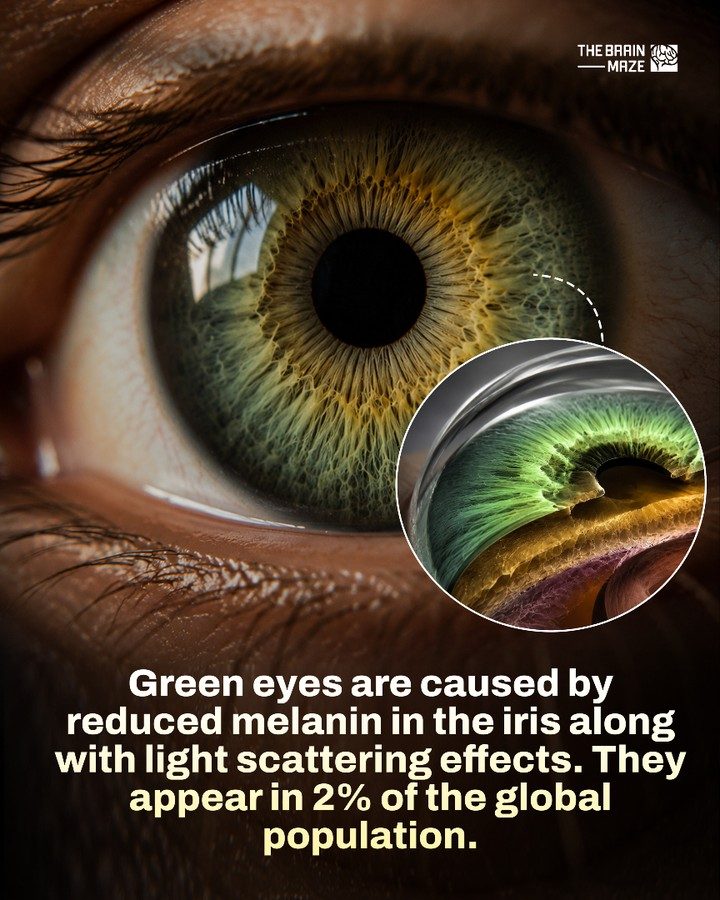
Eye Color Explanation
Green eyes are among the rarest eye colors in the world, found in only about two percent of the global population. Their unique coloration is not due to a green pigment but rather a combination of low melanin levels in the iris and the way light interacts with the eye's microscopic layers.
Why Green Eyes Are So Rare
The rarity of green eyes can be attributed to genetic factors. Eye color is determined by the amount and type of melanin in the iris. There are two types of melanin: eumelanin, which is brown or black, and pheomelanin, which is red or yellow. The interaction of these two types of melanin in the iris creates various eye colors.
The green color of the eyes is a result of low levels of eumelanin and a specific scattering of light. The iris contains tiny structures that scatter light in different directions. When the light hits these structures, it is absorbed and reflected in various ways. The unique combination of low levels of eumelanin and the way light scatters through the iris produces the striking green appearance.
The Influence of Lighting on Eye Color
One fascinating aspect of green eyes is that their color can appear to shift in different lighting conditions. This phenomenon is due to the way light interacts with the iris. The scattering of light can cause the eye to reflect different wavelengths, which can make the green color appear lighter or darker.
Under bright lighting, the green color may appear more vibrant and intense. In dimmer conditions, the green hue might seem muted or even appear closer to blue. This variability in eye color is one of the reasons green eyes are often considered so unique and captivating.
The Role of Melanin
Melanin is the pigment responsible for the color of the skin, hair, and eyes. In the iris, melanin is found in two layers: the anterior border layer and the stroma. The anterior border layer determines the overall darkness of the iris, while the stroma determines the specific color.
For green eyes, the anterior border layer has a low amount of melanin, allowing more light to penetrate and scatter. The stroma layer, however, has a specific combination and distribution of melanin that absorbs certain wavelengths of light and scatters others, resulting in the green color. This delicate balance of melanin and light scattering is what makes green eyes so distinctive.
The Genetic Aspect
Eye color is a heritable trait, which means it is passed down from parents to their children. The inheritance of eye color is complex and involves multiple genes. Green eyes, being less common, are often the result of a specific combination of genes from both parents.
The genetics of eye color are not as simple as some might think. For example, two parents with blue eyes can have a child with green eyes, and two parents with brown eyes can have a child with green eyes. This is because the inheritance of eye color involves several genes that interact in complex ways.
Green Eyes and Human Populations
Green eyes are found in various populations around the world, but they are particularly common in Northern and Central Europe. In these regions, the genetic makeup of the population includes a higher prevalence of green-eyed individuals. This is likely due to a combination of genetic and historical factors, including migrations and intermarriage over time.
Practical Tips for Understanding Eye Color
-
Observe in Different Lighting: To appreciate the full beauty of green eyes, observe them in different lighting conditions. Notice how the color can change from vibrant to muted, depending on the amount and type of light.
-
Understand the Role of Melanin: Familiarize yourself with the role of melanin in determining eye color. Recognize that green eyes have a specific combination and distribution of melanin that creates their unique appearance.
-
Explore the Genetics: Learn about the complex inheritance patterns of eye color. Understand that green eyes can result from a variety of genetic combinations and that eye color is not as straightforward as some might think.
Important Takeaways
Recognizing the rarity and beauty of green eyes involves understanding the unique combination of low melanin levels and light scattering. Green eyes are a result of the way light interacts with the iris, creating a striking and variable color. This interaction is influenced by genetic factors and can appear differently in various lighting conditions.
The captivating appearance of green eyes is a result of a delicate balance of melanin and light scattering, making them a fascinating and unique aspect of human diversity. By understanding the science behind green eyes, we can better appreciate their beauty and the complex mechanisms that create them.
Conclusion
Green eyes are a rare and striking feature, found in only about two percent of the global population. Their color is not due to a green pigment but rather a combination of low melanin levels and the way light scatters through the iris. This unique interaction produces a vibrant and variable green appearance that can shift in different lighting conditions. Understanding the science behind green eyes allows us to appreciate their rarity and the complex mechanisms that create their distinctive beauty.
Watch the Reel
Questions readers ask
What percentage of the population has green eyes?
Green eyes are quite rare, comprising only about two percent of the global population. This rarity adds to their intrigue and uniqueness.
What causes the green color in eyes?
The green color in eyes is not due to a green pigment but rather a result of low levels of melanin and a specific scattering of light in the iris. The combination of this light scattering and low levels of eumelanin creates the green appearance.
How do different lighting conditions affect the appearance of green eyes?
Green eyes can appear to shift in color under different lighting conditions. This change in appearance is due to the way light interacts with the iris, which can make the eyes look lighter or darker, or even shift to a grayish or blueish hue depending on the ambient light.
What role do genes play in determining eye color?
Genetics significantly influence eye color. The amount and type of melanin in the iris, which is determined by genetic factors, contribute to the eye's color. Both parents' genetic contributions impact the eye color of their offspring, with green eyes resulting from a specific combination of genetic traits.
What are the two types of melanin in the iris, and how do they interact to create eye color?
The two types of melanin in the iris are eumelanin, which is brown or black, and pheomelanin, which is red or yellow. The interaction of these two types of melanin in the iris, particularly the low levels of eumelanin, is what creates the unique green color in eyes.
Why are green eyes considered rare compared to other eye colors?
Green eyes are considered rare because they require a specific genetic combination that results in low levels of eumelanin and the unique light scattering that produces the green hue. Most people have higher levels of eumelanin, which results in more common eye colors, such as brown and blue.
Can green eyes change in color over time, or can they be altered through any means?
Green eyes can appear to change color under different lighting conditions, but the underlying color does not change over time. There is no safe or permanent way to alter natural eye color, so any perceived changes are due to the environment and not any inherent change in the iris.
Related deep dives
Similar reads based on topic and creator.




Recent articles
Fresh deep dives from the latest Reels we unpacked.




Comments
Be the first to comment.