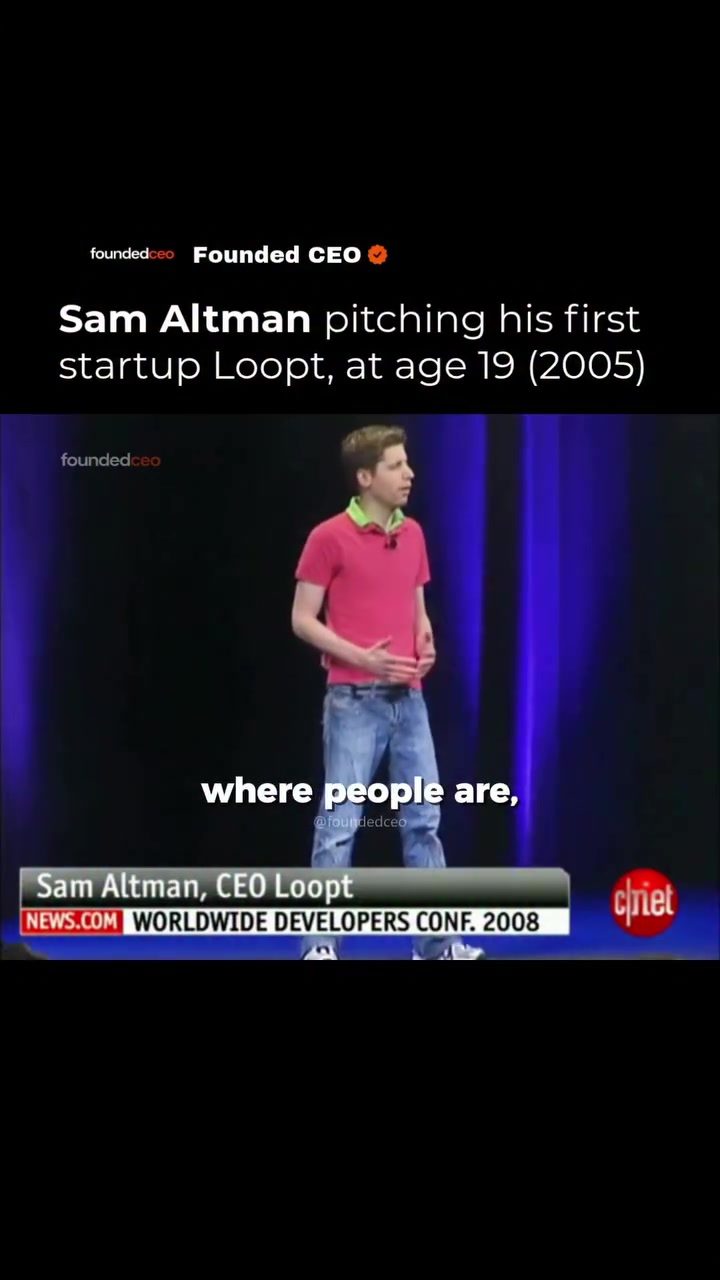
Sam Altman's Early Venture: Pitching Loopt at 19
Entrepreneur Sam Altman launched his first startup, Loopt, while still a sophomore at Stanford University in 2005. Loopt aimed to revolutionize the way people connect by offering real-time location sharing. This concept, though ahead of its time, laid the groundwork for future location-based social apps. Altman pitched Loopt as a young 19-year-old, capturing the essence of Silicon Valley's entrepreneurial spirit.
Loopt's Core Concept
Loopt was designed to help users see where their friends were in real-time, fostering spontaneous meetups and shared experiences. The app displayed a map with an orange pin representing the user and blue pins for friends. This visual interface allowed users to discover nearby friends and serendipitous encounters, such as dining at the same restaurant or being in the same airport.
How It Worked
Users could navigate the map by pinching, dragging, and tapping, similar to modern mapping apps. The app highlighted friends in proximity, showing their activities and recent updates. For instance, a friend might be driving across the Golden Gate Bridge or visiting a nearby café. Users could see photos, text entries, and comments shared by friends, all tied to specific locations on the map.
Sharing and Connecting
Loopt enhanced social interactions by integrating with native mobile APIs. Users could leave comments, make calls, or send texts directly from the app. The platform also allowed users to share their location and activities with friends, promoting spontaneous meetings. For example, if a friend was nearby and free for lunch, users could easily arrange a meeting with just a few taps.
The Significance of Loopt
Loopt marked a pivotal moment in Altman’s career. It was one of the first startups accepted into Y Combinator's inaugural class, securing over $30 million in funding from notable investors like Sequoia Capital. This early success introduced Altman to the intricacies of startup life, including fundraising, product development, and navigating competitive landscapes.
Lessons Learned
Although Loopt never reached breakout success, it provided Altman with invaluable lessons. The experience taught him the nuances of scaling a company, managing competition, and operating under constant uncertainty. These early challenges were instrumental in shaping his future endeavors, including his tenure as President of Y Combinator and his current role as CEO of OpenAI.
The Acquisition and Beyond
In 2012, Green Dot Corporation acquired Loopt for approximately $43 million. While this acquisition wasn't a groundbreaking exit, it served as a stepping stone for Altman. The lessons and connections he gained from Loopt set the stage for his future success, where he has advised and funded thousands of startups through Y Combinator and OpenAI.
Why Real-Time Location Sharing Matters
The concept of real-time location sharing, though not new, remains relevant. Apps like Snapchat, WhatsApp, and Apple’s Find My Friends have incorporated similar features, highlighting the enduring appeal of location-based services. These apps help users stay connected, find friends, and discover new places, much like Loopt aimed to do.
Today’s Landscape
Modern location-sharing apps offer more features and better integration with other services. They often include enhanced privacy controls, enabling users to share their locations temporarily or with selected contacts. These advancements have made location sharing more accessible and secure, addressing some of the concerns that may have hindered Loopt’s mainstream adoption.
Practical Tips for Startups
For aspiring entrepreneurs, the story of Loopt offers several practical tips:
Focus on User Experience
A seamless and intuitive user experience is crucial for any app. Loopt’s interface, which allowed users to navigate maps and see friends’ activities effortlessly, was a key selling point.
Adapt and Innovate
As the tech landscape evolves, startups must continuously adapt and innovate. Though Loopt didn't achieve widespread success, its concept laid the groundwork for future location-based apps. Adaptability and a willingness to pivot are essential for startups to thrive.
Embrace Early Challenges
Early failures and setbacks can provide invaluable lessons. Altman’s experience with Loopt highlighted the importance of resilience and adaptability in the face of competition and market challenges.
Important Takeaways
Loopt’s journey underscores the importance of innovation and timing in the tech industry. While Altman’s early startup didn’t reach mass adoption, it paved the way for his future success and provided foundational knowledge. The lessons learned from Loopt continue to influence Altman’s career and the broader tech landscape.
Conclusion
Sam Altman's early venture, Loopt, marked a pivotal moment in his entrepreneurial journey. The app, focusing on real-time location sharing, offered a glimpse into the future of social networking and connectivity. While it didn't achieve widespread success, the experience laid the groundwork for Altman's future endeavors, shaping his approach to startups, innovation, and resilience. In today’s tech landscape, the lessons from Loopt remain relevant, highlighting the enduring importance of user experience, adaptability, and early challenges.
Watch the Reel
Questions readers ask
Who founded Loopt and when was it created?
Loopt was founded by Sam Altman in 2005, when he was just 19 years old and a sophomore at Stanford University. This early venture marked the start of Altman's entrepreneurial journey and laid the foundation for modern location-based social networking apps.
What was the core concept of the Loopt app?
The core concept of the Loopt app was to provide real-time location sharing. It allowed users to see the whereabouts of their friends in real time on a map, which encouraged spontaneous meetups and shared experiences. This feature made Loopt a pioneer in location-based social networking.
How did the Loopt app help users connect with friends?
Loopt helped users connect with friends by displaying an orange pin for the user and blue pins for their friends on a map. This visual interface enabled users to easily discover if friends were nearby, facilitating spontaneous meetups and enhancing social interactions.
What made Loopt a pioneering app in its time?
Loopt was pioneering because it was one of the first apps to offer real-time location sharing. This concept revolutionized how people connected and interacted. Although it was ahead of its time, Loopt set the stage for future location-based social networking apps that we use today.
What was the interface of the Loopt app like?
The interface of the Loopt app was designed around a map. Users were represented by an orange pin, while friends were represented by blue pins. This intuitive visual design made it easy for users to see where their friends were in real time, fostering a more connected social experience.
What was the significance of Sam Altman's pitch to Loopt?
Sam Altman's pitch for Loopt at the age of 19 was significant as it embodied the entrepreneurial spirit of Silicon Valley. Launching a startup at such a young age, particularly one that introduced a revolutionary concept like real-time location sharing, demonstrated Altman's innovative thinking and bold vision.
How did Loopt influence future location-based social apps?
Loopt's innovative approach to location sharing influenced the development of future location-based social apps. By introducing the concept of real-time location sharing and making it visually intuitive, Loopt paved the way for apps that focus on connecting users through location data, ultimately enhancing social interactions.
Related deep dives
Similar reads based on topic and creator.


Recent articles
Fresh deep dives from the latest Reels we unpacked.




Comments
Be the first to comment.