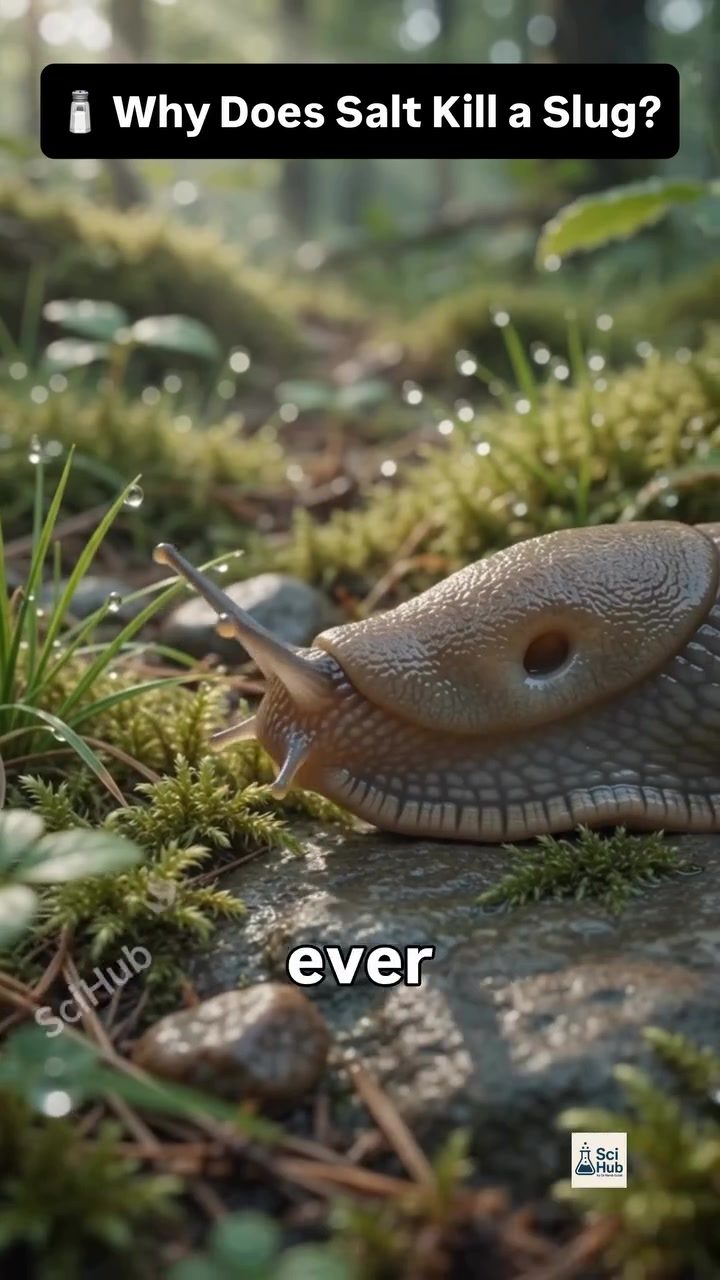
Salt and Slugs: The Science Behind a Common Garden Dilemma
Salt is a common household item that many people use for cooking and preserving food. However, it also has a dark side when it comes to garden pests, particularly slugs. The question of why salt is deadly to slugs is not just a curious garden mystery; it touches on fundamental scientific principles that govern how living organisms interact with their environment.
Why This Matters
Understanding the science behind why salt kills slugs isn't just about controlling pests; it reveals the broader principles of biology and chemistry at work in nature. These principles are not only fascinating but also have practical applications in fields ranging from agriculture to medicine. By delving into the mechanisms at play, we gain a deeper appreciation for the intricate balance of life and the scientific processes that drive it.
The Science Behind Salt and Slugs
The Role of Concentration Gradients
When salt comes into contact with a slug's wet skin, it creates a high concentration of salt outside the slug's body. This difference in salt concentration between the slug's internal environment and its external environment is known as a concentration gradient. The concentration gradient is a critical factor in the process that leads to the slug's demise.
Osmosis: The Key Process
Osmosis is the movement of water molecules from an area of high water concentration to an area of low water concentration through a semipermeable membrane. In the case of a slug, its skin acts as a semipermeable membrane. When salt is applied, the high concentration of salt outside the slug creates a situation where the water inside the slug moves outwards to balance the concentrations.
Dehydration: The Ultimate Cause of Death
As water moves out of the slug's body, it becomes dehydrated. This dehydration causes the slug's body to shrink gradually. Severe dehydration can be fatal for the slug, as it loses essential water and electrolytes needed for its survival. It's important to note that salt itself is not directly toxic to the slug; rather, it's the dehydration caused by the osmotic process that ultimately kills the slug.
Practical Tips for Using Salt Against Slugs
Effective Application
If you choose to use salt as a method for controlling slugs in your garden, it's important to apply it correctly. Sprinkle a small amount of salt around the areas where slugs are likely to be found, such as near plants they are known to feed on. Be cautious, however, as excessive use of salt can also harm plants and disrupt the soil's natural balance.
Alternatives to Salt
While salt is effective, it's not the only method for controlling slugs. Other natural and chemical methods can be just as effective and may have fewer environmental impacts. Some common alternatives include:
- Iron phosphate-based baits: These baits are safe for pets and wildlife but toxic to slugs and snails.
- Copper barriers: Copper creates a mild electric shock that deters slugs from crossing it.
- Diatomaceous earth: This powdery substance damages the slugs' soft bodies, leading to dehydration and death.
- Handpicking: Manually removing slugs from your garden can be time-consuming but is an effective and environmentally friendly method.
Important Takeaways
- Salt doesn't directly kill slugs; it causes dehydration through osmosis.
- Salt creates a concentration gradient, leading to the movement of water out of the slug's body.
- Dehydration is the ultimate cause of death for slugs exposed to salt.
- There are several effective, natural alternatives to salt for controlling slugs in your garden.
Conclusion
The interaction between salt and slugs is a clear example of how nature's processes can be harnessed for practical purposes. By understanding the science behind osmosis and concentration gradients, we can better appreciate the delicate balance of life and make informed decisions about pest control in our gardens. Whether you choose to use salt or opt for alternative methods, knowing the underlying mechanisms can help you make more effective and environmentally conscious choices.
Watch the Reel
Questions readers ask
How does osmosis contribute to the death of slugs when exposed to salt?
Osmosis causes water to move from an area of high concentration (inside the slug) to an area of low concentration (the salt). When a slug is exposed to salt, the high concentration of salt outside the slug draws water out of its body, leading to dehydration and eventual death.
Why is a concentration gradient important in understanding how salt affects slugs?
The concentration gradient is crucial because it drives the movement of water between the slug and its environment. In the case of a slug, the gradient is established because the salt has a lower water concentration compared to the slug. When the gradient is high, water rapidly moves from the slug to the salt, hastening the slug's dehydration.
What role do biology and chemistry play in the process of slug dehydration?
Biological processes, such as the slug's need to maintain internal water balance, and chemical principles, like the concentration gradient, both play roles in this process. The slug's body tries to maintain homeostasis, but the chemical forces from the salt overwhelm this, causing rapid water loss and dehydration.
Can other substances besides salt cause slugs to dehydrate?
Yes, other substances that create a high external concentration gradient, such as sugar or certain acids, can also cause slugs to dehydrate. However, salt is particularly effective because it is readily available and creates a strong osmotic gradient.
Is it safe to use salt as a slug control method in gardens?
While salt is effective, it is not the most environmentally friendly option. Excessive use of salt can negatively impact soil health, harm other plants and organisms, and may not be suitable for long-term pest control. Consider alternative methods, such as diatomaceous earth or natural predators, for a more balanced approach to garden pest management.
How quickly does a slug die when exposed to salt?
The time it takes for a slug to die after exposure to salt can vary, but it typically happens within a few hours. The speed of dehydration depends on the amount of salt, the size of the slug, and environmental conditions, but the process is generally rapid due to the strong osmotic forces at play.
What are some practical applications of understanding osmosis beyond slug control?
Understanding osmosis has wide-ranging applications, from improving agricultural practices by managing soil water content, to medical advancements in drug delivery and understanding cell function. This knowledge also aids in waste management and environmental conservation by helping control pests naturally.
Related deep dives
Similar reads based on topic and creator.




Recent articles
Fresh deep dives from the latest Reels we unpacked.




Comments
Be the first to comment.