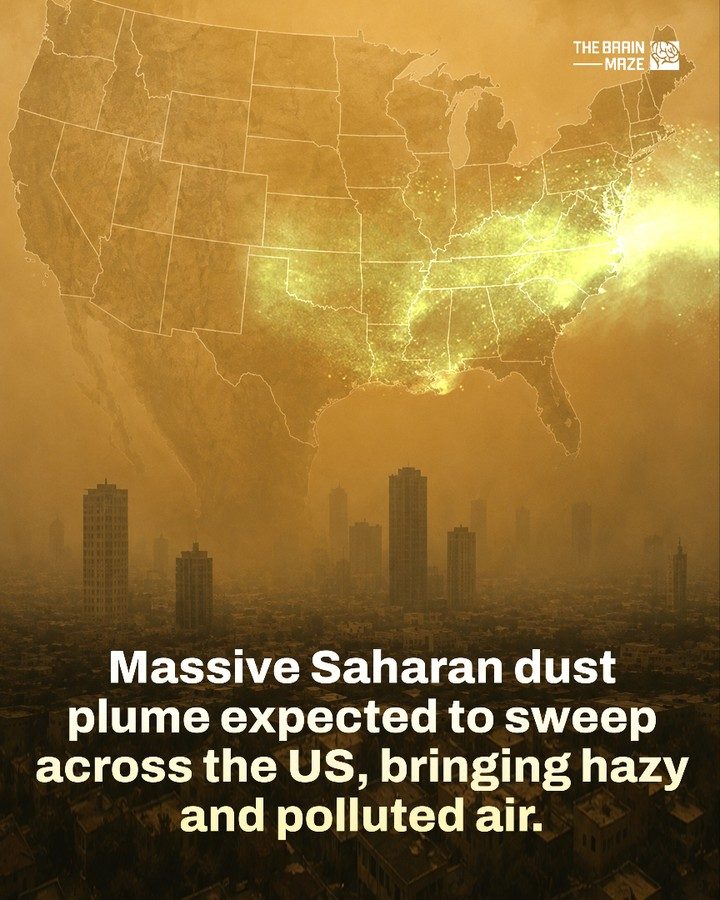
Saharan Dust Plume: Understanding the Impact on the Southeastern United States
A massive Saharan dust cloud is expected to sweep across parts of the southeastern United States in the coming days. This phenomenon, which originates in North Africa and travels across the Atlantic, is set to bring several changes to the affected regions, including Florida and surrounding Gulf areas.
Context / Why This Matters
Every year, dust plumes from the Saharan Desert journey thousands of miles across the Atlantic Ocean, impacting air quality and weather patterns in various regions, including the southeastern United States. Understanding the effects of these dust plumes is crucial for residents and travelers in the affected areas. The dust can significantly alter local weather conditions, air quality, and even suppress hurricane formation.
Main Discussion
The Journey of the Dust Plume
The Saharan dust plume originates from the Sahara Desert in North Africa. Strong winds lift the fine particles of sand and dust into the atmosphere, where they are carried westward by trade winds. The journey of the dust plume is influenced by various atmospheric conditions, including wind speed and direction, temperature, and humidity.
The dust particles travel through layers of the atmosphere, with some larger particles settling out over the ocean, and finer particles continuing their journey. The dust can be transported over 5,000 miles, making it a global phenomenon that impacts not only the southeastern United States but also the Caribbean, Central America, and even South America.
Effects on Weather and Climate
When the Saharan dust plume reaches the southeastern United States, it brings with it several notable weather and climate changes. The dry, sand-laden air reduces humidity in the affected regions, leading to lower relative humidity levels. This can make the air feel drier and more comfortable for some, but it also suppresses hurricane formation, as the dry air inhibits the development of thunderstorms and tropical disturbances.
The dust plume also raises "feels like" temperatures significantly in the affected regions. The dust particles in the air scatter sunlight, which can increase the amount of solar radiation reaching the earth's surface. This, in combination with the lower humidity, can make it feel warmer than actual temperatures.
Air Quality Concerns
One of the most immediate and visible effects of the Saharan dust plume is the worsening of air quality. The fine particles of dust and sand can irritate the eyes, nose, and throat, and exacerbate respiratory conditions such as asthma and allergies. People with pre-existing respiratory conditions should take precautions to minimize their exposure to the dust.
The dust can also cause hazy and polluted air, reducing visibility and creating a yellowish or brownish hue in the sky. This can impact outdoor activities and visibility, making it harder to see clearly in the affected regions.
Impact on Wildlife and Ecosystems
The Saharan dust plume also affects local wildlife and ecosystems. The fine particles can cause respiratory issues in animals, and the dust can settle on vegetation, impacting plant growth and health. The dust can also negatively affect water quality, as it can settle on the surface of bodies of water, reducing the amount of sunlight that reaches underwater plants and organisms.
The dust also contains nutrients, such as iron and phosphorus, which can fertilize marine and terrestrial ecosystems. However, the impacts of this fertilization are complex and can have both positive and negative effects on local ecosystems.
Practical Tips
To navigate the effects of the Saharan dust plume, it's important to take some practical steps to protect your health and well-being.
Protect Your Health
If you have respiratory conditions such as asthma or allergies, stay indoors as much as possible and keep windows and doors closed. Use air purifiers and air conditioners to filter out dust particles. Wear a mask when going outside, and avoid strenuous outdoor activities.
If you experience symptoms such as coughing, sneezing, or difficulty breathing, seek medical attention.
Protect Your Eyes
Wear sunglasses or protective eyewear to shield your eyes from dust particles, especially when outdoors. Avoid rubbing your eyes, as this can irritate them further. Use eye drops to soothe any irritation.
Stay Informed
Pay attention to local weather updates and air quality reports. The effects of the dust plume can vary in intensity and duration, so it's important to stay informed about current conditions.
Important Takeaways
- The Saharan dust plume is a natural phenomenon that originates in the Sahara Desert and travels across the Atlantic, impacting various regions, including the southeastern United States.
- The dust plume can reduce humidity, suppress hurricane formation, and worsen air quality in affected regions.
- The dust can cause respiratory issues, irritate the eyes and throat, and exacerbate pre-existing respiratory conditions.
- To protect your health, stay indoors as much as possible, use air purifiers and air conditioners, and wear a mask when going outside.
- Pay attention to local weather updates and air quality reports to stay informed about current conditions.
Conclusion
The Saharan dust plume is a fascinating and complex phenomenon that has a significant impact on the weather, climate, and air quality in the southeastern United States. By understanding the effects of the dust plume and taking practical steps to protect your health, you can stay informed and prepared for the changes it brings.
Watch the Reel
Related deep dives
Similar reads based on topic and creator.



Recent articles
Fresh deep dives from the latest Reels we unpacked.




Comments
Be the first to comment.