Bee Behavior
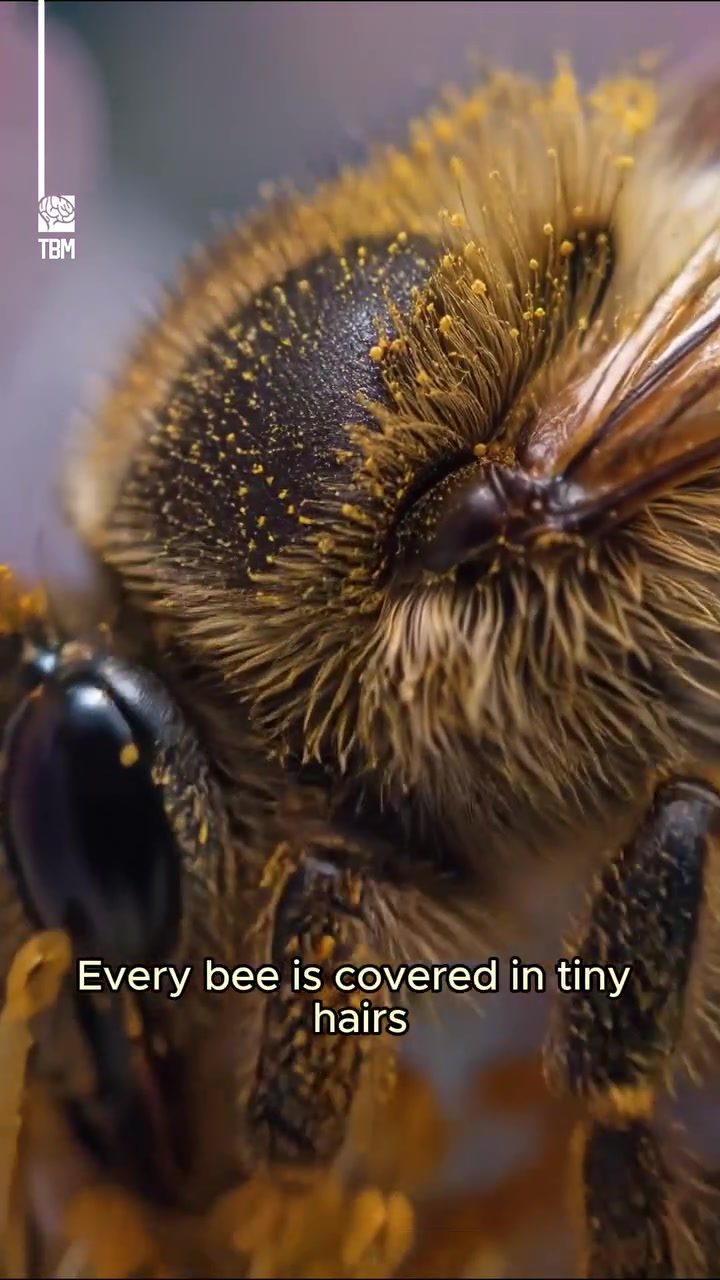
Bees play a pivotal role in our ecosystems, and one of the most fascinating aspects of their biology is their hairy bodies. These tiny branched hairs cover a bee’s body, serving as a natural pollen collector. This unique feature not only makes pollination more efficient but also helps bees carry food back to the hive.
Context / Why this matters
Pollination is a critical process that enables plants to reproduce and produce fruits, vegetables, and seeds. Bees are among the most efficient pollinators, and their hairy bodies are a significant factor in this efficiency. Understanding why bees are so hairy can provide deeper insights into their behavior and the importance of their role in the ecosystem.
Main discussion
The purpose of bee hairs
Every bee is equipped with tiny, branched hairs that act like miniature feathers. These hairs make it easy for pollen grains to stick to the bee’s body as it moves from flower to flower. The branched structure of these hairs increases the surface area, allowing more pollen to adhere. This makes the bee an efficient pollinator, as it can transfer pollen from one plant to another, facilitating fertilization.
Pollen collection and pollination
As a bee visits flowers, pollen grains get trapped in its hairs. When the bee moves to the next flower, some of this pollen rubs off onto the stigma of the new flower. This process is crucial for plant reproduction. The pollen grains are the male reproductive cells of the plant, and their transfer to the stigma (the female reproductive organ) allows for fertilization and the production of fruits, vegetables, and seeds.
Special brushes on bee legs
Bees don’t just rely on their body hairs for pollen collection. They also use special brushes on their legs to gather pollen into compact bundles. These bundles are then carried back to the hive as food for the colony. This dual mechanism of pollen collection—using body hairs to facilitate pollination and leg brushes to gather food—shows the intricate and efficient system bees have evolved for survival.
The impact of bee hair on pollination efficiency
The remarkable hairs on a bee’s body significantly enhance pollination efficiency. Without these hairs, the process of pollen transfer would be far less effective. Many plants would struggle to reproduce and grow because they would not receive the necessary pollen to fertilize their flowers. This highlights the critical role bees play in maintaining biodiversity and supporting agricultural systems.
The life cycle of a bee
The intricate details of a bee’s body, including its tiny hairs, play a vital role in its life cycle. From gathering pollen to reproducing, every aspect of a bee’s behavior is finely tuned to ensure the survival of its species and the plants it relies on. Bees collect nectar and pollen as food sources, which are then processed and stored in the hive. This food is essential for the development of bee larvae and the overall health of the colony.
Practical tips
Supporting bee populations
Understanding the importance of bee hairs and their role in pollination can help us appreciate the need to support bee populations. Here are some practical tips to support bees:
- Plant bee-friendly flowers: Choose flowers that are rich in nectar and pollen. These can include plants like lavender, sunflowers, and bee balm.
- Create a bee-friendly habitat: Provide a water source and nesting sites for bees. Bees need a variety of habitats to thrive.
- Avoid pesticides: Pesticides can be harmful to bees. Opt for natural pest control methods and avoid using chemicals that can harm these important pollinators.
Important takeaways
The tiny, branched hairs on a bee’s body are essential for efficient pollination and the survival of the bee colony. These hairs act as natural pollen collectors, facilitating the transfer of pollen from one flower to another. Additionally, bees use special brushes on their legs to gather pollen into compact bundles, which they carry back to the hive as food.
Conclusion
The hairy bodies of bees are a testament to nature’s ingenuity. These tiny hairs, along with their leg brushes, make bees highly efficient pollinators. By understanding and supporting bee behavior, we can help ensure the health of our ecosystems and agricultural systems.
Watch the Reel
Questions readers ask
Why do bees have hairy bodies?
Bees have hairy bodies primarily to facilitate pollen collection. The tiny, branched hairs on their bodies act like a natural pollen collector, trapping pollen grains as bees move from flower to flower. This hairy structure is a key adaptation that enhances their efficiency in pollination.
How do bee body hairs help in the pollination process?
Bee body hairs play a crucial role in the pollination process by trapping and transferring pollen. As a bee visits a flower, pollen grains stick to the hairs on its body. When the bee moves to the next flower, some of this pollen is deposited, aiding in the fertilization of the plant. This mechanical process is vital for plant reproduction.
How do bees collect pollen using their body hairs?
Bees collect pollen using their body hairs through a process of physical contact. As they land on flowers, pollen grains adhere to the branched hairs covering their bodies. Bees then actively groom themselves, packing the collected pollen into specialized structures called pollen baskets on their hind legs for transport back to the hive.
What happens to the pollen collected by bees?
The pollen collected by bees serves two main purposes. Some of it is used to feed the bee larvae in the hive, providing essential proteins and nutrients. The rest is transferred to other flowers, facilitating the pollination process and enabling plants to produce fruits, vegetables, and seeds.
Can all bees collect pollen effectively due to their hairy bodies?
While most bees have hairy bodies that aid in pollen collection, the efficiency can vary among different species. Honeybees, for instance, are particularly adept at this due to their dense body hair and specialized grooming behaviors. Other bee species may have different adaptations that also support pollination and food collection.
How does the structure of bee hairs aid in pollen transfer?
The structure of bee hairs, which are tiny and branched, creates a large surface area for pollen grains to adhere to. This design maximizes the amount of pollen a bee can carry from one flower to another, enhancing the efficiency of the pollination process. The hairs also help in the grooming process, allowing bees to transfer pollen to their hind legs for storage and transport.
Why is the process of bees collecting pollen important for our ecosystem?
The process of bees collecting pollen is vital for our ecosystem as it directly supports plant reproduction. By transferring pollen between flowers, bees enable the production of fruits, vegetables, and seeds. This, in turn, supports a wide range of wildlife and contributes to the overall health and biodiversity of our environment.
Related deep dives
Similar reads based on topic and creator.

Recent articles
Fresh deep dives from the latest Reels we unpacked.




Comments
Be the first to comment.