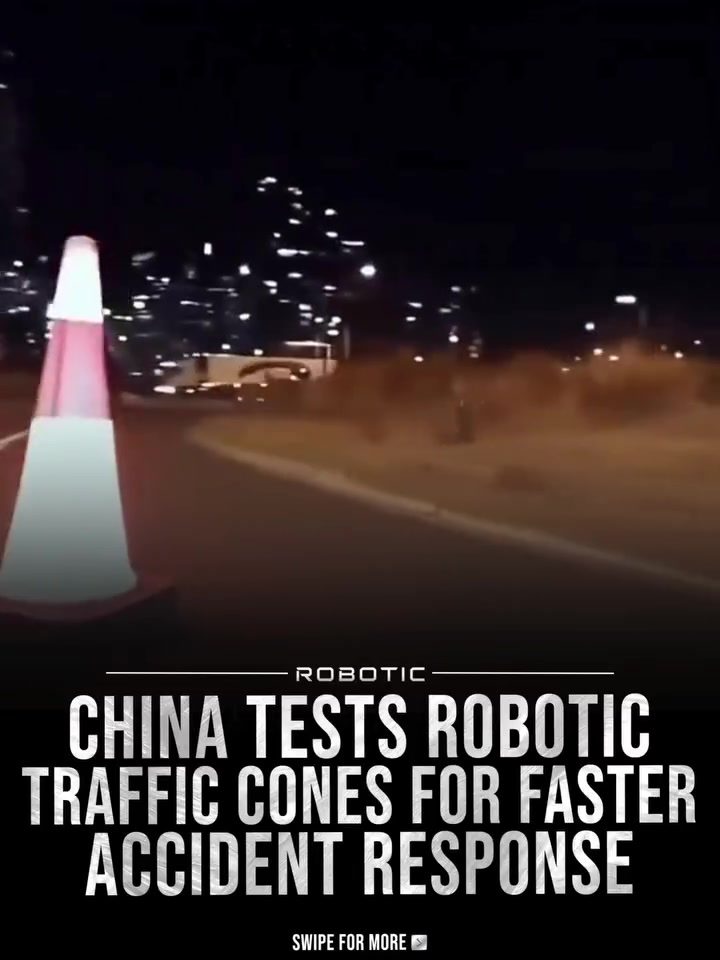
Robotic Traffic Cones Revolutionize Accident Response
Robotic traffic cones are transforming the way emergency crews respond to accidents, making the process faster and safer. These advanced devices, currently being tested in China, offer a significant improvement over traditional manual methods. By deploying autonomously from emergency vehicles, these robotic traffic cones can quickly create a safe perimeter around an accident scene, reducing response times and minimizing risks to personnel on busy roads.
Why This Matters
Road safety is a critical concern for any community. Accidents can cause significant delays and hazards for both the emergency personnel and other drivers. Traditional methods of setting up traffic cones manually involve human responders entering active traffic zones, which is inherently dangerous. Robotic traffic cones address this issue by reducing the need for human intervention in hazardous situations. This innovation not only improves the safety of emergency responders but also enhances overall traffic management during and after an accident.
Main Discussion
The Technology Behind Robotic Traffic Cones
These robotic traffic cones are equipped with advanced autonomous navigation systems, enabling them to move independently and reposition themselves as needed. The technology involves a combination of sensors, GPS, and possibly even remote control features, allowing for precise deployment and coordination. For instance, the cones tested in Ningbo can conduct autonomous patrols and coordinate with each other to create barriers quickly after an accident. This level of automation ensures that the cones can be deployed efficiently, even in high-stress situations.
Deployment and Usage Scenarios
One of the key advantages of these robotic traffic cones is their ability to deploy directly from emergency vehicles. This means that as soon as an emergency crew arrives at the scene, the cones can be released and positioned without the need for manual intervention. This seamless deployment process significantly reduces the time required to secure an accident scene, which is crucial for managing traffic flow and ensuring the safety of all parties involved.
The Impact on Emergency Response
By automating the process of setting up traffic cones, emergency crews can focus more on providing medical assistance and managing the situation rather than on manual tasks that can be hazardous. This shift in focus allows for more efficient and effective emergency response, ultimately leading to better outcomes for accident victims and reduced risks for responders.
Practical Tips
For Emergency Crews
- Training: Ensure that emergency personnel are well-trained in the use and deployment of these robotic traffic cones.
- Maintenance: Regularly maintain and update the robotic cones to ensure they are in optimal working condition.
- Coordination: Establish clear protocols for coordinating the deployment of these cones, especially in scenarios involving multiple emergency vehicles.
For Drivers
- Awareness: Be aware of the presence of these robotic traffic cones and understand their purpose in improving road safety.
- Compliance: Follow the guidelines and instructions provided by emergency personnel when dealing with robotic traffic cones during an accident.
Important Takeaways
The introduction of robotic traffic cones represents a significant leap in road safety and emergency response technology. By automating the deployment of traffic cones, emergency crews can respond more quickly and safely to accidents, reducing the risks to both personnel and other drivers. This innovation highlights the potential of integrating robotics into public safety, paving the way for more advanced and efficient emergency response systems.
Conclusion
Robotic traffic cones are setting a new standard in accident response and road safety. Their ability to deploy autonomously and create a safe perimeter quickly and efficiently is a game-changer for emergency crews and drivers alike. As this technology continues to evolve, it is likely to become an integral part of our road safety infrastructure, ensuring safer and more efficient management of traffic during emergencies.
Watch the Reel
Questions readers ask
How do robotic traffic cones improve emergency response times in China?
Robotic traffic cones significantly reduce response times by deploying autonomously from emergency vehicles. This eliminates the need for personnel to manually set up cones, allowing them to focus on other critical tasks and reducing the time it takes to secure an accident scene.
What advantages do autonomous traffic cones offer over traditional methods?
Autonomous traffic cones enhance safety by creating a perimeter around accident scenes quickly and without human intervention. This reduces the risks to personnel who would otherwise be setting cones manually in busy traffic, and ensures a safer working environment.
Are these robotic traffic cones being used in other countries besides China?
As of now, the article specifies that these robotic traffic cones are being tested and used in China. There is no mention of their deployment in other countries, though their success in China could lead to broader adoption elsewhere.
How do these robotic cones enhance overall road safety?
Robotic traffic cones improve road safety by minimizing the risks to emergency personnel and reducing the hazards for other drivers. They create a secure perimeter quickly, which helps prevent further accidents and ensures smoother traffic flow around accident scenes.
What are the key advantages of deploying robotic traffic cones from emergency vehicles?
Deploying robotic traffic cones from emergency vehicles allows for quick and efficient setup around accident scenes. This autonomous deployment means that emergency personnel can focus on their primary duties while the cones create a safe perimeter, improving overall efficiency and safety.
What other potential applications might robotic traffic cones have beyond emergency response?
While currently used for emergency response, robotic traffic cones could also be beneficial in managing traffic during non-emergency situations, such as road construction or large events. Their autonomous capabilities could help in quickly setting up and adjusting traffic patterns to ease congestion and enhance safety in various scenarios.
Related deep dives
Similar reads based on topic and creator.



Recent articles
Fresh deep dives from the latest Reels we unpacked.




Comments
Be the first to comment.