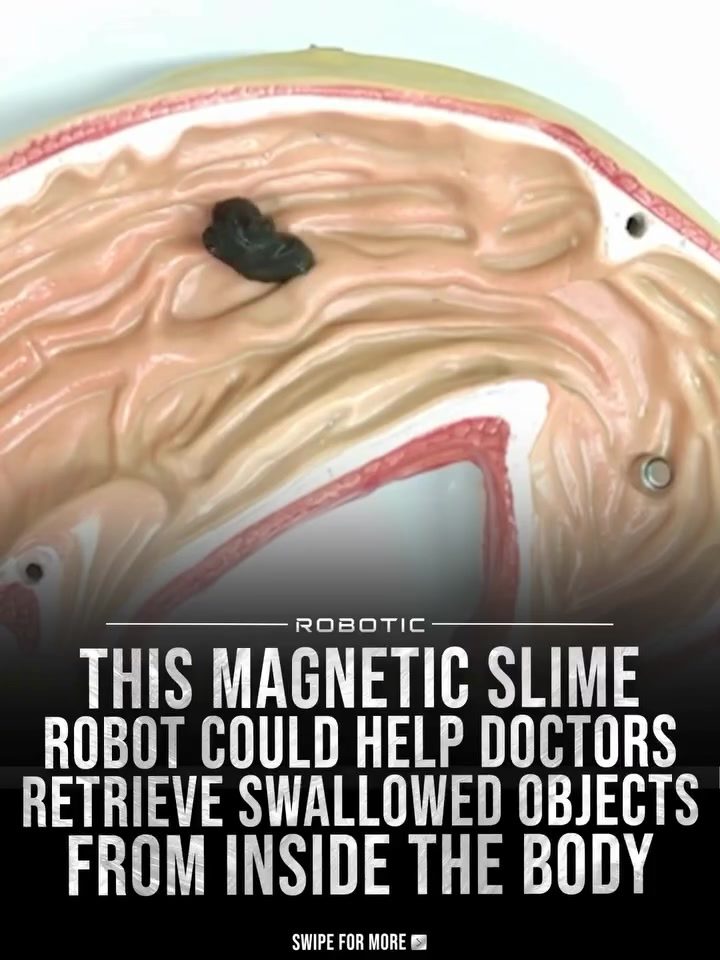
Robotic Slime for Medical Retrieval
Robotic slime is a cutting-edge technology that holds promise for medical retrieval procedures. This innovation combines the principles of soft robotics and magnetism to create a device that can navigate through the human body with remarkable precision.
Context / Why this matters
Swallowing foreign objects is a common occurrence, particularly among children and the elderly. These objects can sometimes become lodged in the digestive tract, necessitating medical intervention. Traditional methods for removing these objects often involve invasive procedures, such as endoscopy or surgery, which can be risky and uncomfortable for patients.
The development of robotic slime offers a less invasive alternative. By utilizing magnetic fields to control its movement, this technology can potentially retrieve swallowed objects without the need for surgery. This not only reduces patient discomfort but also minimizes the risks associated with invasive procedures.
Main discussion
The Science Behind Robotic Slime
Developed by researchers at The Chinese University of Hong Kong, robotic slime is a novel application of soft robotics. Unlike traditional robots, which are typically rigid and rely on motors and electronics, robotic slime is composed of a soft, magnetic material. This material allows it to take on different forms and navigate through the body with ease. Let's break down the key features of this technology.
Magnetic Control
The movement of the robotic slime is controlled by external magnetic fields. These fields can be precisely manipulated to guide the slime through the body. This precision allows doctors to navigate the slime through the digestive tract, even through narrow passages as small as 1.5 mm. The ability to control the slime's movements with such accuracy is a significant advantage, as it enables doctors to retrieve objects from hard-to-reach places.
Adaptability
One of the standout features of robotic slime is its adaptability. The slime can change its consistency to fit the situation. For instance, it can become more rigid when needed or flow through tiny gaps. This adaptability is crucial for navigating the complex and often unpredictable environment of the human body.
Self-Healing and Electrical Conductivity
In addition to its magnetic and adaptable properties, robotic slime can self-heal after being cut. This feature ensures that the slime remains functional and effective, even if it encounters obstacles or damage within the body. Furthermore, the slime can conduct electricity, which opens up the possibility of using it to repair broken circuits or other electrical components within the body.
Potential Medical Applications
The potential applications of robotic slime in medical retrieval are vast. Beyond retrieving swallowed objects, this technology has the potential to revolutionize other medical procedures as well.
Minimally Invasive Surgery
The ability of robotic slime to flow through narrow passages and change its consistency makes it an ideal candidate for minimally invasive surgeries. This technology could be used to repair or retrieve objects in areas of the body that are difficult to access with traditional surgical methods. For example, robotic slime could navigate through twisted or obstructed vessels to retrieve foreign objects or repair damage.
Targeted Drug Delivery
Another potential application of robotic slime is in targeted drug delivery. By encapsulating medications within the slime, doctors could deliver drugs directly to specific sites within the body. This targeted approach could improve the effectiveness of treatments while reducing side effects, as the medication would be concentrated in the affected area rather than distributed throughout the body.
Diagnostic Procedures
Robotic slime could also be used in diagnostic procedures. Its ability to navigate through the body makes it an excellent tool for imaging and sampling. For example, robotic slime could be used to take tissue samples from hard-to-reach areas or to provide detailed images of the internal environment.
Practical tips
For Healthcare Professionals
-
Explore Collaboration Opportunities: Healthcare professionals should consider collaborating with researchers and engineers to explore the potential of robotic slime in their practice. By staying informed about the latest advancements in this field, doctors can be better prepared to incorporate this technology into their procedures.
-
Attend Conferences and Workshops: Participating in conferences and workshops focused on soft robotics and medical technology can provide valuable insights and networking opportunities. These events often showcase the latest developments and offer hands-on training sessions.
For Researchers and Engineers
-
Invest in Research and Development: Researchers and engineers should continue to invest in research and development efforts to refine and expand the capabilities of robotic slime. By pushing the boundaries of what this technology can achieve, they can open up new possibilities for medical applications.
-
Collaborate with Healthcare Professionals: Engaging with healthcare professionals can provide valuable insights into the practical applications and challenges of robotic slime. This collaboration can help ensure that the technology is developed with real-world needs in mind.
Important takeaways
Robotic slime represents a significant advancement in medical technology. Its unique properties, including magnetic control, adaptability, self-healing, and electrical conductivity, make it an ideal candidate for a wide range of medical procedures. By leveraging this technology, healthcare professionals can perform less invasive surgeries, deliver targeted treatments, and conduct more effective diagnostic procedures.
Conclusion
The development of robotic slime is a testament to the incredible potential of soft robotics in medical applications. This innovative technology could revolutionize how we approach medical retrieval procedures, making them safer, more effective, and less invasive. As research and development in this field continue to advance, the possibilities for future biomedical applications are vast. By embracing this technology, we can pave the way for a new era in medical care.
Watch the Reel
Questions readers ask
How does robotic slime work for retrieving swallowed objects?
Robotic slime utilizes soft robotics and magnetism to navigate through the digestive tract. Magnetic fields control the slime, allowing it to precisely locate and retrieve swallowed objects with minimal invasiveness.
What are the benefits of using robotic slime for medical retrievals compared to traditional methods?
Robotic slime offers a less invasive alternative to traditional methods like endoscopy or surgery. It reduces risks and discomfort for patients by providing a precise, non-invasive retrieval method.
Who developed the robotic slime technology for medical use?
The development of robotic slime for medical retrieval is notable in research conducted by Hong Kong University robotics professionals. They have spearheaded advancements in this innovative medical retrieval technology.
Can robotic slime be used to retrieve any type of swallowed object?
Robotic slime is designed to retrieve a variety of swallowed objects. Its precise magnetic control allows it to adapt to different shapes and sizes, making it a versatile tool for medical retrieval procedures.
Is robotic slime safe for use in the human body?
Robotic slime is engineered with biocompatible materials, ensuring safety for use within the human body. Its soft nature and magnetic control minimize the risk of damage to internal tissues during retrieval procedures.
How is robotic slime controlled during the retrieval process?
Magnetic fields are used to guide and control robotic slime through the digestive tract. This allows medical professionals to direct the slime precisely to the location of the swallowed object and retrieve it effectively.
What makes robotic slime a promising innovation in medical retrieval?
Robotic slime's ability to navigate the body with precision, retrieve objects non-invasively, and reduce patient discomfort positions it as a promising innovation. This technology offers a safer and more comfortable alternative to traditional retrieval methods.
Related deep dives
Similar reads based on topic and creator.



Recent articles
Fresh deep dives from the latest Reels we unpacked.




Comments
Be the first to comment.