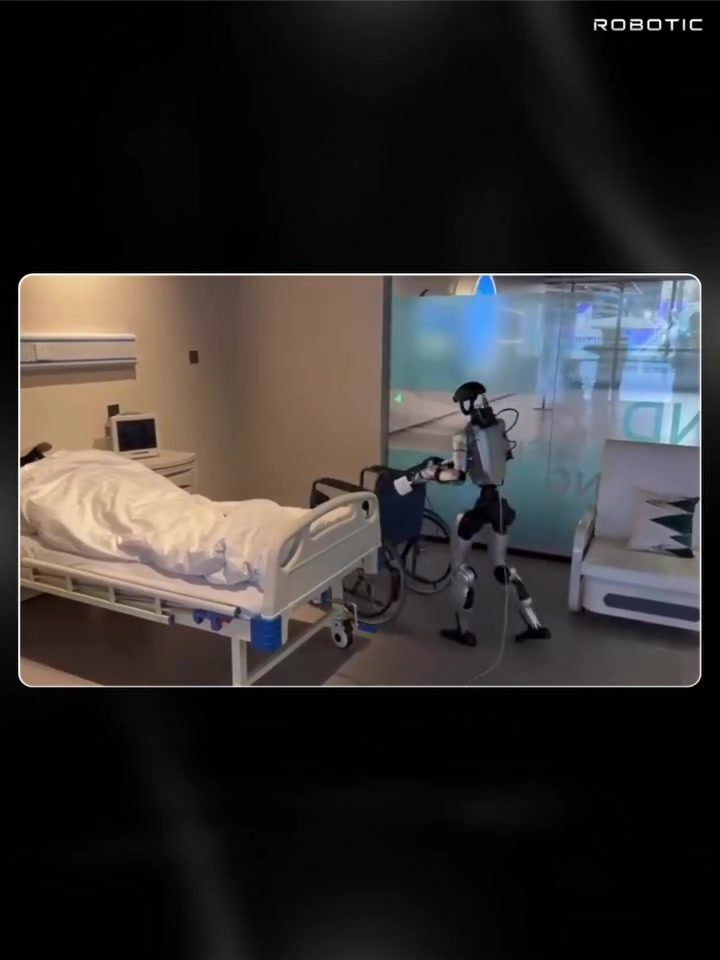
Robotic Assistance in Healthcare
Robots are increasingly playing a critical role in healthcare by handling real responsibilities within hospital environments. The advent of robotic systems in healthcare is not a distant dream but a present reality. Unitree Robotics’ humanoid systems are already actively assisting with patient care and daily medical tasks, supporting staff in managing repetitive or physically demanding work. This shift is timely, as healthcare systems worldwide grapple with staff shortages. By taking on routine duties, robots can alleviate the workload on medical professionals, allowing them to focus on critical care and complex decision-making.
Context / Why This Matters
Healthcare systems have long been under strain due to an aging population and the increasing complexity of medical treatments. The integration of robotic assistance in hospitals is a strategic response to these challenges. By handling tasks such as transporting equipment, aiding mobility, and supporting routine operations, robotic systems can significantly improve operational efficiency. Furthermore, this shift highlights how robotics is transitioning from industrial environments to human-centered spaces, where reliability, safety, and smooth interaction are paramount.
Main Discussion
The Role of Robotics in Healthcare
Robotic systems in healthcare are designed to handle a range of tasks, from delivering meals and medications to assisting with patient mobility. These systems are equipped with advanced sensors and algorithms that enable them to navigate hospital environments safely and efficiently. Their ability to perform repetitive tasks without fatigue or error is a significant advantage in a high-stress environment like a hospital.
Types of Robotic Assistance
-
Delivery Robots: These robots are designed to transport items such as meals, medications, and medical supplies. They can navigate through hospital corridors, elevators, and even into patient rooms, delivering items directly to the bedside. This not only saves time but also reduces the risk of human error in medication delivery.
-
Mobility Assistive Robots: These robots help patients move around the hospital, providing support for those with mobility issues. They can guide patients to their destinations, such as diagnostic departments or physical therapy rooms, ensuring they reach their appointments safely and on time.
-
Support Robots for Staff: These robots assist healthcare professionals by handling tasks that are physically demanding or time-consuming. They can help in setting up equipment, transporting patients, and performing routine checks, allowing staff to focus on more critical tasks.
Benefits of Robotic Assistance
The integration of robotic systems in healthcare offers several benefits:
-
Efficiency and Productivity: Robots can perform tasks more quickly and efficiently than humans, reducing wait times and improving overall productivity.
-
Consistency and Accuracy: Robotic systems are programmed to perform tasks with high precision and consistency, reducing the risk of errors in medication delivery and other critical tasks.
-
Safety: Robots can operate in environments that may be hazardous for humans, such as handling hazardous materials or performing tasks in isolation areas.
-
Reduced Workload: By taking over repetitive and physically demanding tasks, robots can significantly reduce the workload on healthcare professionals, allowing them to focus on tasks that require human expertise and decision-making.
The Future of Healthcare Automation
The future of healthcare is poised to see an even greater integration of robotic systems. As technology advances, robots will become more sophisticated, capable of performing a broader range of tasks. This includes not only physical tasks but also cognitive tasks, such as data analysis and decision support. The goal is to create a seamless partnership between human expertise and robotic assistance, leveraging the strengths of both to provide better patient care.
Practical Tips
For healthcare institutions looking to integrate robotic systems, here are some practical tips:
-
Assess Needs: Identify the areas where robotic assistance can be most beneficial. This could be in delivery services, patient mobility, or supporting staff in routine operations.
-
Choose the Right Robots: Select robots that are specifically designed for healthcare environments. Ensure they have the necessary certifications and safety features.
-
Training and Integration: Provide comprehensive training for staff on how to use and interact with the robots. Ensure that the robots are integrated seamlessly into existing workflows.
-
Maintenance and Updates: Regular maintenance and software updates are essential to keep the robots functioning optimally. Ensure that there is a dedicated team for maintenance and troubleshooting.
-
Feedback and Improvement: Continuously gather feedback from staff and patients to identify areas for improvement. Use this feedback to make necessary adjustments and upgrades.
Important Takeaways
-
Robotic systems are already assisting with patient care and daily medical tasks in hospitals, handling repetitive or physically demanding work.
-
The integration of robots in healthcare can significantly reduce the workload on medical professionals, allowing them to focus on critical care and complex decision-making.
-
Robots can perform tasks more quickly and efficiently, with high precision and consistency, reducing the risk of errors and improving overall productivity.
-
The future of healthcare will see an even greater integration of robotic systems, leveraging their strengths to provide better patient care.
Conclusion
The role of robotic systems in healthcare is evolving rapidly, with Unitree Robotics’ humanoid systems leading the charge. By taking on real responsibilities within hospitals, these robots are not only improving operational efficiency but also enhancing the quality of patient care. As we look to the future, the seamless integration of human expertise with robotic assistance will be crucial in navigating the challenges of modern healthcare.
Watch the Reel
Questions readers ask
How do robotic assistants contribute to managing staff shortages in hospitals?
Robotic assistants contribute to managing staff shortages by taking on routine tasks such as delivering meals, medications, and aiding patient mobility. This delegation allows healthcare professionals to concentrate on more critical and complex aspects of patient care, thereby optimizing the use of human resources within the hospital. For example, Unitree Robotics’ humanoid systems are designed to handle repetitive or physically demanding tasks, making them a valuable addition to the healthcare environment to help professionals focus on what's most important.
What types of tasks can robotic assistants perform in a hospital setting?
Robotic assistants can perform a variety of tasks in a hospital setting, including delivering meals and medications, assisting with patient mobility, and handling other daily medical tasks. This automation in hospitals helps streamline operations and ensures that essential services are provided efficiently, even when staff is limited. Robots in hospital care can also help to reduce the workload on medical staff, allowing them to prioritize their time and energy on more critical aspects of patient care.
How do robot delivery systems improve patient care automation?
Robot delivery systems improve patient care automation by ensuring timely and accurate delivery of meals, medications, and supplies. This automation in hospitals reduces the risk of human error and increases efficiency, allowing healthcare professionals to focus on direct patient care. With robots handling logistical tasks, hospitals can enhance their overall service quality and reliability.
What are the benefits of using robots for patient mobility in hospitals?
Using robots for patient mobility in hospitals provides several benefits, including reducing the physical strain on healthcare staff and enhancing patient safety. Robotic systems can assist patients with moving around the hospital, which is particularly useful for those with limited mobility. This support not only improves patient outcomes but also helps hospitals manage resources more effectively.
Can robotic assistants be integrated with other medical technologies to improve hospital care?
Yes, robotic assistants can be integrated with other medical technologies to significantly improve hospital care. By working in conjunction with electronic health records, telemedicine, and other automated systems, robots can provide a more comprehensive and seamless healthcare experience. This integration can enhance communication, coordination, and overall efficiency within the hospital environment, leading to better patient outcomes.
How might hospitals benefit from using medical robots?
Hospitals can benefit from using medical robots in numerous ways, including improved efficiency, reduced workload for staff, and enhanced patient care. Robotic assistants in healthcare can handle a wide range of tasks, from delivering medications to assisting with patient mobility, which helps hospitals manage daily operations more effectively. This allows healthcare professionals to focus on critical care and decision-making, ultimately improving the quality of care provided to patients.
Related deep dives
Similar reads based on topic and creator.



Recent articles
Fresh deep dives from the latest Reels we unpacked.




Comments
Be the first to comment.