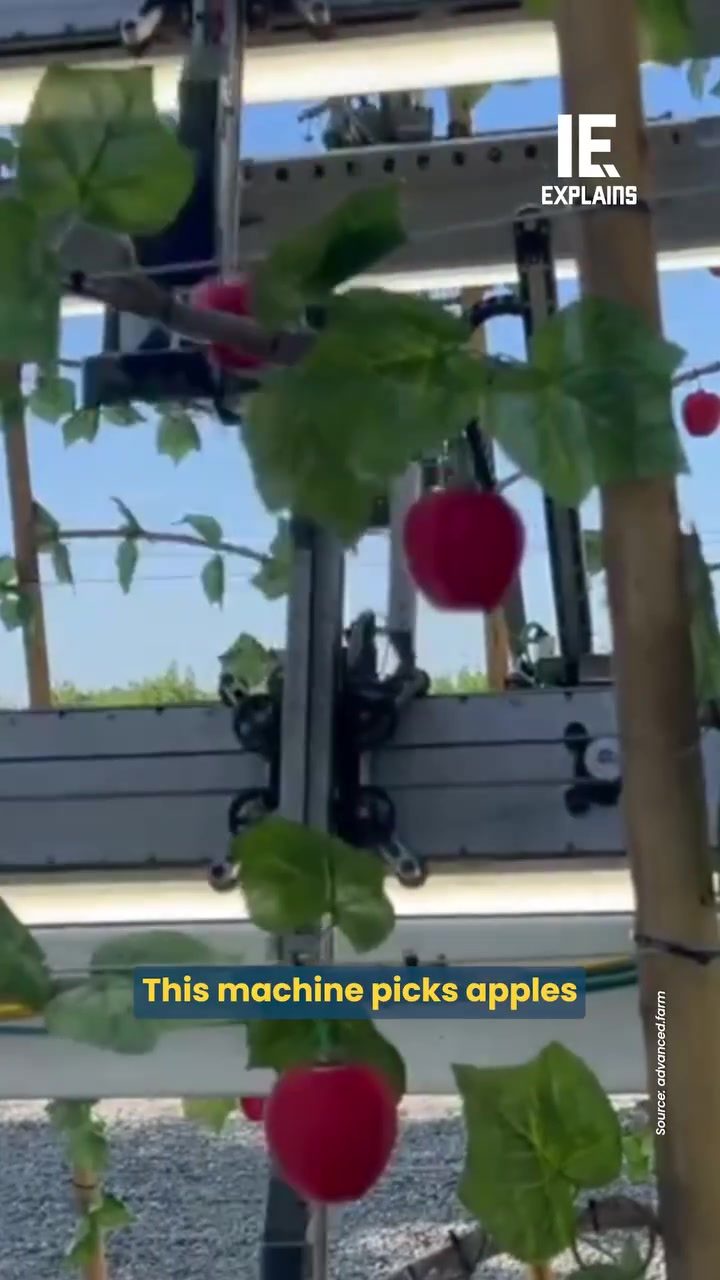
Automated Apple Harvesting
Automated apple harvesting is revolutionizing the way farmers approach one of the most labor-intensive aspects of orchard management. This technology, developed by Advanced Farm, a California robotics startup, uses a robotic harvester equipped with six robotic arms and vacuum suction grippers. These arms are designed to gently pick ripe apples, significantly reducing the need for manual labor.
Why This Matters
The introduction of robotic apple pickers is a response to several critical challenges in modern apple farming. Labor costs are one of the biggest expenses, and with a decreasing workforce, farmers are looking for ways to streamline operations. Robotic harvesters address these issues by increasing efficiency and reducing reliance on human labor. These machines are particularly effective in modern, high-density fruit wall orchards, which are becoming more prevalent in the industry.
Main Discussion
The Technology Behind Robotic Apple Pickers
The robotic apple picker developed by Advanced Farm uses advanced technology to identify and harvest ripe apples efficiently. Equipped with onboard cameras, the machine scans the trees to determine which apples are ready for picking. This technology allows the harvester to operate with precision, avoiding unripe fruit and minimizing damage to the trees.
The six robotic arms are tipped with soft vacuum suction grippers, which gently pull each apple off the tree without bruising it. This delicate handling ensures that the apples remain in optimal condition, maintaining their quality and market value. The harvester is not only efficient but also capable of driving itself down the orchard rows, handling fruit bins automatically, which further reduces the need for manual intervention.
Field Trials and Scalability
In field trials, the Advanced Farm robotic harvester demonstrated impressive results. The machine averaged around 2,500 apples per hour, roughly three times the speed of a human picker. This efficiency is a significant advantage, especially during peak harvest seasons when labor shortages can be a major challenge. The technology has already been tested at scale, with hundreds of thousands of apples picked for leading growers in Washington State during the 2024 harvest. Washington State is a critical region for apple production, supplying over 60% of America's apples.
Economic and Labor Implications
The economic impact of adopting robotic apple harvesters is substantial. Harvest labor is one of the biggest costs in apple farming, and the difficulty in finding workers is increasing. By automating this process, farms can reduce labor costs and ensure a steady, efficient harvest. This is why CNH, a major farm equipment giant, acquired this technology in 2025. The company is betting that the future of orchard management lies in robotics, which can provide a reliable and cost-effective solution to labor shortages.
Practical Tips
For farmers considering the transition to robotic apple harvesting, several practical tips can help ensure a smooth adoption:
-
Assess Orchard Layout: Robotic harvesters work best in modern, high-density fruit wall orchards. If your orchard layout is different, consider modifying it to optimize the efficiency of the robotic harvester.
-
Evaluate Labor Costs: Calculate the current labor costs associated with apple harvesting and compare them with the investment required for robotic technology. The long-term savings and increased efficiency can often justify the initial cost.
-
Test on a Small Scale: Before fully committing, conduct small-scale trials to assess the performance of the robotic harvester in your specific orchard conditions. This can help identify any potential issues and make necessary adjustments.
-
Training and Maintenance: Ensure that your team is well-trained in operating and maintaining the robotic equipment. While the machines are designed to be autonomous, regular maintenance and occasional human oversight are essential.
-
Partnering with Technology Providers: Collaborate with technology providers like Advanced Farm or CNH to stay updated on the latest advancements and receive ongoing support.
Important Takeaways
-
Efficiency: Robotic apple pickers can harvest apples three times faster than human workers, drastically increasing the speed and efficiency of the harvest.
-
Quality: The use of soft vacuum suction grippers ensures that apples are picked gently, maintaining their quality and reducing waste.
-
Labor Savings: Automation reduces the need for manual labor, helping to address labor shortages and reduce costs.
-
Scalability: The technology has already been tested at scale, proving its reliability in large-scale operations.
Conclusion
Automated apple harvesting represents a significant leap forward in agricultural technology. As labor costs rise and the workforce shrinks, farmers are increasingly turning to robotics to maintain productivity and efficiency. The robotic apple picker developed by Advanced Farm and acquired by CNH offers a compelling solution, with its advanced technology, efficiency, and scalability. For farmers looking to stay competitive in the modern agricultural landscape, embracing this technology could be a game-changer.
Watch the Reel
Questions readers ask
What are the main benefits of using robotic apple harvesting in orchards?
Robotic apple harvesting offers several key benefits, including increased efficiency in apple picking, reduced reliance on manual labor, and cost savings in labor expenses. Additionally, these robots can work continuously, making them ideal for high-density orchards, where quick harvesting is crucial.
How do robotic apple pickers identify and harvest ripe fruit?
Robotic apple pickers, like those developed by Advanced Farm, use advanced technology to identify and harvest ripe apples. They are equipped with sophisticated sensors and robotic arms with vacuum suction grippers that gently pick the apples, ensuring minimal damage to the fruit.
What specific technologies are used in automated apple harvesting systems?
Automated apple harvesting systems, including the vacuum apple picker, rely on a combination of robotics, sensors, and suction harvesting systems. These technologies work together to identify ripe apples, pick them without causing harm, and place them into collection bins.
How does robotic apple harvesting address labor challenges in modern apple farming?
Robotic apple harvesting helps to alleviate labor challenges by reducing the need for manual labor. With a decreasing workforce and labor costs skyrocketing, these robots offer a reliable and efficient solution to streamline orchard operations and maintain productivity.
Can robotic apple pickers be used in all types of orchards?
While robotic apple pickers can be used in various orchards, they are particularly beneficial in high-density orchards. These orchards have a higher concentration of trees, making traditional manual harvesting more challenging and time-consuming, and the robots can work more effectively in this environment.
How do robotics in agriculture benefit farmers financially?
Farmers can experience significant financial benefits from adopting robotics in agriculture, particularly in orchard management. By automating tasks like apple picking, farmers can reduce labor costs, lower the risk of product loss, and increase overall productivity, allowing for greater profitability.
Related deep dives
Similar reads based on topic and creator.


Recent articles
Fresh deep dives from the latest Reels we unpacked.




Comments
Be the first to comment.