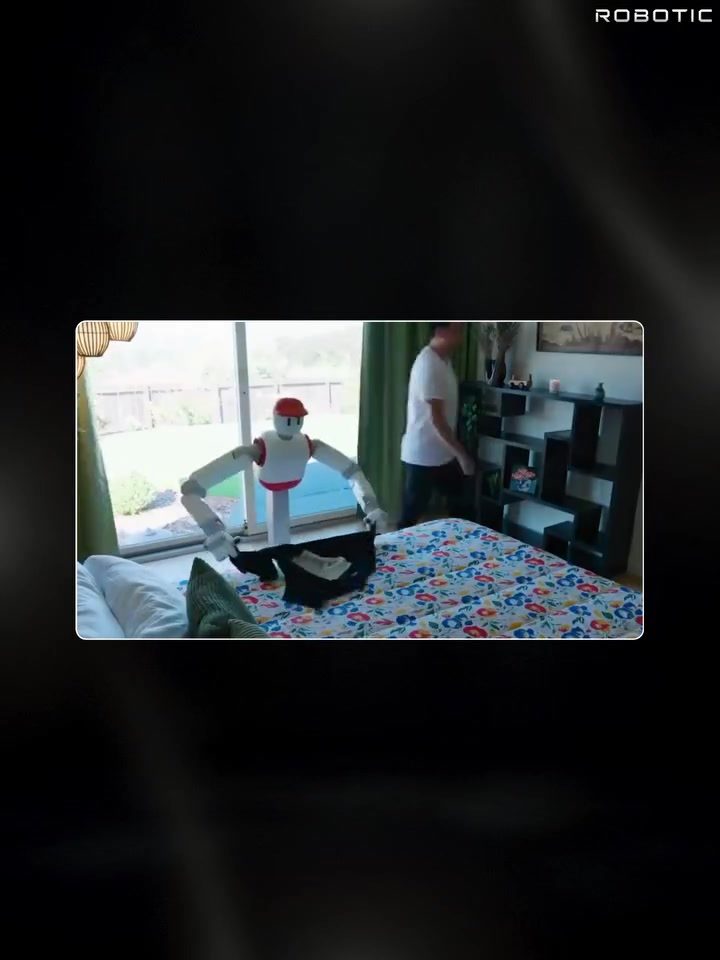
AI-Powered Home Robots and Laundry Folding
The advent of AI-powered home robots is revolutionizing household chore management, particularly with tasks like laundry folding. These intelligent machines are designed to make everyday living more convenient and less time-consuming. Let's delve into the capabilities and implications of these innovative home assistants.
Why This Matters
In today's fast-paced world, even a simple chore like folding laundry can take up a significant amount of time. AI-powered robots, such as the ones developed by Sunday Robotics, are engineered to automate this mundane task. By harnessing the power of artificial intelligence, these robots can learn to fold laundry efficiently, freeing up valuable time for more important activities.
Capabilities and Learning Processes
One-Shot Learning and Adaptability
The AI home robot, such as the ACT-2 model, demonstrates an impressive 99.1% success rate in folding laundry. This high level of accuracy is achieved through a combination of AI pretraining and targeted fine-tuning. The robot is able to learn a new task, like folding laundry, after just one demonstration. This is known as one-shot learning, a breakthrough in AI that allows robots to adapt to different environments and tasks more quickly.
The model successfully completed 778 out of 785 autonomous folds across nine different garment types. This versatility is crucial for practical household use, where one-size-fits-all solutions rarely apply. The robot's ability to handle various items, from huge 8XL shirts to tiny baby clothes, showcases its adaptability and precision.
Real-World Performance
The real-world performance of these robots is tested in environments that mimic everyday household scenarios. This includes dealing with disturbances such as bright daylight, falling clothes, and the presence of curious children. The robot, Memo, was observed folding clothing under these conditions without interruption, demonstrating its resilience and consistency.
Handling Clothing of All Sizes
Robotic arms in these home robots are highly dexterous and capable of handling a wide range of clothing sizes and types. From manipulating a white shirt on a bed to handling a red shirt in a living room, these robotic arms showcase their versatility and precision. The ability to interact with different fabrics and clothing materials is a testament to their advanced programming and design.
Practical Tips for Using AI Home Robots
Setting Up Your Robot
When integrating an AI home robot into your household, it's essential to set up the environment appropriately. This includes ensuring there is adequate space for the robot to operate and that the area is well-lit. Bright daylight and clutter-free surroundings can significantly enhance the robot's performance.
Dealing with Interruptions
AI home robots are designed to handle various disturbances, but it's helpful to minimize potential interruptions. Keeping children and pets away during the robot's operation can prevent delays and ensure smooth performance.
Utilizing One-Shot Learning
To maximize the efficiency of your AI home robot, take advantage of its one-shot learning capability. Demonstrate the task clearly the first time, and the robot will be able to replicate it accurately. This minimizes the need for extensive retraining and allows the robot to adapt to new tasks quickly.
Important Takeaways
Flexibility and Usefulness
AI home robots bring a new level of flexibility and usefulness to household chore management. Their ability to quickly learn new tasks and adapt to different environments makes them valuable additions to any modern home.
Enhanced Human-Robot Interaction
The interaction between children and robots can be both educational and recreational. Robotic arms designed for home use can engage with children in a safe and controlled manner, showcasing the potential for future human-robot interactions.
Fabric and Clothing Considerations
For optimal performance, it's crucial to understand the types of fabrics and clothing the robot can handle. The blend of polyester, cotton, and spandex is commonly found in modern clothing, and robots are designed to easily manipulate these materials.
Conclusion
AI home robots, particularly those designed for laundry folding, are bringing practical solutions to everyday household challenges. Their high success rates, adaptability, and ability to learn new tasks quickly make them invaluable tools for modern living. By integrating these robots into our daily routines, we can free up time for more meaningful activities and enjoy a more organized and efficient home environment.
Watch the Reel
Questions readers ask
What is the success rate of Memo Robot in folding laundry?
Memo Robot achieves an impressive 99.1% success rate in folding laundry. This high rate is due to its advanced AI capabilities, which allow it to handle a wide variety of garments with precision.
How does Memo Robot learn to fold different types of clothes?
Memo Robot utilizes one-shot learning, which means it can master folding various garment types after just one demonstration. This advanced capability enables it to adapt to different household environments effortlessly.
What is one-shot learning, and why is it important for laundry folding robots?
One-shot learning is a type of machine learning where the robot can learn and adapt after just one instance of demonstration. For laundry folding robots, this means they can quickly understand and replicate the folding process for new types of garments, making them highly efficient and versatile.
Can Memo Robot fold clothes in different household settings?
Yes, Memo Robot is designed to adapt seamlessly to different household environments. Its advanced AI and one-shot learning capabilities allow it to fold laundry effectively, regardless of the specific layout or types of garments in various homes.
How does Memo Robot compare to other AI-powered laundry folding robots?
Memo Robot stands out with its 99.1% success rate and one-shot learning capability. While other AI-powered robots may also assist with laundry folding, Memo Robot's high efficiency and adaptability make it a top contender in the market.
What benefits does using a laundry folding robot like Memo Robot offer?
Using a laundry folding robot like Memo Robot can save significant time and reduce the hassle of manual folding. This smart laundry helper can manage the task efficiently, allowing users to focus on other important activities, making it a valuable addition to any household.
What types of garments can Memo Robot fold?
Memo Robot is capable of folding a wide variety of garment types, including shirts, pants, towels, and more. Its advanced AI allows it to recognize and handle different fabrics and shapes, ensuring a thorough and efficient folding process for all items.
Related deep dives
Similar reads based on topic and creator.



Recent articles
Fresh deep dives from the latest Reels we unpacked.




Comments
Be the first to comment.